
Hello! Ever wondered about the incredible, often hidden, world of primates living right here in India’s Northeast? Trust me, it’s a region bursting with some of the most unique and beautiful monkey and ape species you can imagine. I recently went on a journey to find and photograph some of these amazing creatures, and let me tell you, it was an adventure full of surprises, challenges, and heartwarming moments.
Forget the common Rhesus Monkeys you see in cities or the Himalayan Langurs you might spot up north; the primates of the Northeast are a league of their own. From India’s only ape species to monkeys with ‘glasses’ and golden fur, this region is a biodiversity hotspot for our closest animal relatives. I wanted to see these rare beauties up close, understand their lives, and share their stories. So, buckle up, because we’re diving deep into the lush forests where these fascinating beings call home!

India’s Only Ape: The Western Hoolock Gibbon
Let’s start with a superstar: the Western Hoolock Gibbon. Did you know India has an ape species? Yep, it’s the Hoolock Gibbon! Unlike monkeys, apes don’t have tails, and these agile creatures spend most of their lives swinging through the canopy. They’re like nature’s acrobats, with long arms that let them glide through trees with incredible speed. Spotting one is a challenge and a reward in itself, as they are critically endangered due to habitat loss. Their morning calls are an ethereal sound, echoing through the dense forests – a reminder of their elusive presence.
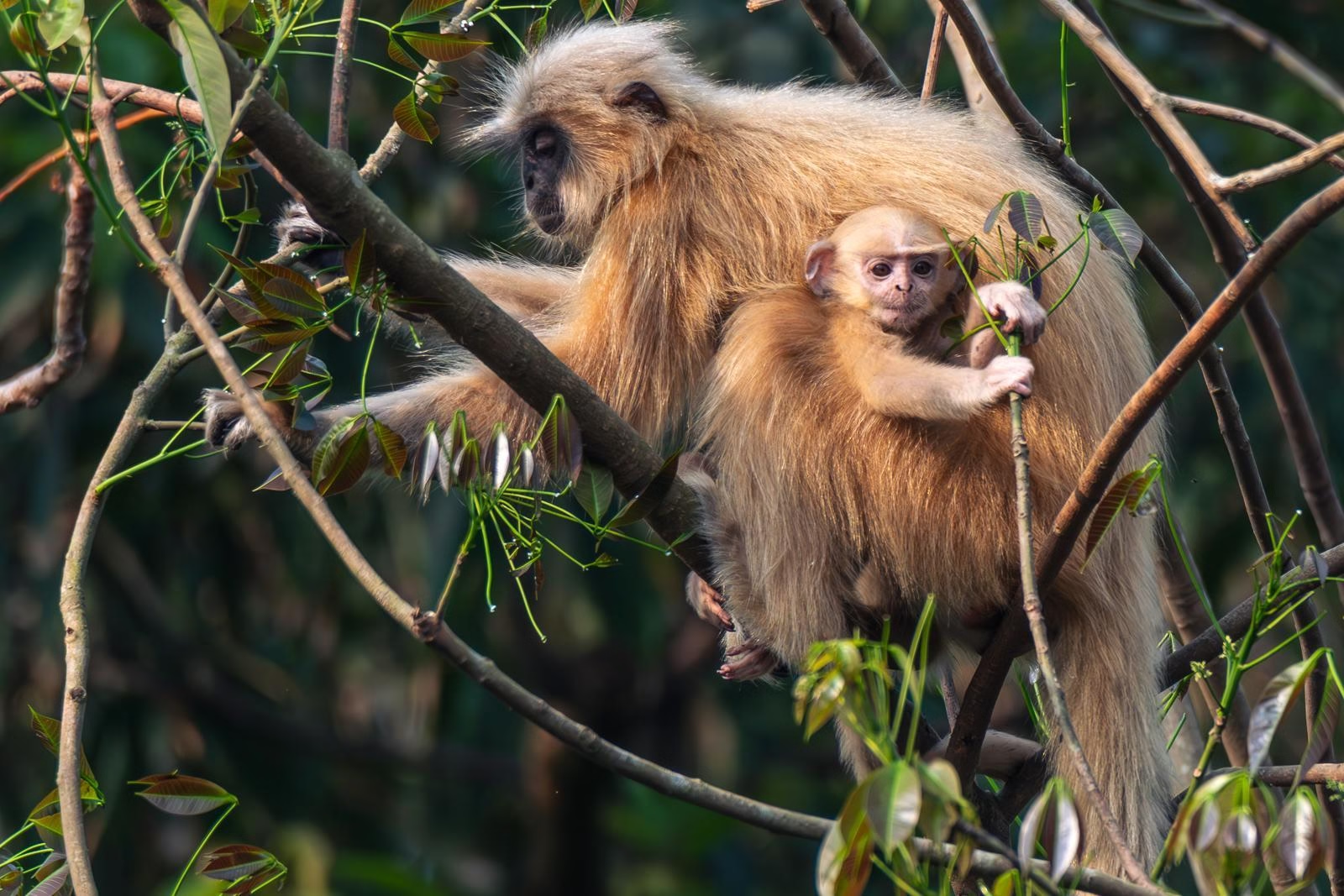
My Golden Encounter: The Magnificent Golden Langur
My quest for primates led me to Assam, specifically the villages near the Kakoijana Reserve Forest, truly special places where humans and wildlife coexist peacefully. My main target? The majestic Golden Langur. These monkeys are just stunning! Imagine shiny, golden-blonde fur, often with a darker, almost black face – that’s a Golden Langur for you. They’re quite different from the grey langurs you might usually encounter.
My trip to Kakoijana was a real adventure. I stayed in a comfy homestay, surrounded by farm sounds, which was a welcome break from city life. The forest itself was pristine, and my local guide, Haro Mohan Rabha, was a treasure. He knew every nook and cranny of the forest and had a deep connection with these animals.
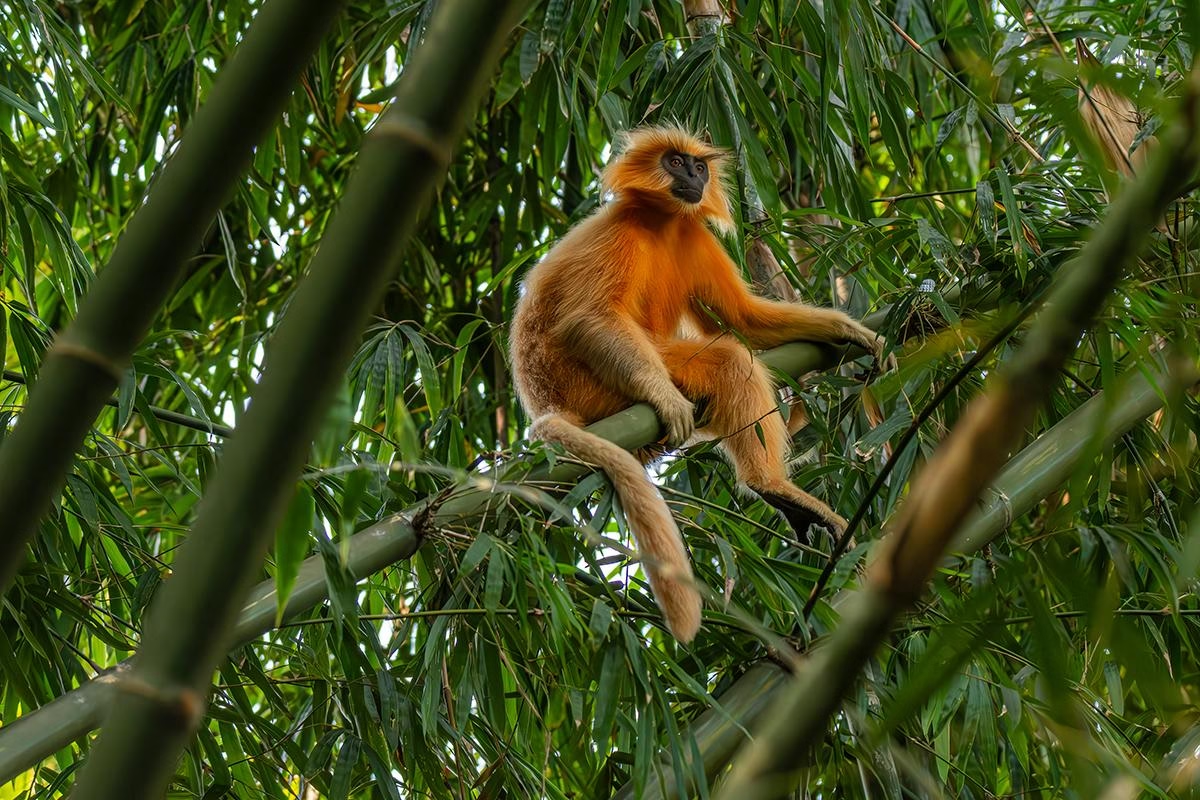
Finding them wasn’t always easy, but after some searching, we located a whole family right in the village! It was amazing. Locals told me a hilarious story: these curious langurs have developed a fascination with mirrors over the last couple of years. They sometimes peek into empty houses just to gaze at their reflections! How cool is that? The villagers don’t mind at all; they see these golden beauties as part of their family, munching on young bamboo shoots without causing any trouble.
I even had a memorable, albeit messy, moment when a Golden Langur pooped on my camera lens! It was a sign of an immersive wildlife encounter, and I wouldn’t trade it for anything. Capturing photos and videos of these endangered beauties, including an alpha male, was incredibly rewarding. However, it wasn’t all fun and games. I learned that conservation is a serious challenge here, with several Golden Langurs tragically dying from electrocution – a stark reminder of the threats they face.
Searching for the Spectacled Ones: Phayre’s Leaf Monkey
My next big quest took me to Tripura, hunting for the shy and elusive Phayre’s Leaf Monkey, also known as the Spectacled Monkey. And let me tell you, finding them was a true test of patience!
These monkeys are incredibly unique, especially with their prominent white rings around their eyes, making them look like they’re wearing spectacles. Locals even call them ‘Chashma Banar,’ which means ‘Spectacled Monkey’ in Bengali. These ‘glasses’ aren’t just for show; they actually help them see where their friends are looking in the dim forest canopy, and they can even widen them to create a ‘scary mask’ to ward off predators!
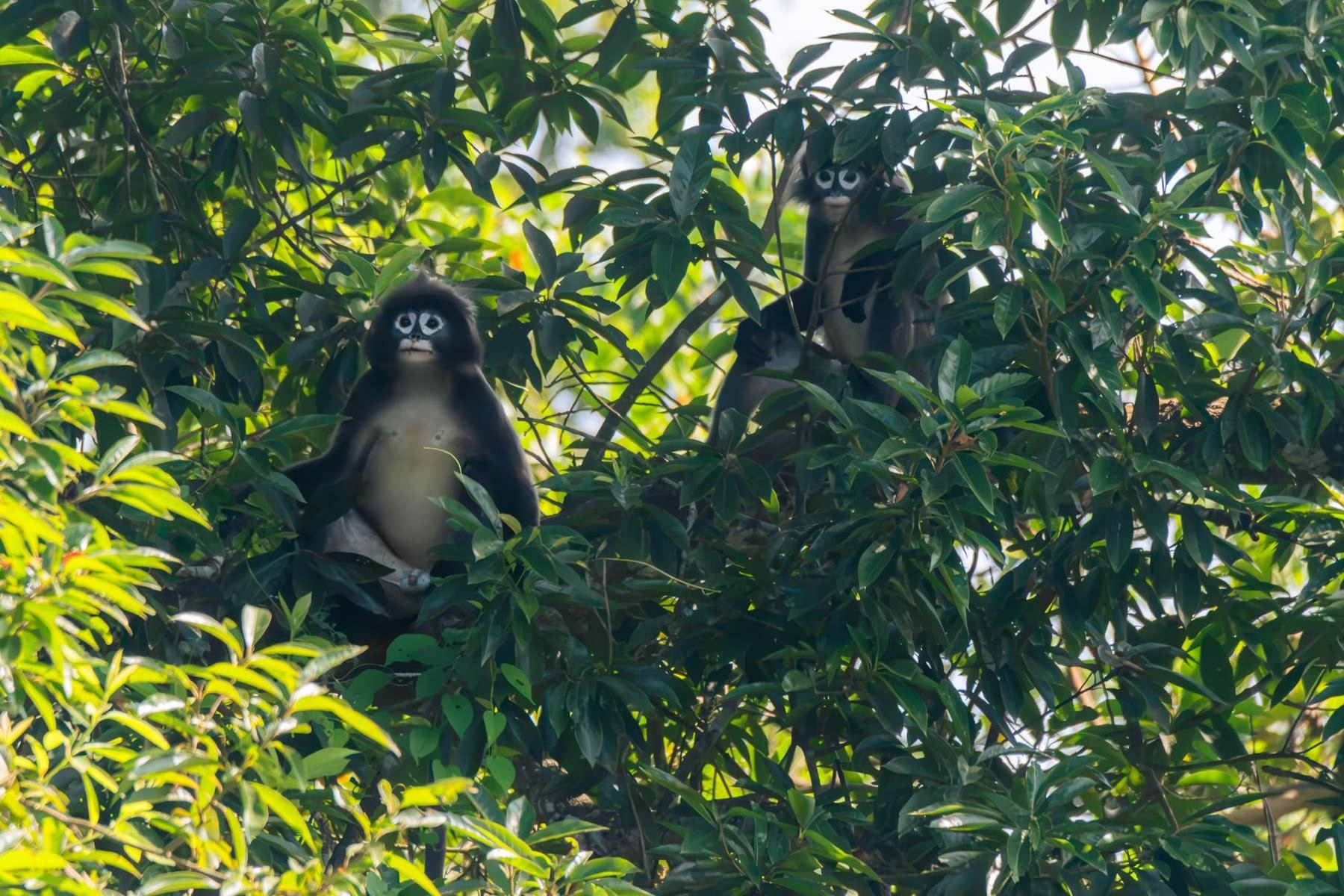
And get this: baby Phayre’s Leaf Monkeys are born with bright orange fur, like tiny pumpkins! It’s so adorable, and it changes to grey as they grow. They’re mostly leaf-eaters, preferring young bamboo shoots.
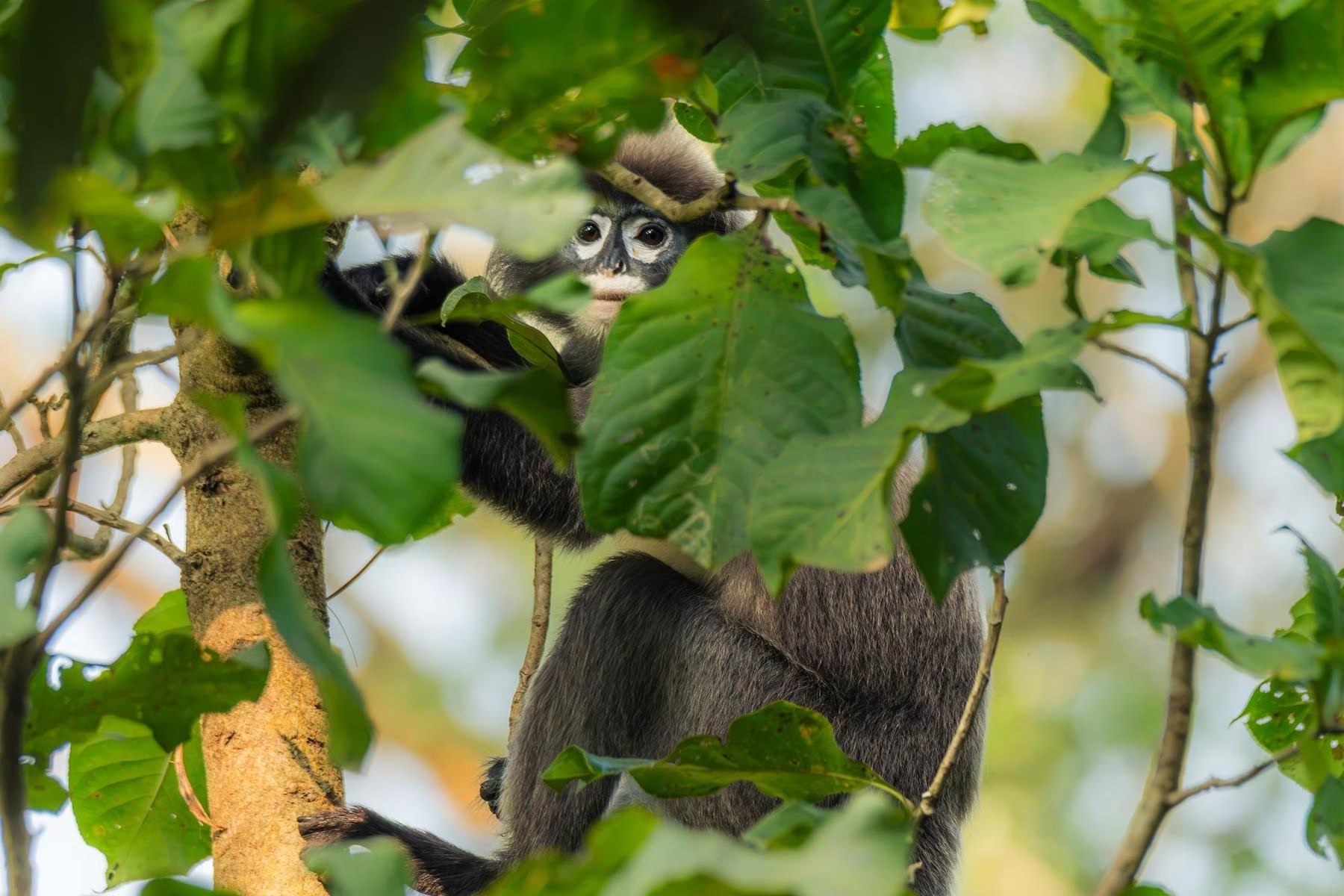
My search in Tripura, with my fantastic guide Pankaj Bhattacharjee, was tough. After days of exploring Rowa and Sepahijala Wildlife Sanctuaries without much luck, we made a final attempt. We eventually found a group near the zoological park at Sepahijala. It was a bittersweet moment – thrilling to finally see them, but also a little heartbreaking to witness the wild group trying to interact with their family members in an open enclosure, even getting chased by Capped Langurs and squirrels amidst human activity. It made me wonder about the invisible lines between the wild and the managed, and the challenges these creatures face just to connect.
Other Northeast Gems: Capped Langur, Pig-tailed Macaque, and Arunachal Macaque
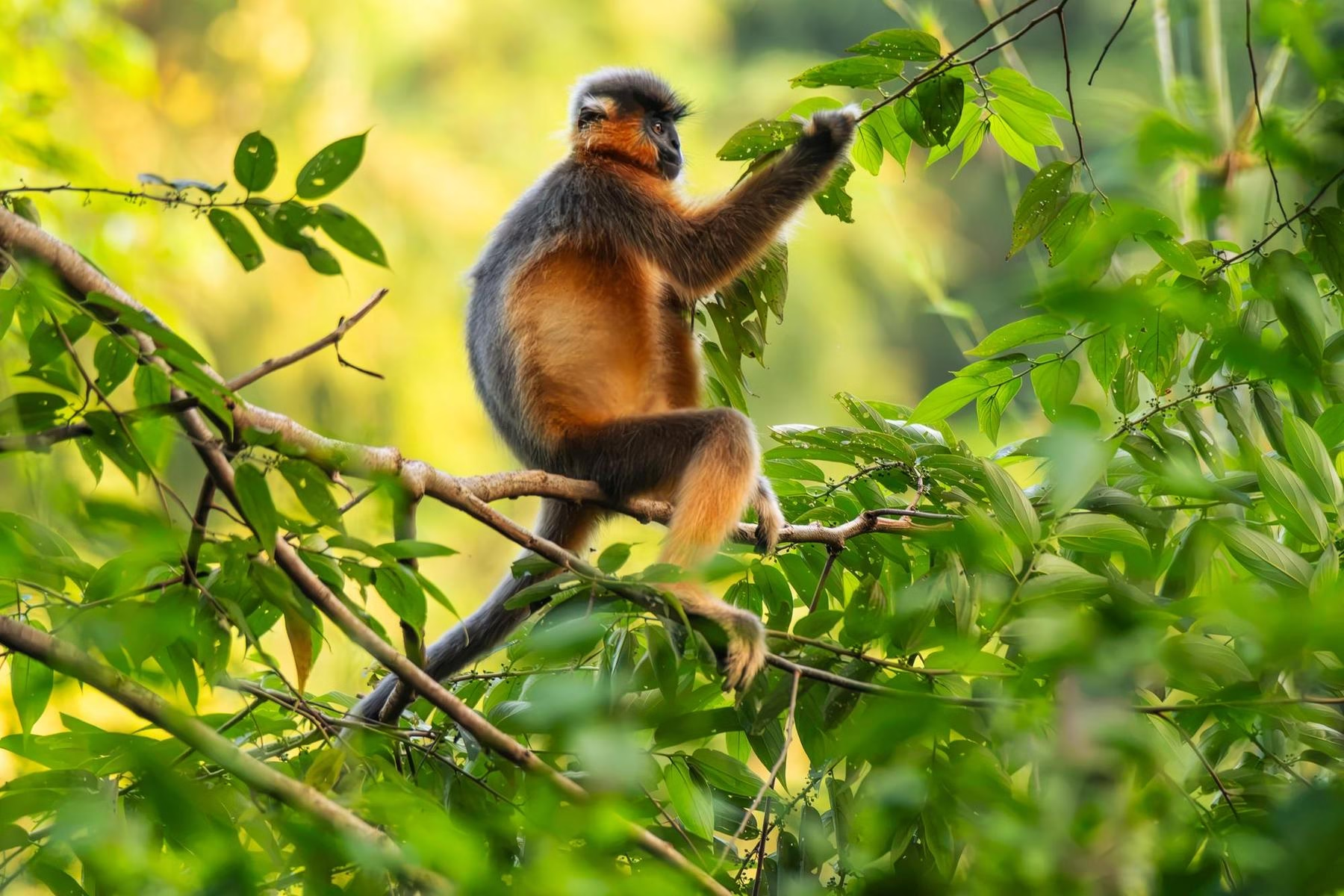
While tracking the Phayre’s Leaf Monkeys, I also got a glimpse of the striking Capped Langur. These beautiful primates are easily recognized by their distinctive ‘cap’ of dark hair on their heads and often have orange or reddish underparts. Like the Phayre’s Leaf Monkey, they are arboreal and primarily leaf-eaters, living high in the forest canopy. They’re another beautiful example of the diverse monkey species in the region, often contrasting with the more widespread Himalayan Langurs.
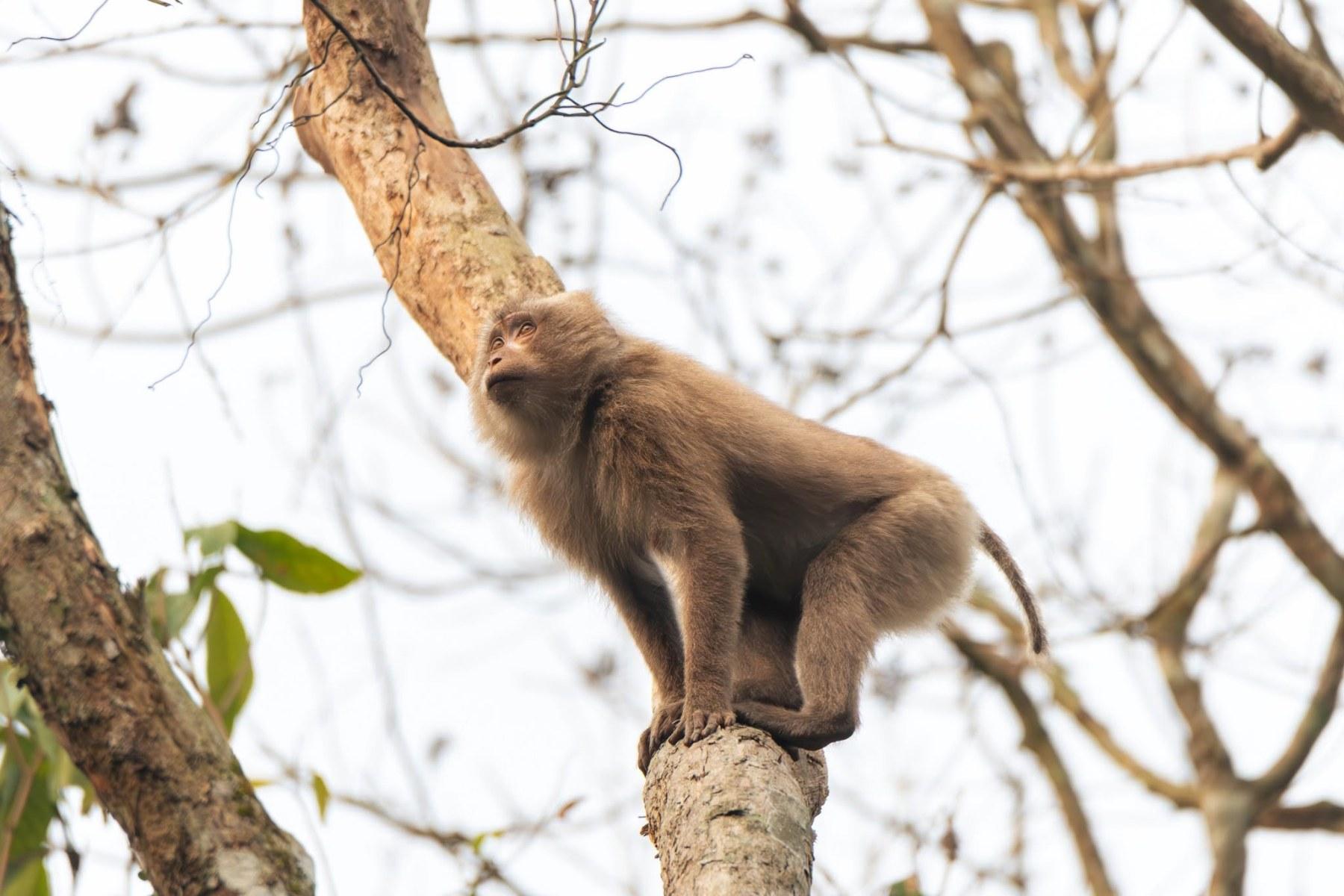
I was also fortunate enough to capture a photograph of a Pig-tailed Macaque. These macaques are named for their short, upward-curling tails that really do look like a pig’s tail! They’re quite different from the more common Rhesus Monkeys, not just in their tail but also in their more robust build and often darker facial skin. They’re incredibly intelligent and live in large groups, foraging both on the ground and in trees.
And then there’s the Arunachal Macaque, a species I was particularly keen to learn about. This macaque is one of the most recently discovered and documented primate species globally, found in the high-altitude forests of Arunachal Pradesh. Its discovery highlights just how much more there is to explore and understand about the biodiversity of Northeast India. It’s a testament to the region’s diverse, often unexplored, natural wonders.
The Challenge of Coexistence: Why These Primates Need Our Help
As you can see, Northeast India is a treasure trove of primate diversity. But these exquisite creatures, from India’s only ape to the critically endangered Phayre’s Leaf Monkeys and the endangered Golden Langurs, face immense challenges. Habitat loss due to deforestation, human encroachment, and even dangers like electrocution (as seen with the Golden Langurs) threaten their very existence.
It’s crucial for us to understand how unique and important these species are. They’re not just ‘monkeys’; they each play a vital role in their ecosystems. By supporting local conservation efforts, raising awareness, and respecting their habitats, we can help ensure that future generations can also marvel at these primate wonders. My journeys taught me that the local communities, like those in Kakoijana, are often the first line of defense and the most important allies in protecting these amazing animals.
What’s your most memorable wildlife encounter? Share your thoughts in the comments below! Let’s keep the conversation going about protecting India’s incredible wildlife heritage.
- Exploring Northeast India’s Primate Wonders - November 23, 2026
- Finding Tripura’s Spectacled Monkeys - November 9, 2026
- Rhinoceros in Jharkhand? Uncovering Isko’s Ancient Wildlife & Art - October 21, 2026