


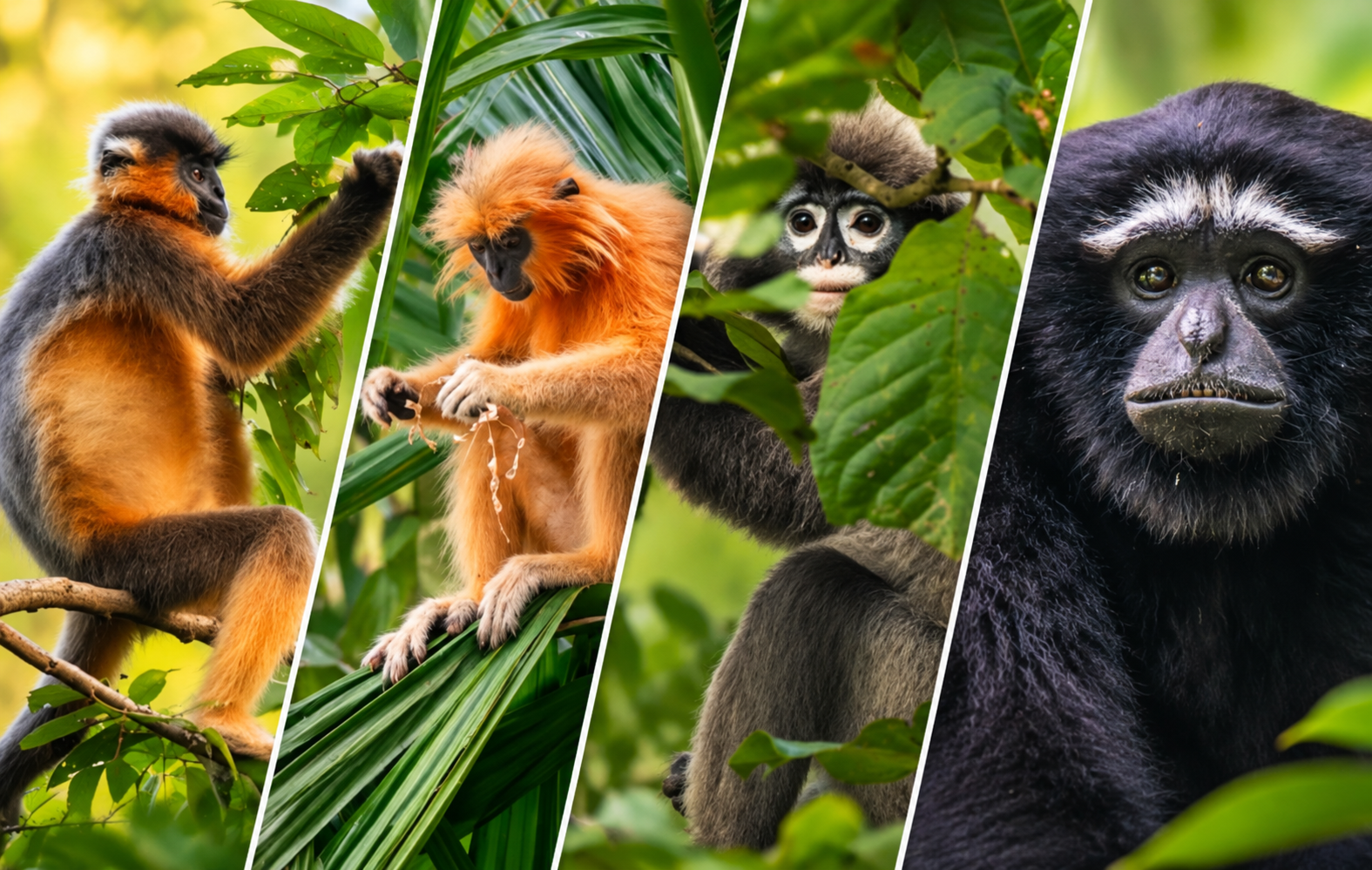
When we start exploring the wild, we have some entry point. For a lot of enthusiasts, the entry point is birding, for some it is just seeing tigers in a national park while some could be into exploring frogs, snakes, butterflies, and what not. But within my personal circles, I do not know many who take an active interest in the ones that are very much out there whether or not you like them, up on the trees with their tails hanging from the branches – Monkeys, Langurs, and (not with the tail) the Gibbons. They are all “primates”.
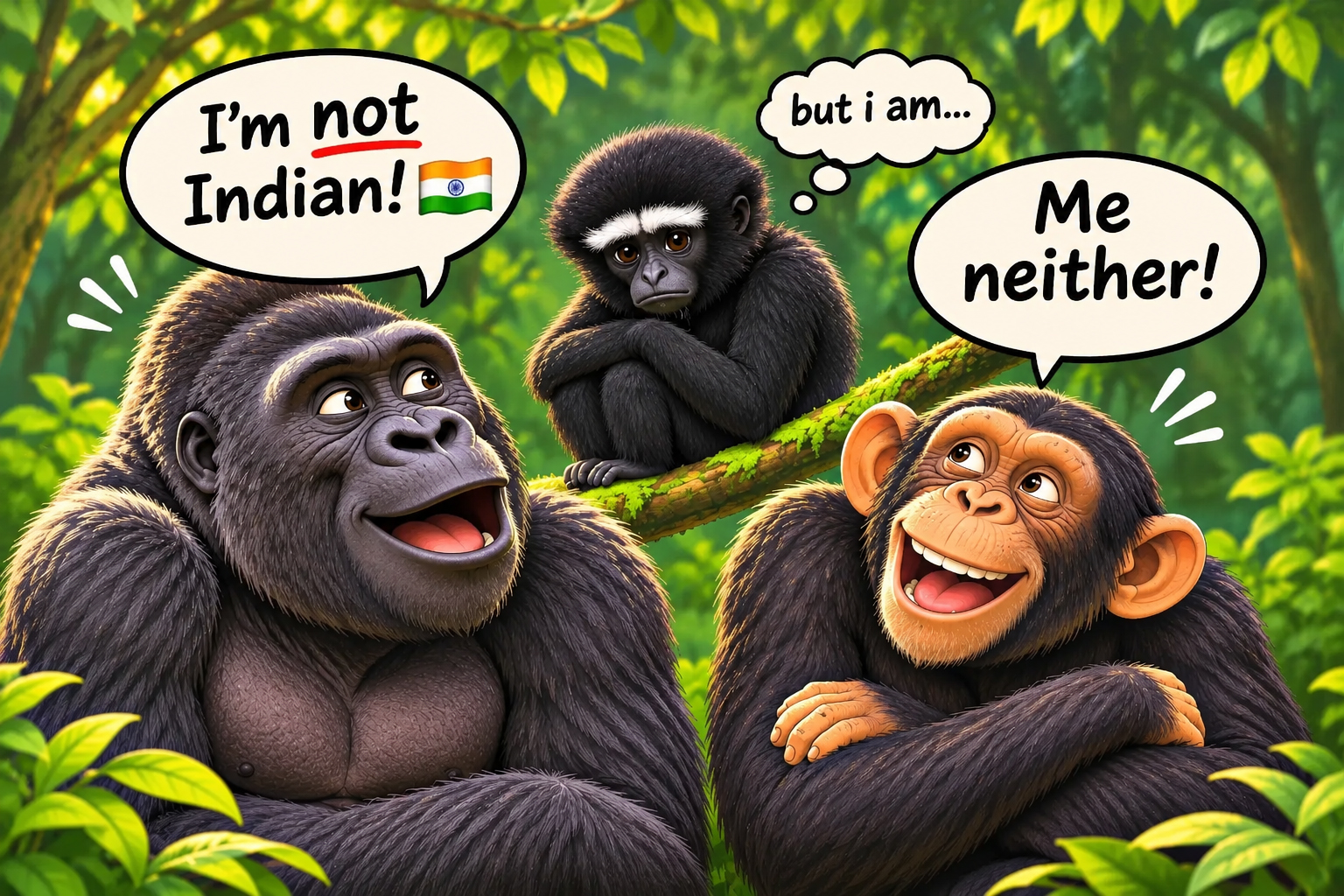
Did you know? While a lot of kids know about Gorillas and Chimpanzees because they are popular in children’s books, you can not find them in the wild in India.
But India has Her own ape species – the Western Hoolock Gibbons! ..and they are very endangered. This just gave me more reasons to make a blog post about them and their likes for you to read.
Fasten the seat belt because we have a lot to discuss but you wouldn’t read a very long and boring blog post.
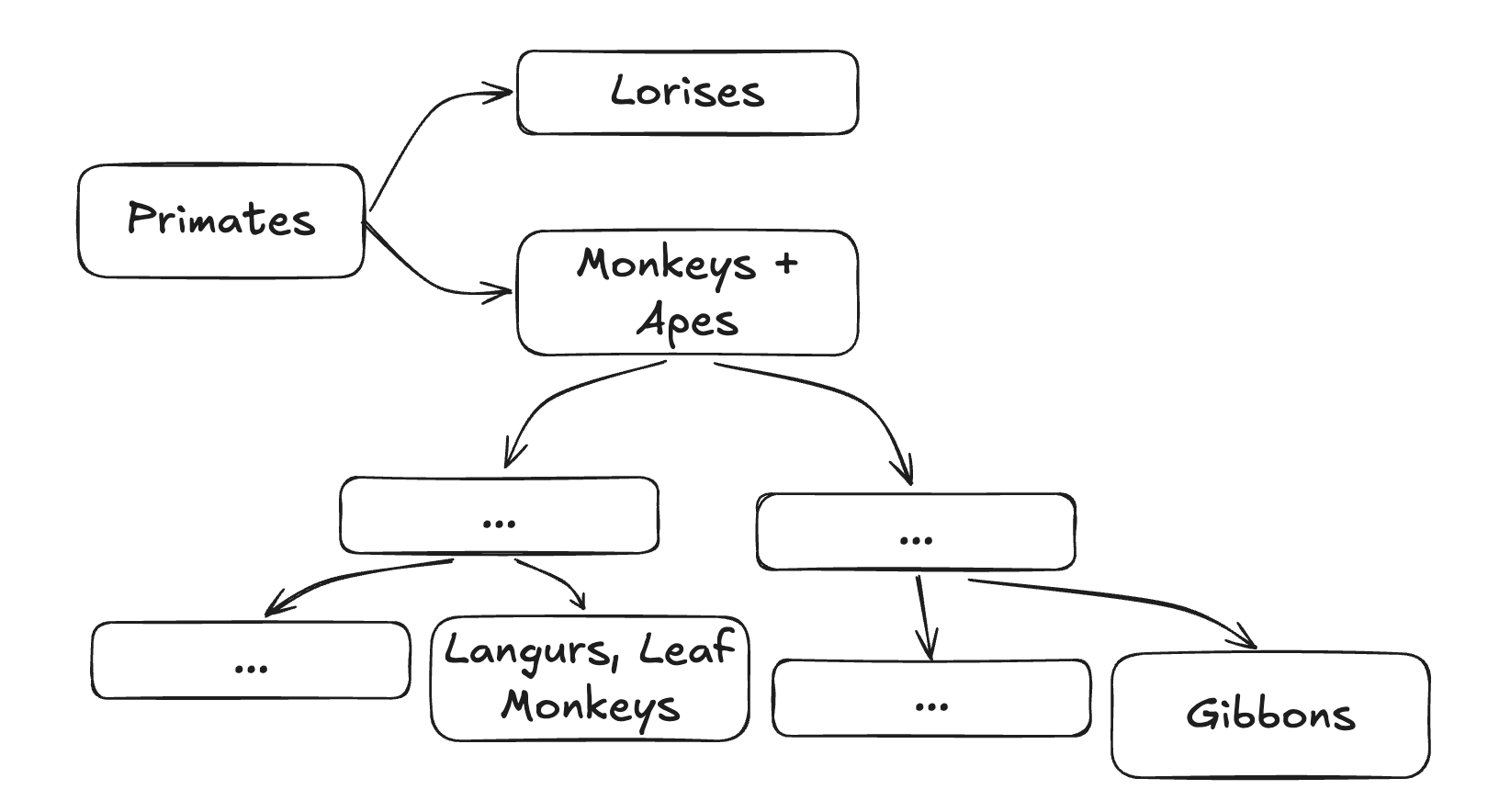
- In the world, there are 539 documented “primates” of which 23 are in India. That’s roughly 4% of them.
- There are 2 Lorises – Bengal Slow Loris, and the Grey Slender Loris. They are mostly active in the night and I sleep during the nights. So I do not have any photographs of them. But I can tell you this: You get Bengal Slow Loris in Bengal and North East of India. Grey Slender Loris, in Eastern and Western Ghats, mostly in Southern parts of India.
- Now about “Monkeys and Apes”: There are 21 of them. 20 species of Monkeys, Langurs, and Leaf Monkeys… and 1 ape.
- India has 1 ape species, just 1. That’s the Western Hoolock Gibbon. No Gorillas, no chimpanzees. Just Western Hoolock Gibbons. You can find them only in the North East of India.
- Of the 20 Monkeys and Apes: 10 Macaque species, 7 Gray Langur species, and 3 Leaf Monkeys.
- 3 Leaf Monkey species are *surprise* – Golden Langur, Capped Langur, and the Phayre’s Leaf Monkey.
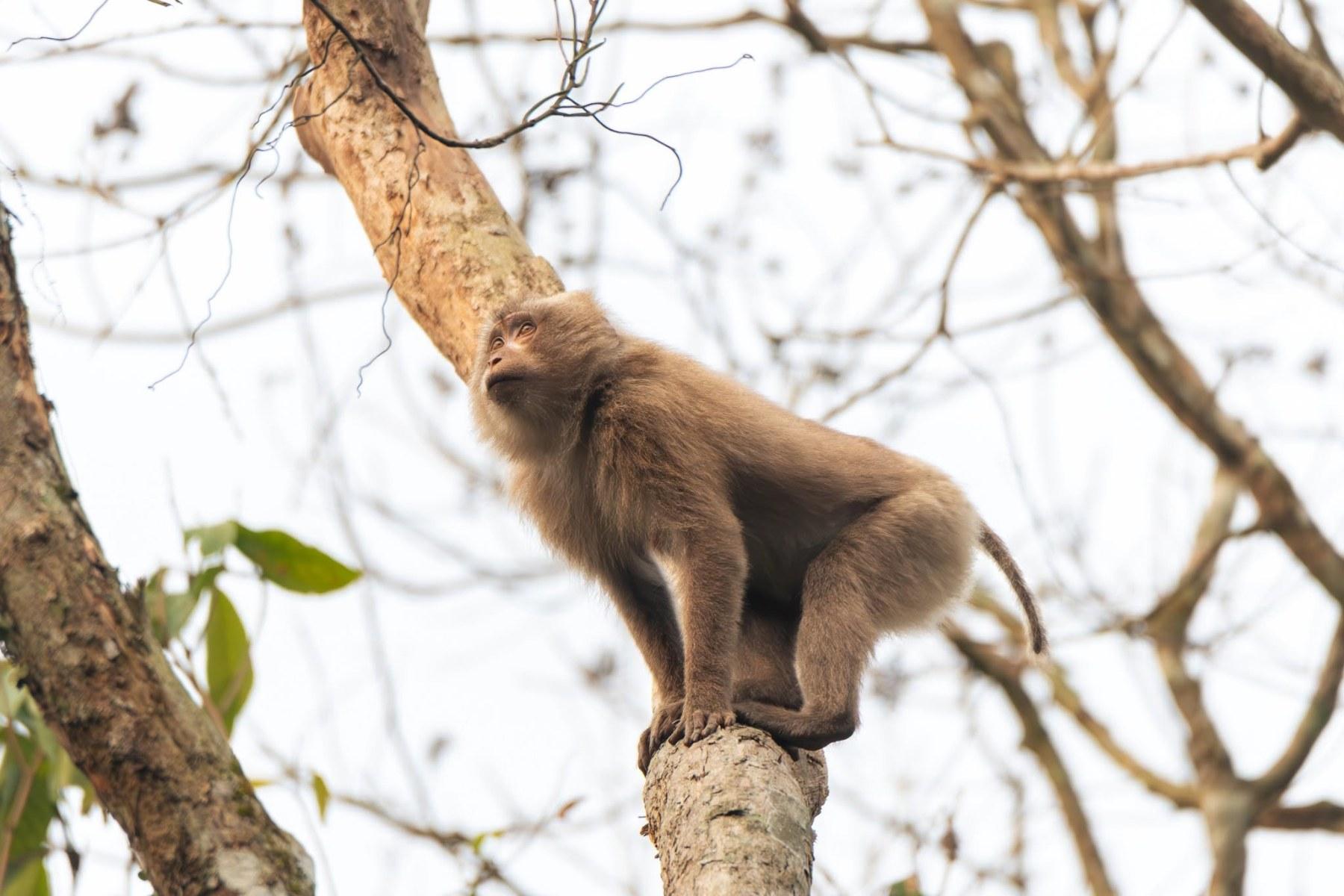
15 out of 23 species, that’s roughly 65% of Indian Primates are in Bengal and North East of India.
Well, that is right. Bengal Slow Loris, the Western Hoolock Gibbon, 7 species of Macaques, 3 Gray Langurs, and 3 species of Leaf Monkeys. The 3 Leaf Monkeys are special in my list: Golden Langurs, Capped Langurs, and the Phayre’s Leaf Monkey.
3 out of 15 species are marked “Least Concern”, 5 are “Endangered”.
Of the 15 species of primates that you would find in Bengal and North East of India, only 3 are marked as “Least Concern” by the IUCN. That’s saying 12 of the 15 (that’s 80%) of them are fighting for their survival, in some form or the other.
5 which are “Endangered” are Bengal Slow Loris, Western Hoolock Gibbon, Golden Langur, Phayre’s Leaf Monkey, and Arunachal Macaque.
The 3 Leaf Monkeys in the North East India.
I wondered how I could differentiate between the Langurs and the Leaf Monkeys. It turns out, it is not one of the easiest things to do. Even common names blur boundaries. A Golden “Langur” is a Leaf Monkey. Phayre’s “Leaf Monkey” is now commonly called Phayre’s Langur. The lines are blurred.
But this is what I could gather: In one ecosystem if the Macaques, Langurs, and Leaf Monkeys live together, then
- the Leaf Monkeys are the ones which would eat primarily leaves (new and mature), young bamboo shoots, and would remain way above the ground by default.
- the Langurs could eat leaves, young bamboo shoots, fruits, and even flowers. They could also come to the ground.
- the Macaques are omnivorous, eat everything, is abundant, stronger, and definitely comes to the ground.
In the wild, the Macaques (mostly Rhesus Monkeys) are the local goondaas. The different classes of species do not really interact much without a fight. Now that is what ChatGPT told me. What did my jungle experience tell me? In November 2025, when I went to a village near Kakoijana Reserve Forest, there was a group of Golden Langurs where a old female Golden Langur had adopted a baby Rhesus Monkey.
We know a lot of their behaviour by observing. I am not sure if we have enough researchers on the ground to observe them. Thus, as a student of science I am not sure if I could believe everything I read on non peer reviewed publications and blogs as truth.
Let’s make it a little simpler for you.. in North East of India, there are only 3 Leaf Monkeys. Have a look, and I am sure you would never forget.
- Capped Langur (IUCN status: Vulnerable)
- Golden Langur / Gee’s Golden Langur (IUCN status: Endangered)
- Phayre’s Leaf Monkey / Phayre’s Langur (IUCN status: Endangered)
Capped Langur (Leaf Monkey) | IUCN Status: Vulnerable.
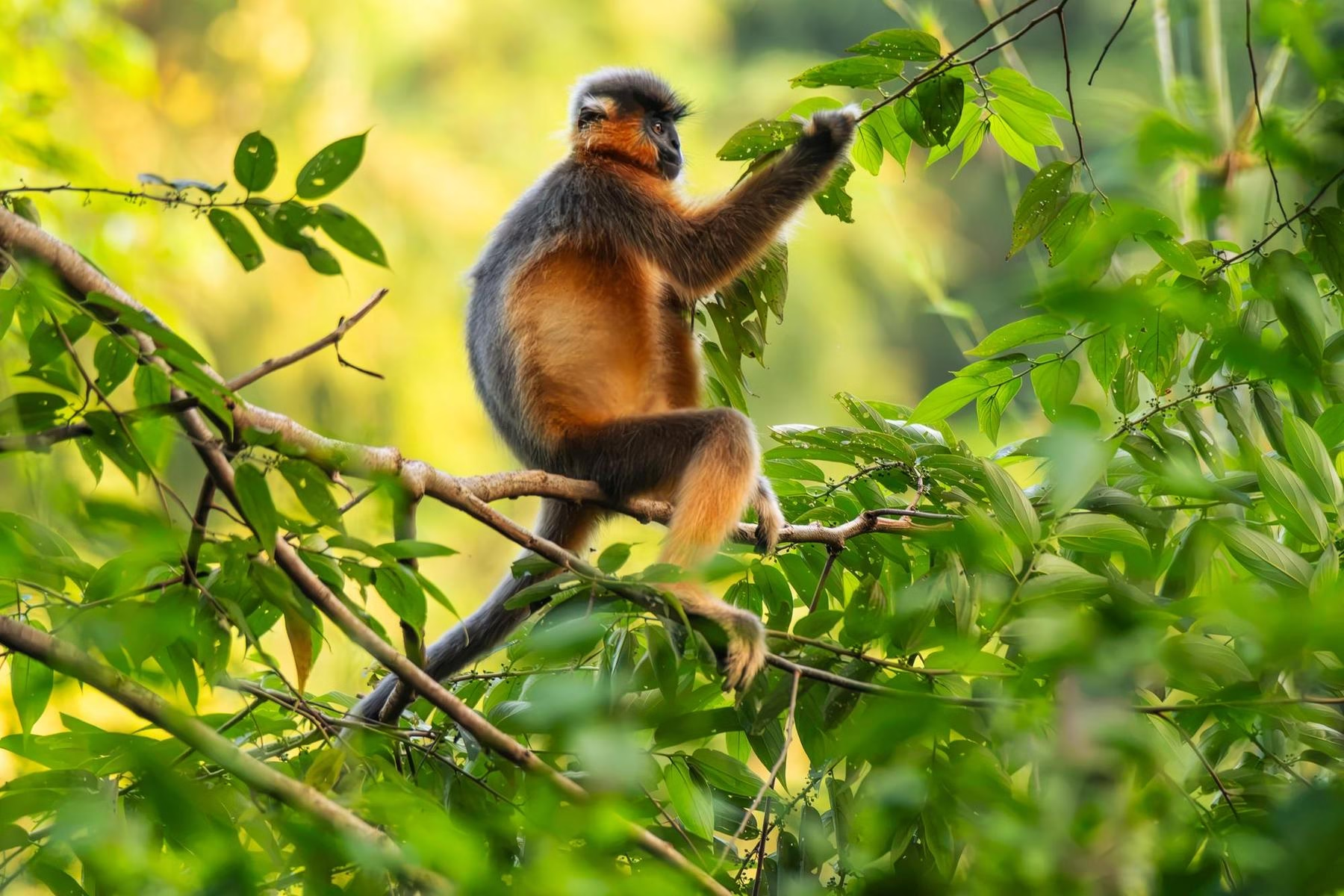
Probably the most abundant of the three, and very visible. They are not very shy and you can photograph them. They are found in Assam, Arunachal Pradesh, Meghalaya, Manipur, Mizoram, Nagaland and Tripura; basically, a lot of places. Their population halved in less than 3 decades, i.e. my entire life time.
Golden Langur | IUCN Status: Endangered.
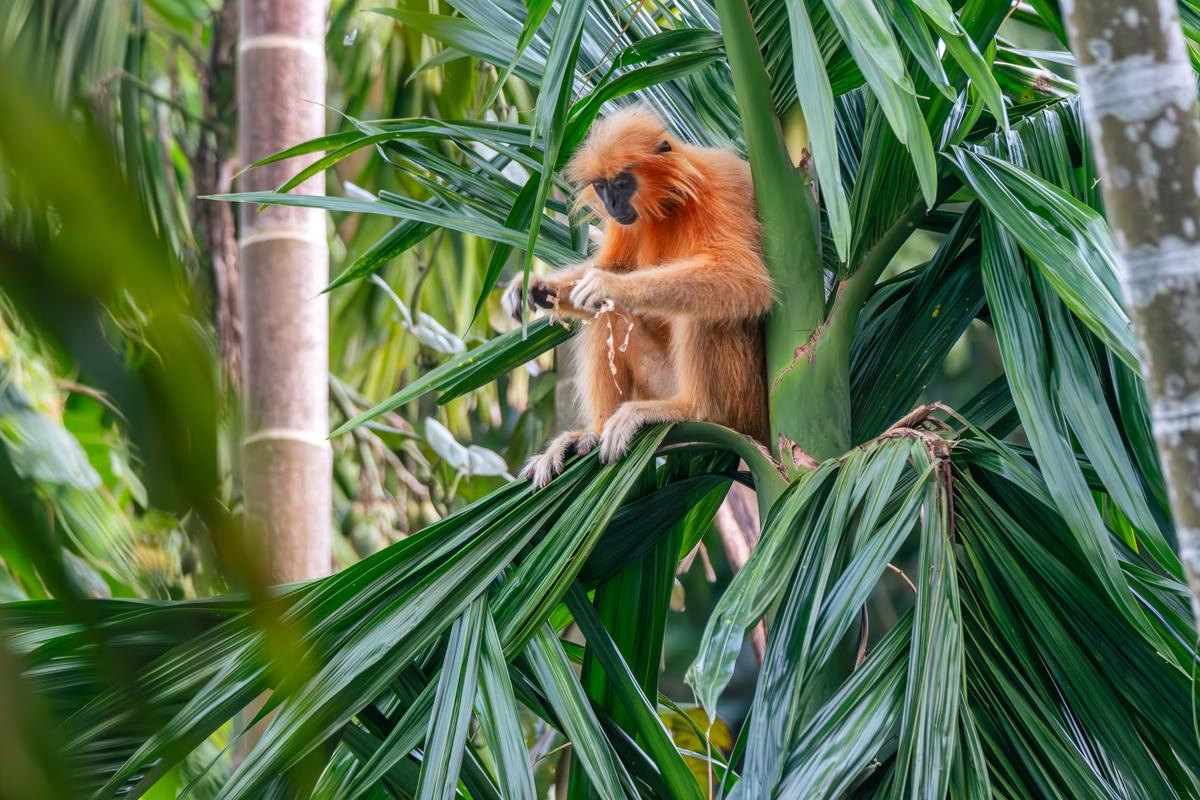
They do not like human beings. But local stories would tell you that they come to people’s homes when people are not there only to look at themselves in the mirror. Then they run away back to their trees. I knew that they do not like human beings, and while photographing them, I did not realise I had gotten close to them. They pooped my lens. Sharp aim. No poop on me. Just my lens.
In case you want to see a reel, check this out. The video footages are by yours truly, and the music is composed by Supratik. The editing is done by Saimantick. In case you know me for over half my life, you definitely know about these two close friends of mine. Also, there are blog posts that I have written which you can read on my blog here, and here.
You can only find them in a tiny region of Kakoijana in Assam, India. In case you want to go to Kakoijana and explore, maybe get in touch with the changemakers there like Sanjeev Ray, and guides like Haro Mohan Rabha [+91 98544 21716].
Phayre’s Leaf Monkey | IUCN status: Endangered.
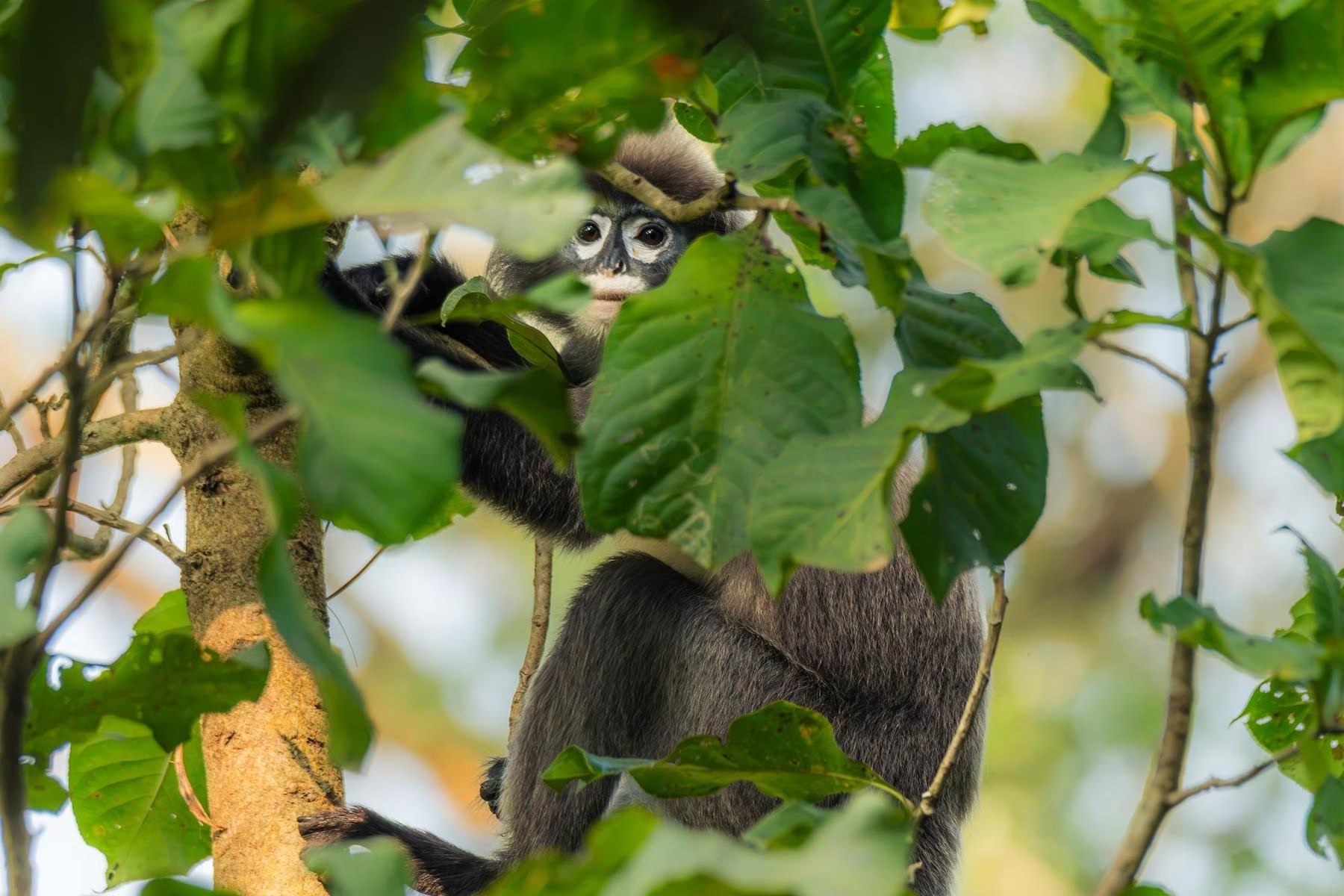
Among the Leaf Monkeys, this is the most difficult to spot. They are very calm, very quiet, and even when they tear a leaf to eat, they do it very quietly. The Phayre’s Leaf Monkey is the state animal of Tripura, but I am not sure if they are doing much for their conservation. The numbers are so low, i.e. they are so endangered that I had to spend 3 days in a tiny patch of a forest, and adjoining rubber plantations, to find them only at the edge of the Sepahijala zoo when they reached out to the rest of their group. You can read about my experience here.
They are found in small patches in Assam, and Mizoram as well. In Tripura, there are claims that they can be found “easily” in Rowa and other places. I am not sure if I would agree with the word “easily”. There is a lack of on-ground information, even for people who are trying to make a career out of wildlife guiding. So, just know that it is difficult. We were told about the specific location by a wildlife biologist who works at the Sepahijala Zoo. My guide Pankaj Bhattacharjee [+91 96122 04648] has personal connection with this biologist, and I got to see.
Western Hoolock Gibbon | India’s only ape | IUCN status: Endangered.
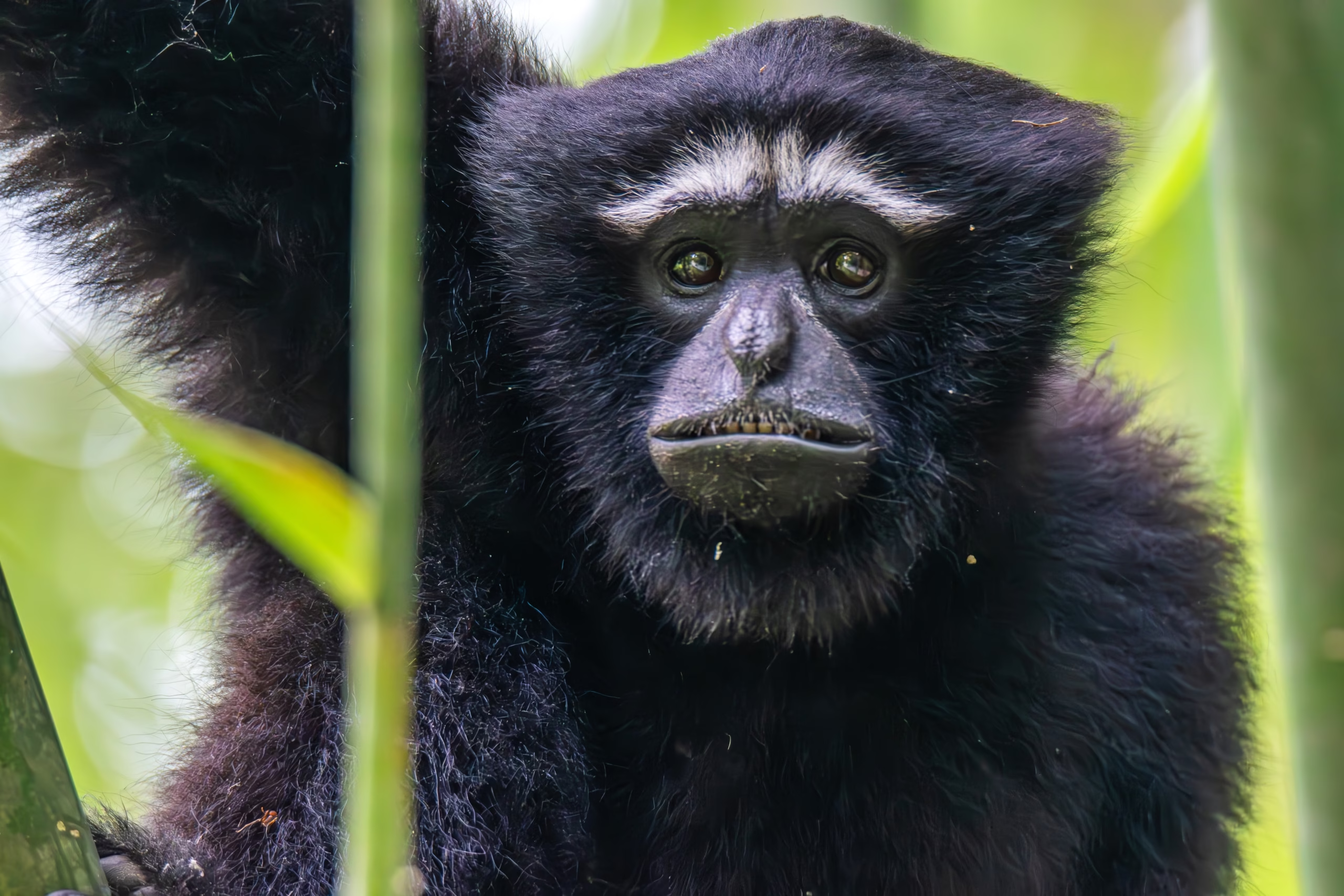
Let’s get back to the first AI generated cartoon I showed earlier in this blog post. Indian children might know a lot about the Gorillas and the Chimpanzees because they are popular in children’s books, cartoons, and documentaries are made on them. They can not find them in the Indian wild. But you know which ape they can find? Answer: The Western Hoolock Gibbons.
…and as is the case, they are also Endangered. They are not monkeys, they dont have tails. But they live high up on the trees and do not come down. They are loud and they swing from one tree to another the moment they see you – the human. For the uninitiated, this is how they sound. When you see them in the wild, stay calm. Please know that they are way more afraid of you than you are of them. Cliched but true. When I was there with my brother, a guide, and a gunman – I was so fucking fascinated by them they I forgot for a moment I could be stepping on a snake. It was off the conventional trail, a little into the forest, thick growth, grass, and shrubs. I forgot about all the dangers and I just kept looking at the Gibbons.
PS: Do not be stupid like me. When we went there during March 2025, we got to see a fresh pugmark of a leopard. There are leopards and that’s why there was a gunman with us. In June when I went to Dehing Patkai, there was an incident of a leopard attacking a visitor, in the very place where we were. I am sure the visitor was not very innocent, but in my excitement, I could have also done something stupid. So when you are in the jungle, be a little mindful.
PS: My local guide in Holongopar Gibbon Sanctuary in Jorhat, Assam, was Bikash Baruah [+91 60026 53014].
1 nation, 1 monkey?
Well, it is fancy to imagine “1 country, 1 political party”, probably not as fancy when you try to imagine “1 country, 1 monkey!”. Anywhere you go, you see only the Rhesus Monkey, who would ask for Bananas from you, or steal your spects and goggles, and return in exchange of Mango Frooti. That’s not good, right? Side jokes apart, if you love the wild, you know how important each of them are, in the ecosystem to protect the world around them. They help grow forests, contribute to climate resilience and are essential in the forest ecosystem services.
So maybe the next time you think about going to a jungle, think about the North East of India, and when you think about the North East, think a little beyond the Tigers in Kaziranga and the Blackie in Manas. Think about the Hornbills, the Bengal Floricans, the other incredible wildlife we have in the region, which of course include the primates!
Thank you for reading!
Hi, I am Anirban Saha. I am a Data Scientist by profession and a wildlife enthusiast at heart. I live in Kolkata, and I try to explore the wildlife in the North of Bengal and North East of India as much as possible. In case you liked reading my blog post, I would encourage you to SHARE the blog post with your friends, and stay connected with me on WhatsApp or Telegram Groups. You could also follow me on Instagram!


- Let’s explore 3 Leaf Monkeys and 1 Ape in North East India! - November 24, 2026
- 5 Elephant facts that Data Scientists told us! - October 4, 2026
- Olive Ridley Turtles at the Rushikulya Beach. - May 11, 2026