


Hello, young bird adventurers!
Imagine this: It’s August 8th, 2026, and I’m on a boat trip deep in a magical place called the Sundarbans. This is a huge forest with lots of water, where tigers live! My brother, Souranil, came all the way from Hyderabad, and we decided to explore. We met a friendly person named Amit Hazra who helped us get our boat ready for two whole days of adventure.
Now, my brother was super excited to see a tiger. He stayed awake and watched very carefully. Me? Well, I might have taken a few naps! Sometimes, even when you’re looking for one thing, nature shows you something even more special. And that’s exactly what happened!
Our Amazing Glimpse of the Ruddy Kingfisher in Sundarbans
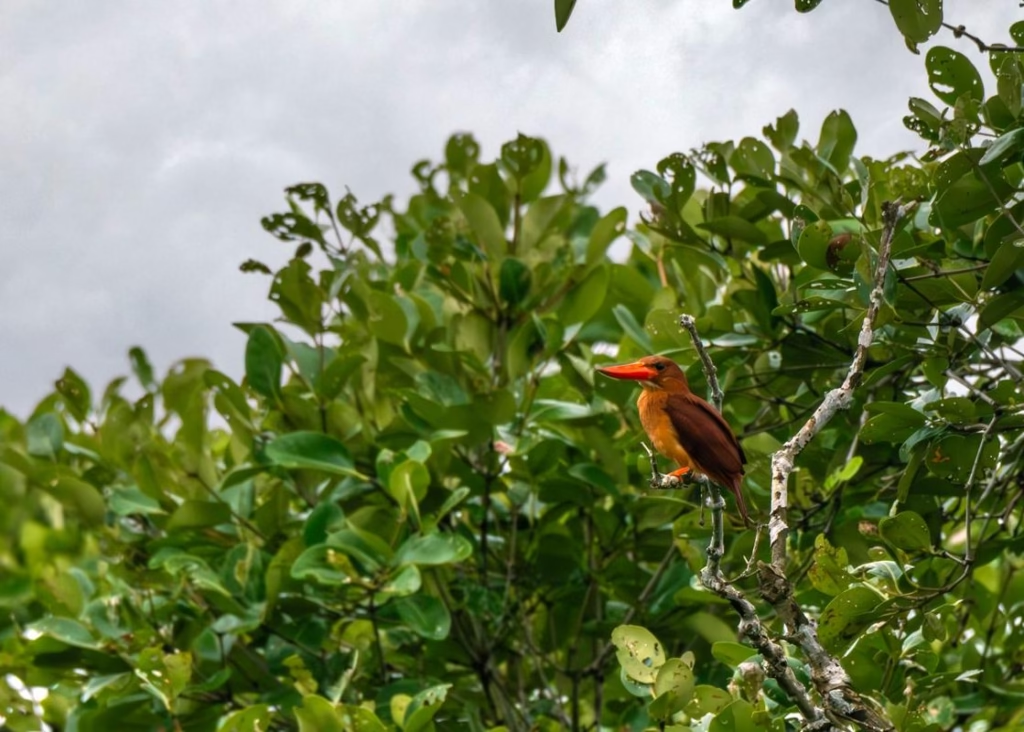
Instead of a tiger, we saw a super cool bird: the Ruddy Kingfisher Sundarbans!
Kingfishers are amazing birds known for their bright colours and quick dives for fish. The Ruddy Kingfisher is extra special. It’s like a fiery orange and red jewel, with a bright red beak that looks like a little dagger. They love living in places like the Sundarbans, where there are lots of mangrove trees and shallow water.
This kingfisher is also called Halcyon coromanda by scientists. It loves to eat crabs, fish, and big insects. Its red beak is just perfect for catching food in the muddy waters here.
We saw it perched on a mossy branch, surrounded by green leaves. It was so vibrant and still, watching for its next meal. It was such a quick and special moment!
Tips for Your Own Bird Adventures
- Be Patient: Sometimes you have to wait quietly for birds to appear.
- Look Closely: Birds can hide well! Scan branches and water edges.
- Enjoy Everything: Even if you don’t see what you expect, other cool things might pop up!
So, even though we didn’t see a tiger, seeing the elusive Ruddy Kingfisher was an incredible surprise. It taught me that every trip has its own wonderful secrets!
Have you ever seen a kingfisher or another special bird? Tell me in the comments below!
Hello fellow bird enthusiasts and nature lovers,
August 8th, 2026. The Sundarbans. A destination often synonymous with its striped apex predator, the Royal Bengal Tiger. My brother, Souranil, fresh from Hyderabad for car paperwork in Kolkata, saw an opportunity for a quick weekend escape. And I, ever the dutiful elder sibling (and chronic nap-taker), joined him. With the capable assistance of Amit Hazra, our boat was booked, and our two-day exploration of the world’s largest mangrove forest commenced.
Souranil, eyes wide with anticipation, spent countless hours scanning the dense foliage for any hint of movement. Me? I confess, a significant portion of my journey was spent indulging in the gentle rock of the boat, punctuated by the occasional blink of an eye. Yet, it was in this contrasting approach to wildlife observation that we stumbled upon an extraordinary moment – not a tiger, but an unforgettable encounter with the elusive Ruddy Kingfisher Sundarbans.
A Glimpse of Fiery Splendor: The Ruddy Kingfisher in Sundarbans
Kingfishers, as a family, are a testament to avian artistry and predatory prowess. From the diminutive Common Kingfisher to the majestic Stork-billed, their diversity is astonishing. Our star of this particular tale belongs to the genus Halcyon, specifically Halcyon coromanda, the Ruddy Kingfisher. This species stands out with its uniform rufous to chestnut-brown body plumage, contrasting sharply with its bright orange-red, dagger-like bill. Unlike many of its cousins, it lacks the prominent blue or white markings, making its fiery appearance all the more striking.
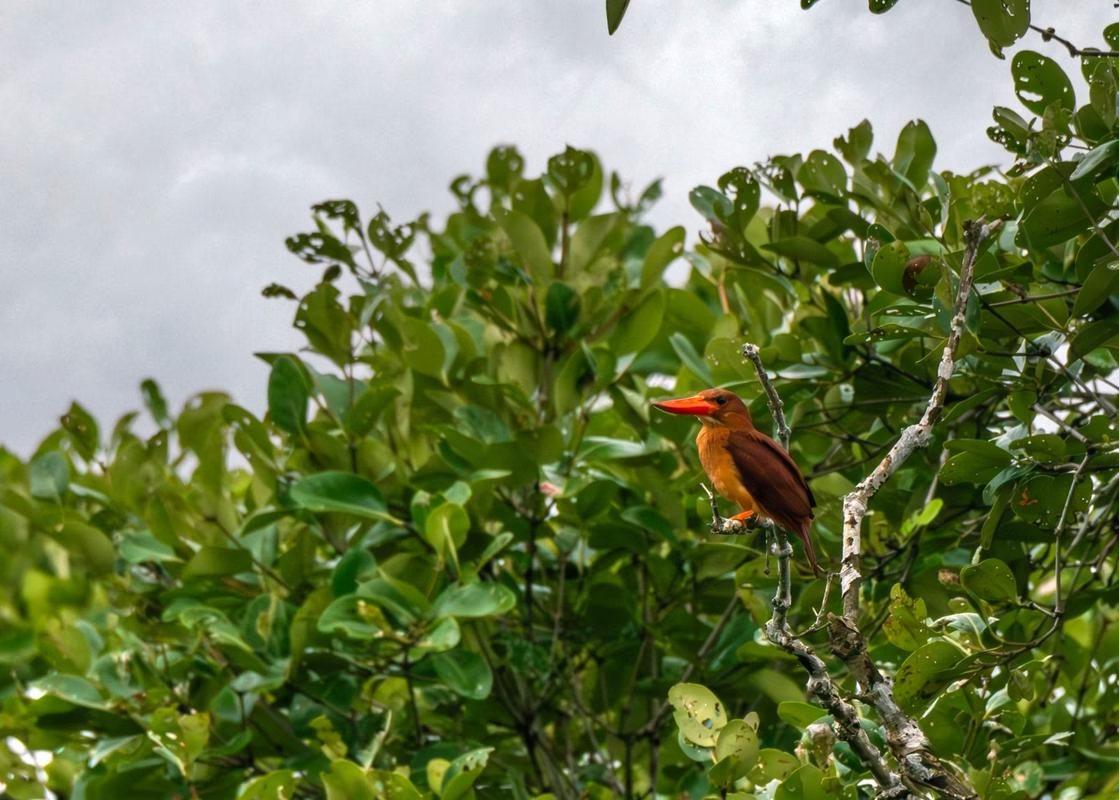
Caption: A vibrant Ruddy Kingfisher perches attentively on a sturdy, moss-dappled branch amidst the dense green foliage of a mangrove tree in Sundarbans.

Our sighting was brief but impactful. There, amidst the dense green canopy of a mangrove tree, set against a bright, cloudy sky, a vibrant Ruddy Kingfisher perched attentively on a moss-dappled branch. Its rich rufous-orange plumage was a startling splash of color in the muted greens and browns of the Sundarbans. It was a fleeting, almost surreal vision that perfectly encapsulated the hidden beauty of this unique ecosystem.
Understanding the Ruddy Kingfisher: Beyond the Visual
These magnificent birds, often found in coastal and mangrove habitats like the Sundarbans, primarily prey on crabs, fish, and large insects. Its bright red bill is perfectly adapted for catching prey in the shallow waters and mudflats. While its call isn’t as commonly heard as some other kingfisher species, it’s typically described as a series of clear, sharp whistles. Resources like Xeno-Canto can provide excellent recordings of the Ruddy Kingfisher sound, allowing you to identify it even when it’s hidden from view. For those interested in tracking its distribution, platforms like eBird show its range extending across parts of India (including the Sundarbans), Southeast Asia, and even into Japan (especially Okinawa) and the Philippines, making the Ruddy Kingfisher in India a significant part of its broader Asian presence.
Photographing the Elusive Ruddy Kingfisher
Capturing a bird as quick and shy as the Ruddy Kingfisher requires patience and preparation. Here are a few tips:
- Light is Key: Mangrove forests can be challenging. Look for spots where the light penetrates, or be ready for high ISO settings.
- Long Lens: A minimum of 400mm is advisable, preferably with image stabilization.
- Stable Platform: If shooting from a boat, brace yourself or use a beanbag for stability.
- Anticipate: Learn common perching spots or hunting patterns. Look for dense foliage near water.
- Be Silent: Kingfishers are easily spooked. Minimize noise and movement.
Challenges, Lessons, and the Unexpected Joy
My ‘failure’ to remain actively vigilant for tigers taught me a valuable lesson: every nature excursion holds its own magic, often found in the most unexpected places. While Souranil’s quest for the stripes went unfulfilled, my more relaxed approach allowed me to appreciate the subtle wonders. The Ruddy Kingfisher Sundarbans encounter became the highlight, a reminder that success isn’t always about ticking off the ‘big’ targets but about embracing the gifts nature bestows.
Your Ruddy Kingfisher Questions Answered
- How can I identify a Ruddy Kingfisher? Look for its uniform rufous body, bright orange-red dagger-like bill, and absence of blue or white markings. The Ruddy Kingfisher scientific name Halcyon coromanda is also a key identifier.
- Where is the best place to see Ruddy Kingfishers in India? Coastal and mangrove habitats like the Sundarbans are prime locations. Its range also extends to countries like Singapore and the Philippines.
- What is the typical Ruddy Kingfisher size? It’s a medium-sized kingfisher, generally around 23-25 cm (9-10 inches) in length.
Conclusion: A Fiery Jewel in the Mangroves
Our Sundarbans adventure of August 2026 may not have yielded the majestic tiger, but it offered something equally captivating: the breathtaking beauty of the Ruddy Kingfisher. It was a powerful reminder that the natural world is full of wonders, both grand and minute. Don’t underestimate the unexpected joys a trip can bring.
What unexpected bird sightings have you had? Share your stories and tips in the comments below! And if you’re planning your own Sundarbans trip, remember to reach out to experienced local guides like Amit Hazra for an unforgettable experience.
Stay wild, stay curious!


- Chasing the Flame: My Ruddy Kingfisher Sundarbans Adventure - August 11, 2026
- My Pakke Wreathed Hornbill Adventure: Majestic Birds & Conservation Heroes - March 18, 2026
- Bhigwan Adventure: Spotting Bengal Fox and Majestic Predatory Birds - February 2, 2026