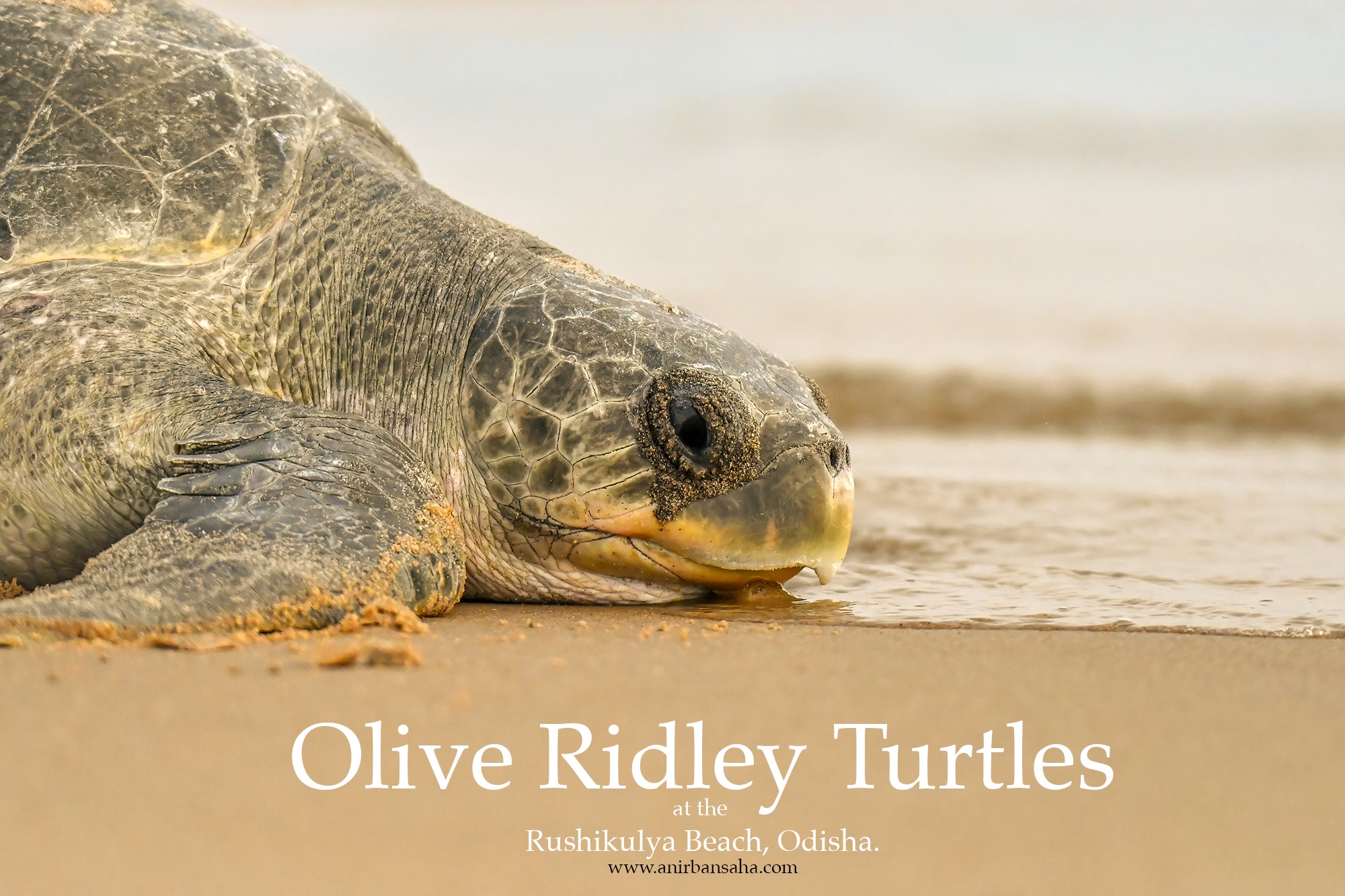
My brother wondered if I would want to join him to photograph the Olive Ridley Turtles, and I started doing what I probably do best – start reading about them online. The more I read, the more fascinated I got, and the more I fell in love with the Olive Ridley Turtles. In this blog post, I would outline my 3 distinctly different trips to the Rushikulya Beach, in Odisha, and paste some photographs.
To the uninitiated, like yours truly, it might be a little tricky to differentiate between the Turtle and the Tortoise, specially because in a lot of Indian languages, we have one word for them; in Bangla, the popular term is “কচ্ছপ (Kocchop)”. The easiest differentiation is the set of legs they do! The Tortoises have legs for walking, while the Turtles have flippers.
.
About Turtles and Tortoises
The Tortoises mostly live on the land, and thus have legs. The Turtles live in the water, i.e. the rivers or the oceans, and have flippers. There are other differences, specially related to the shape of their dome, and their diet. The Tortoises are mostly vegetarian, while the Turtles eat fish, jelly fish, or some vegetation. The Turtles probably do not live as long as the Tortoises.
The Olive Ridley Turtles are Sea Turtles, likely the second smallest in size, and they live most of their lives in the sea eating, probably pooping, definitely mating, but not really building bonds and socialising much.
About Sea Turtles
There are 7 species of Sea Turtles in the world, the largest being the Leatherback Sea Turtle, and the smallest being Kemp’s Ridley Turtle. They are there on earth for around 110 – 150 million years! The males have longer tails, and completely unrelated to their tails – they live mostly in the water, and do not come to the beaches. The females mature and come back to the beach of their birth when they have to lay eggs.
Operation Olivia
Operation Olivia is a conservation mission by the Indian Coast Guard to safeguard the vulnerable Olive Ridley Turtles, during their breeding and nesting season along the Odisha coast. It was started during the 1980’s and has become one of the most successful marine conservation efforts in India. They do surveillance, ban fishing in the region, check boats to ensure they use Turtle Excluder Devices, and run awareness campaigns within local fishing communities to promote sustainable practises and Turtle safety.
Here’s something fascinating about them: Every year, well almost*, the female Olive Ridley Turtles come to the sea beaches and lay eggs, not in tens but in hundred thousands. In 2025, over 6,98,000 turtles came to the beaches in Odisha to lay eggs. This phenomenon is common among the sea turtles and is called the Arribada. It is a Spanish word which means “arrival” or “arrival by the sea”, and to know more about it, you need to click on one of the hidden boxes.
Arribada, why?
While Indigenous communities might have observed the mass nesting of the Sea Turtles, it was first documented with videos in 1947 by Andrés Herrera, at the Rancho Nuevo in Mexico. Herrera was not originally a sea turtle scientist — he was a pilot and outdoors enthusiast. After hearing local stories about huge turtle gatherings, he began flying reconnaissance trips along the Mexican coast. On June 18, 1947, he spotted the mass nesting event, landed his plane, and filmed it. Well, local community folks who spoke Spanish started calling it the Arribadas.
This is what happens, and no one exactly knows why: The baby Olive Ridley Turtles hatch from the eggs, start walking towards the sea and swim away. If they are males, they live in the water and swim all their lives (well, almost always)*, and if it is a female Olive Ridley Turtle, then they mate near the shore of their birth and lay eggs on the shore where they were born almost two decades earlier. One might wonder how they remember the exact location after decades! Well there are popular hypothesises around this, but no one can say for sure how.
* - well almost always
I used the term “almost always” because it is not a rule. In 2024, we did not witness Arribada or the Turtles mass nesting in Rushikulya Beach. And regarding male turtles always swimming their entire lives – there have been some reports from Hawaii, and the Galapagos where male sea turtles were observed resting and sun basking for a brief period of time on the beach; because why not?
I can go on, and on, with this.. Let’s talk about my recent 3 trips to the Rushikulya sea beach, along with my brother Souranil, and guided by Bipro (Behera).
Indian Arribada, and our guide.
In 1974, H. R. Bustard documented the Arribada in the Indian state of Odisha; Gahirmatha to be more specific. He realised this is the largest sea turtle rookery in the world!
After 1974, other scientists were energised to explore more; one of them was Bivas Pandav. Legends mention that Damru Behera, a local fisherman with practical ecological knowledge, informed and assisted Bivas Pandav about the turtles in the Rushikulya beach in 1992. That opened an entire new chapter in this exploration. Today Damru’s son, Bipro, works with research institutes and aides them in conservation efforts. He is pretty famous in the relevant circle, quirky in his own ways, and helps me a lot by giving me keywords to search, and key information for follow!
But why 'Ridley'?
I wondered why this species is named “Ridley”! Turns out, not many people are sure about this. The hypothesis is that it is derived from the names the fishermen or early naturalists had given. Olive Ridley Turtles were discovered by German naturalist Johann Friedrich von Eschscholtz in 1829. He named the turtle, “Chelonia olivacea” with a special focus on the olive coloured shell. Around half a century later, Kemp’s Ridley Turtles were discovered and named after Richard Kemp, who may have been a fisherman, a businessman, or a naturalist, or all of them together. “Ridley” is a term that just exists without a reason. One hypothesis suggests that it comes from the word “riddle”. For a long period of time, fishermen in Florida complained about an evil-natured Turtle, whom they did not know much about. The fishermen did not know where they nest, or live. There were folklores and that did not really help their image. It was only in 1947 , that Andres Herrera filmed a “mass nesting” event. Conservationist Archie Carr in his 1956 book “The Windward Road” recounts his travels through the Caribbean to solve the “riddle of the Ridleys”.
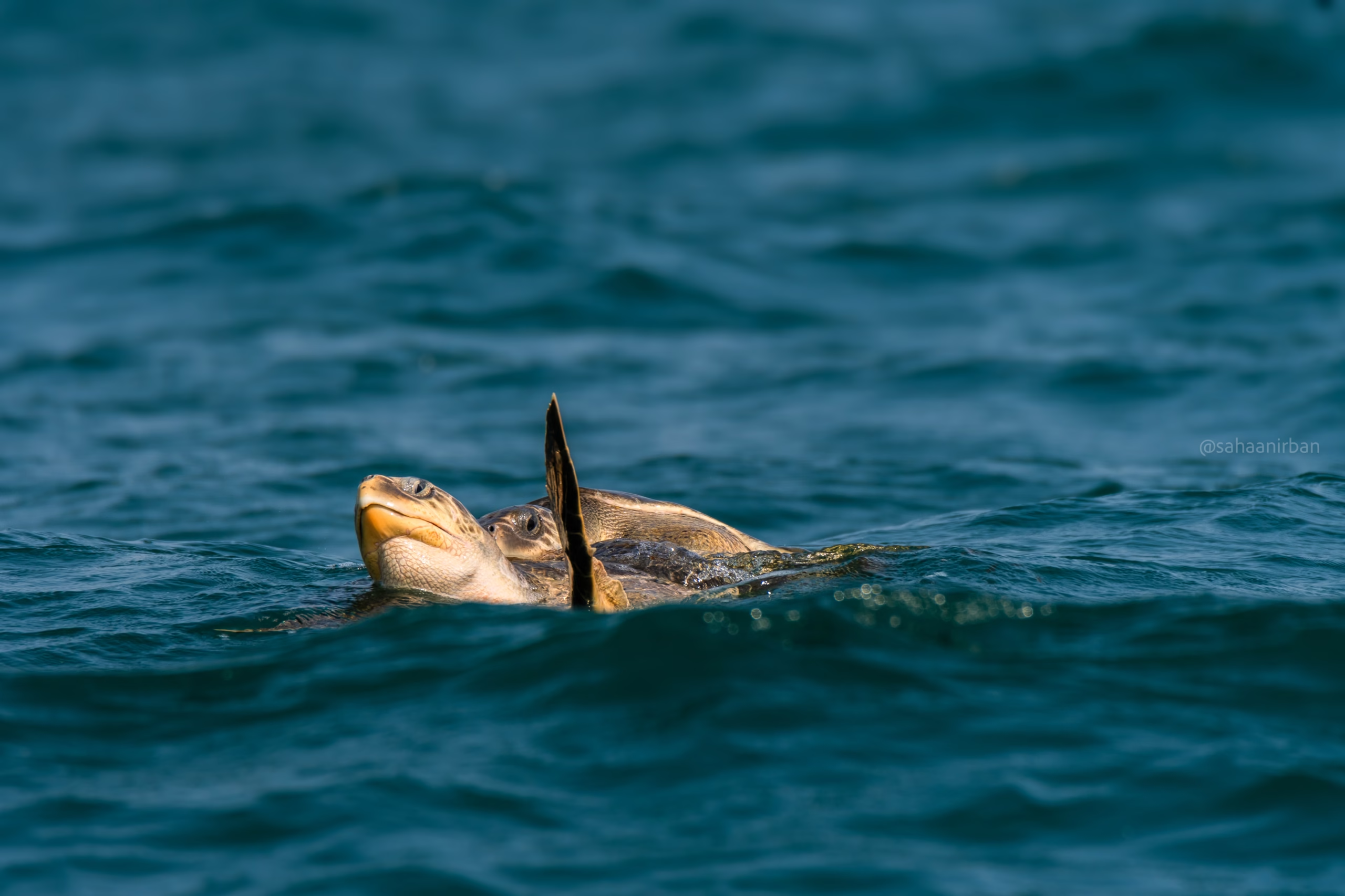
2024: A boat ride near Rushikulya beach, and photographing the Turtles mating.
A intimate moment captured: Two Olive Ridley sea turtles at the ocean’s surface, mating near the coastlines of the Rushikulya Beach in Odisha.
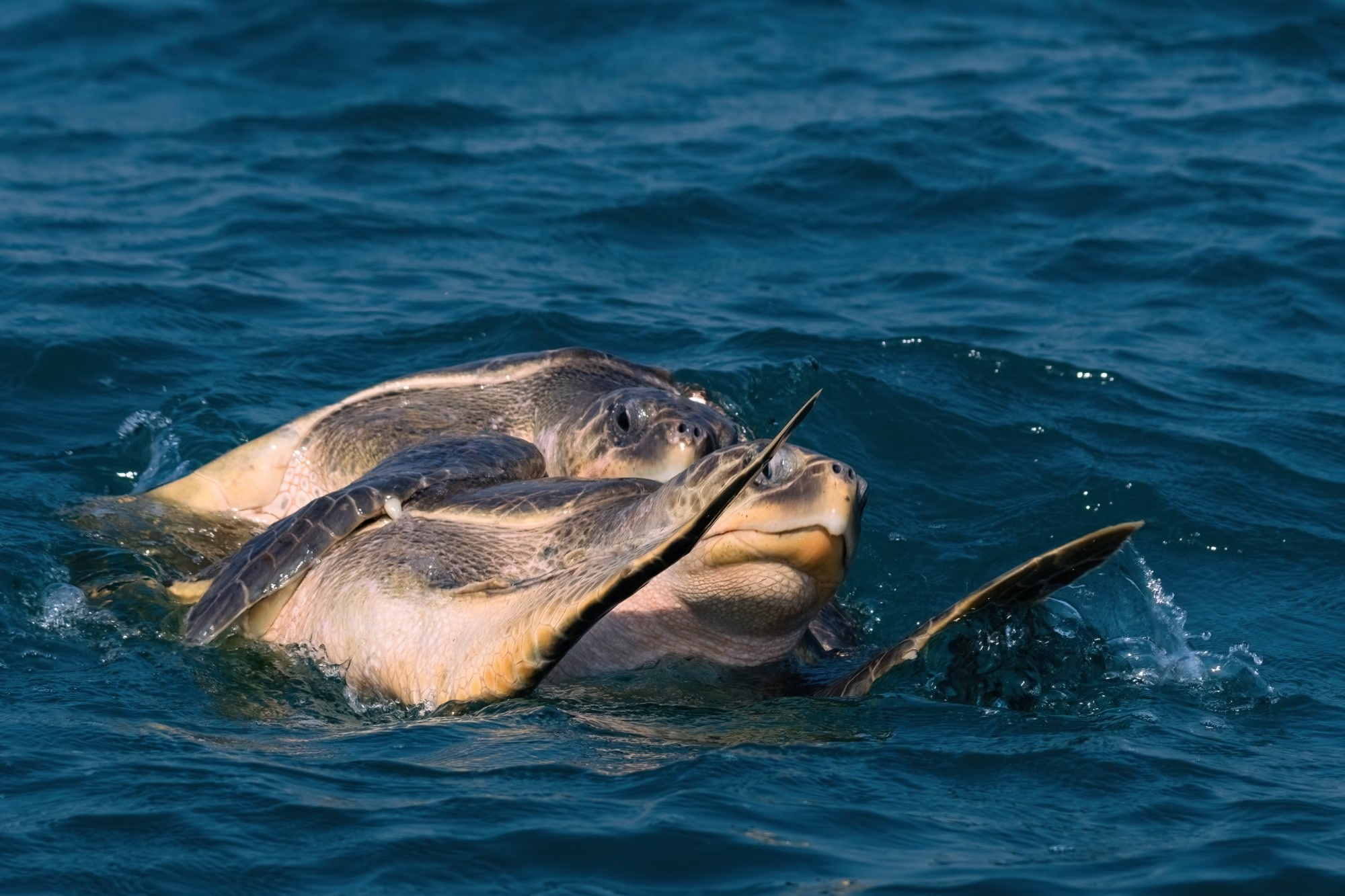
In 2024, Souranil (my brother) wanted to explore the region before visiting the place during the mass nesting. His friend, Rohit, and I tagged along. When we were suggested a boat ride, we said, “Why not?”. Well, that was one bumpy boat ride and I might not recommend it for the faint hearted. The waves took the boat up, and then it came crashing down. We saw some turtles in pairs, mating. Turtle porn, anyone?
A intimate moment in the vast blue, two Olive Ridley sea turtles engaging in mating rituals at sea, a crucial event for the continuation of their species. Isn’t it?
In case you noticed the claw on the Flipper
Male Olive Ridley Turtles have enlarged, strongly curved claws on their front flippers that play a crucial role during mating. While mating, they hook it into the shell of the female, so that the female does not slip away. It also helps them have a grip, and stabilise the position during mating.
There are a couple of more things fascinating about the Olive Ridley Turtles mating, but I am not sure if this is the space to talk about that.
2025: Arribadas at the Rushikulya Beach, and Turtles laying eggs.
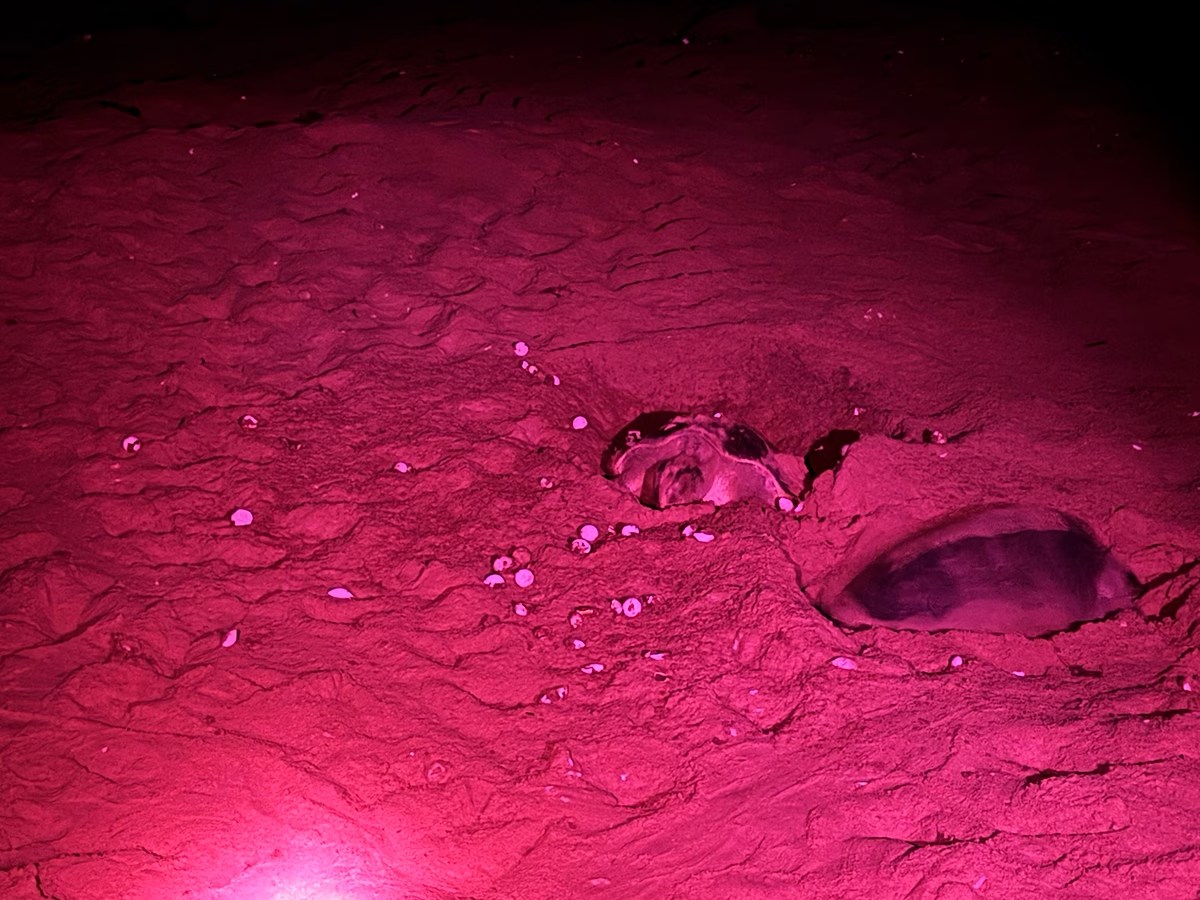
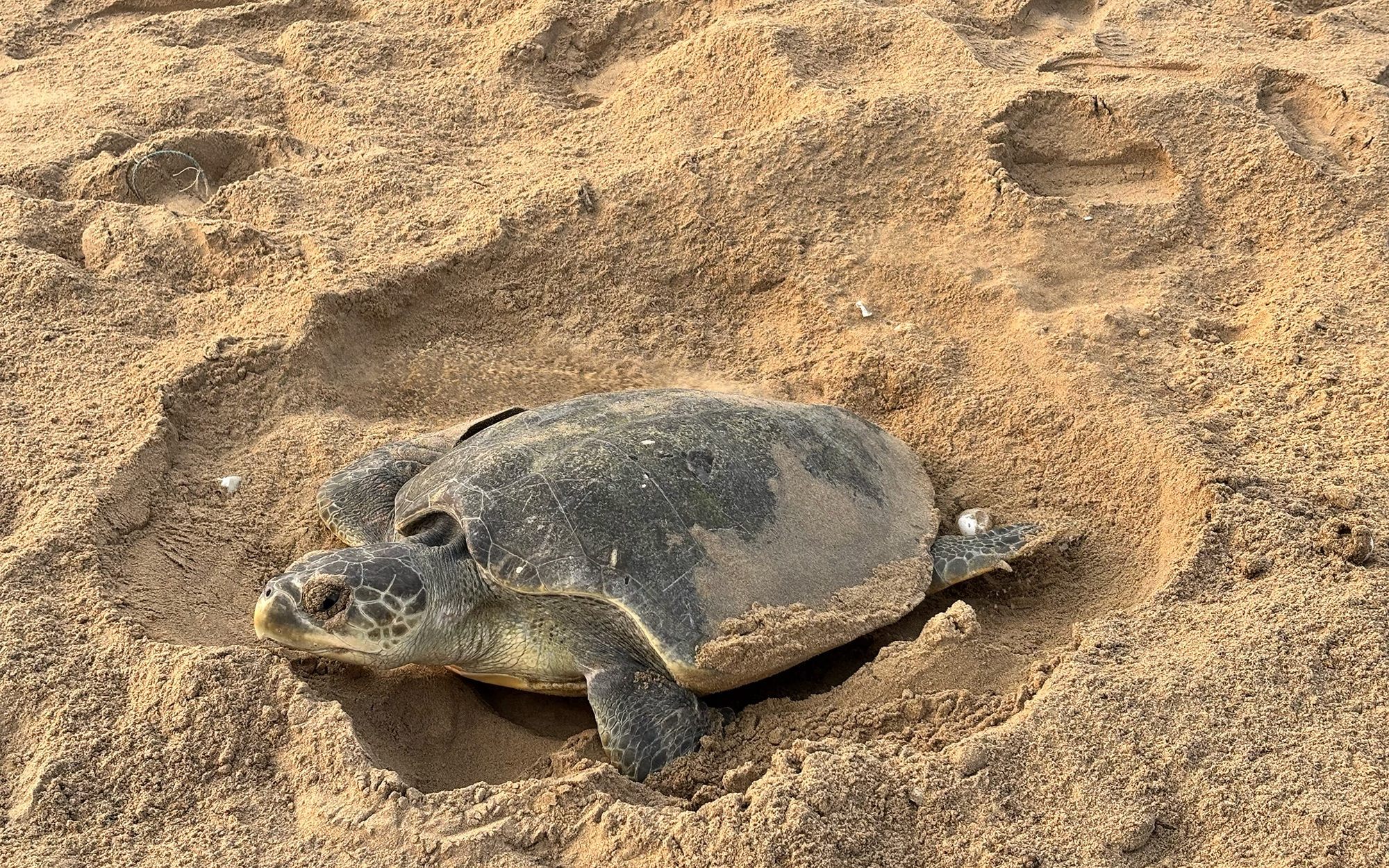
Mobile shot: Two Olive Ridley Turtles laying eggs before sun rise on sand beach of Rushikulya in Odisha.
Souranil drove the car, while I sat beside him often dozing off. We reached the Rushikulya beach an hour before the sun rise. We were prepared with red-light, and sufficient precautionary measures. I photographed mainly with my mobile phone because for some reason, I had my birding lens mounted on my camera. Let me paste some photographs and then speak about them very briefly.
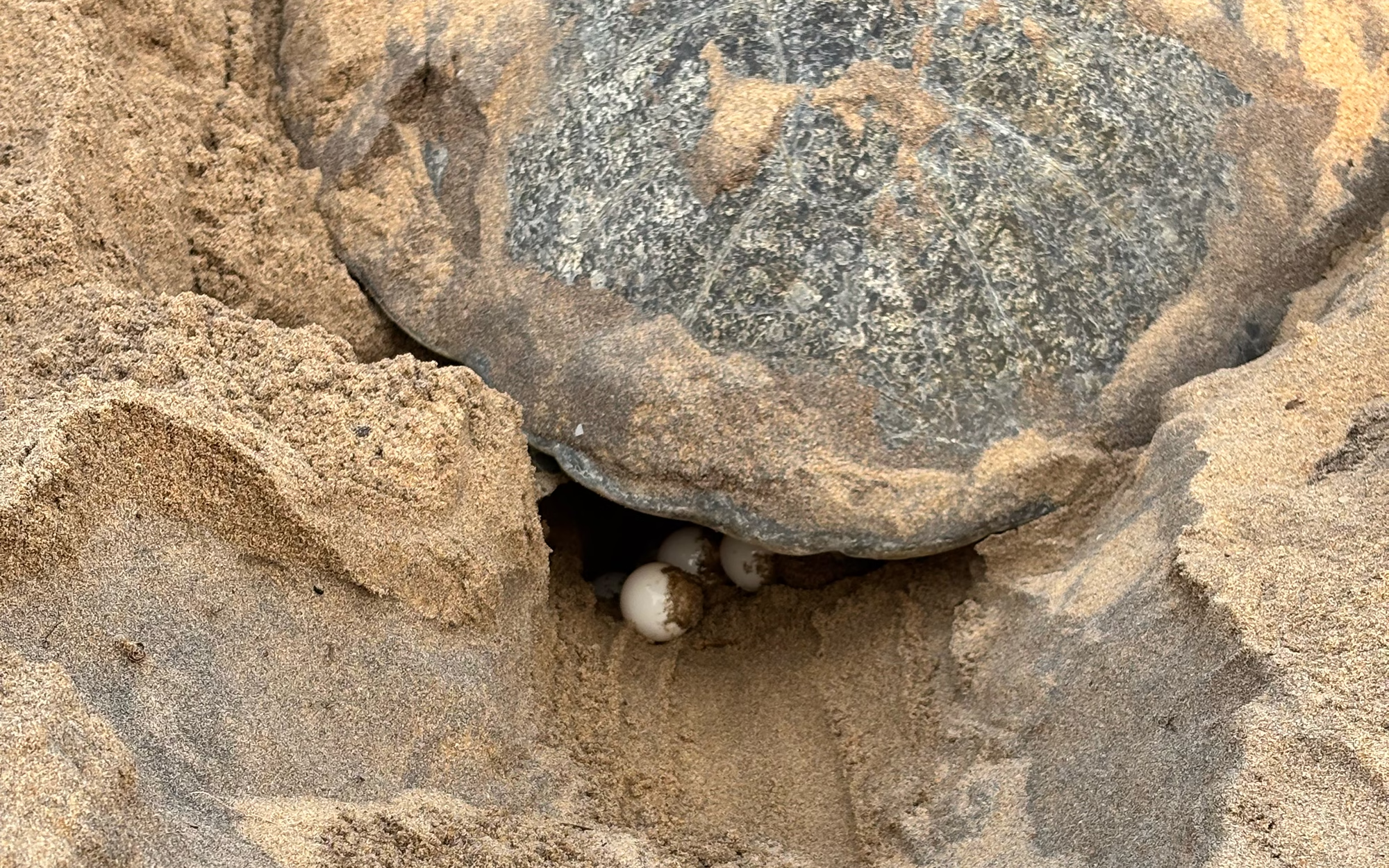
A Olive Ridley Turtle (Lepidochelys olivacea) meticulously works to secure its nest on the golden sands of Rushikulya Beach. This vital act of nesting, observed on March 1, 2025, is crucial for the survival of this endangered species.A tender moment in nature: Olive Ridley Turtle diligently lays its clutch of eggs in the soft sand, ensuring the next generation of ocean life.
The first photograph was shot before the sun rise. If we notice it a little deeply, you would figure that most Turtles come during the night and before the sun rise to lay their eggs. It is chaotic, one could dig up someone else’s nest and lay more eggs there. The space is limited and has to be shared among almost 7 lakh turtles! Crushed eggs are a common scene!
The second photograph shows you how they do it: They crawl up to a place on the sand, slightly dig up the sand with their flippers, and in the dug hole – lay their eggs; around 150 – 200 of them. In the third photograph, you actually see the eggs coming out of the Turtle. For the video, maybe wait for my reel?
Gender Reveal and Sand!
The sex of a baby turtle isn’t determined at conception. It depends on the heat of the sand! Warmer the sand, more likely it is to be a female Olive Ridley Turtle, and vice versa, i.e. cooler the sand, it is more likely to be a male. Thus, the global warming, the push is towards fewer males, skewing the gender balance to an extreme.If this trend continues, there won’t be enough males to fertilize the eggs of the next generation. This leads to a “population crash” because even if you have thousands of females, they cannot reproduce without males.
The Olive Ridley Turtles during this phase of mass nesting faces a separate set of challenges, for example: they are caught in fishing nets, poached for their meat, etc; even their eggs are known to be delicious to humans. There are strict laws implemented but there are still cases where things fail.
When we visited, we observed a general lack of civic sense, which includes but not limited to throwing plastic bottles on the beach by the local fishermen. There were visitors who were there neither for research or documentation purposes. I photographed them touching the eggs, their shells, and posing with the turtles for their reels. I also have a photograph of a full grown Turtle with a fishing hook stuck in her eye.
2026: Baby Hatchlings walking towards the sea..
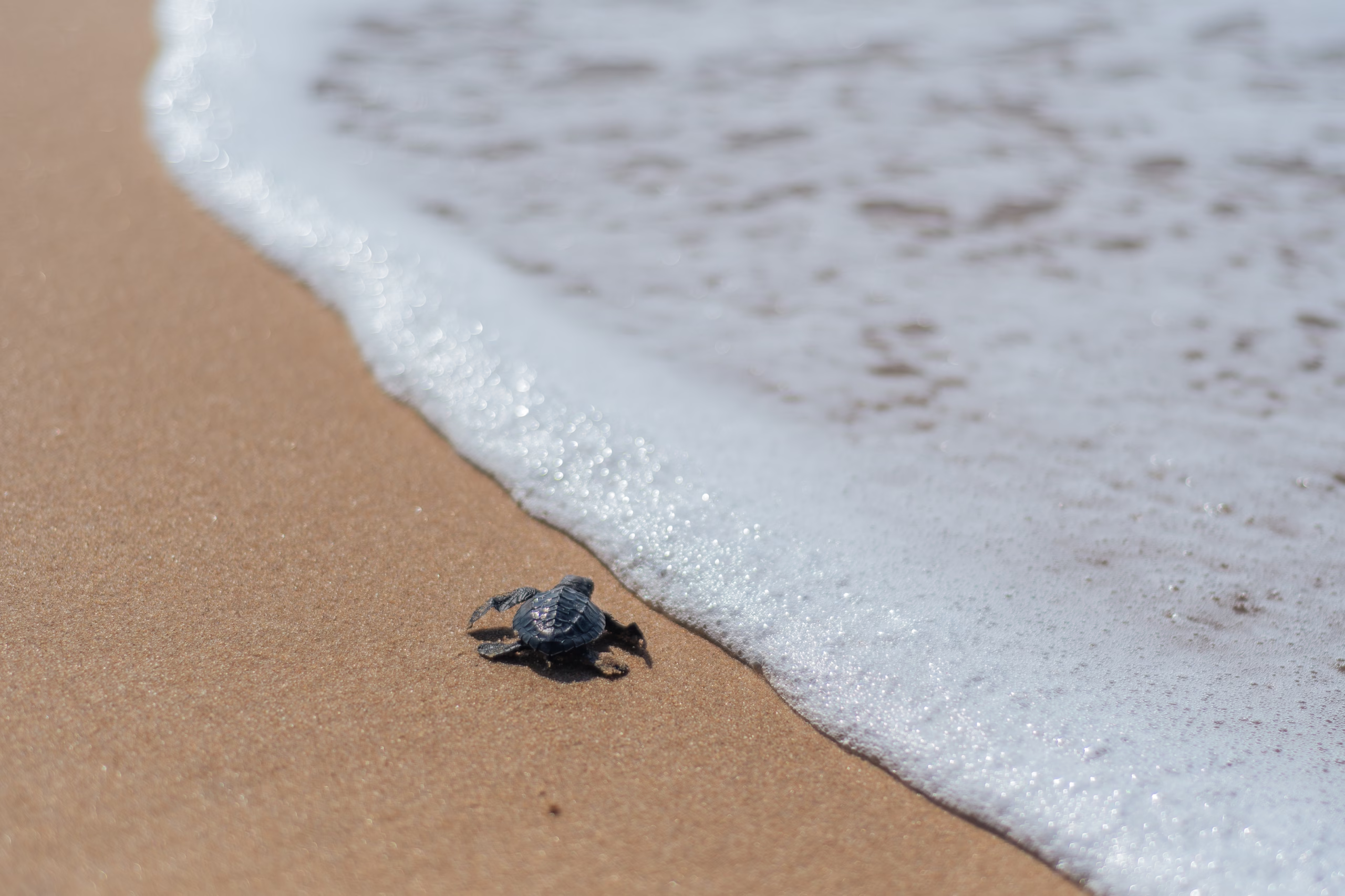
A momentous journey begins! This determined Olive Ridley turtle hatchling makes its first brave trek from the nest to the vast ocean, a poignant reminder of nature’s cycles and the incredible fight for survival.
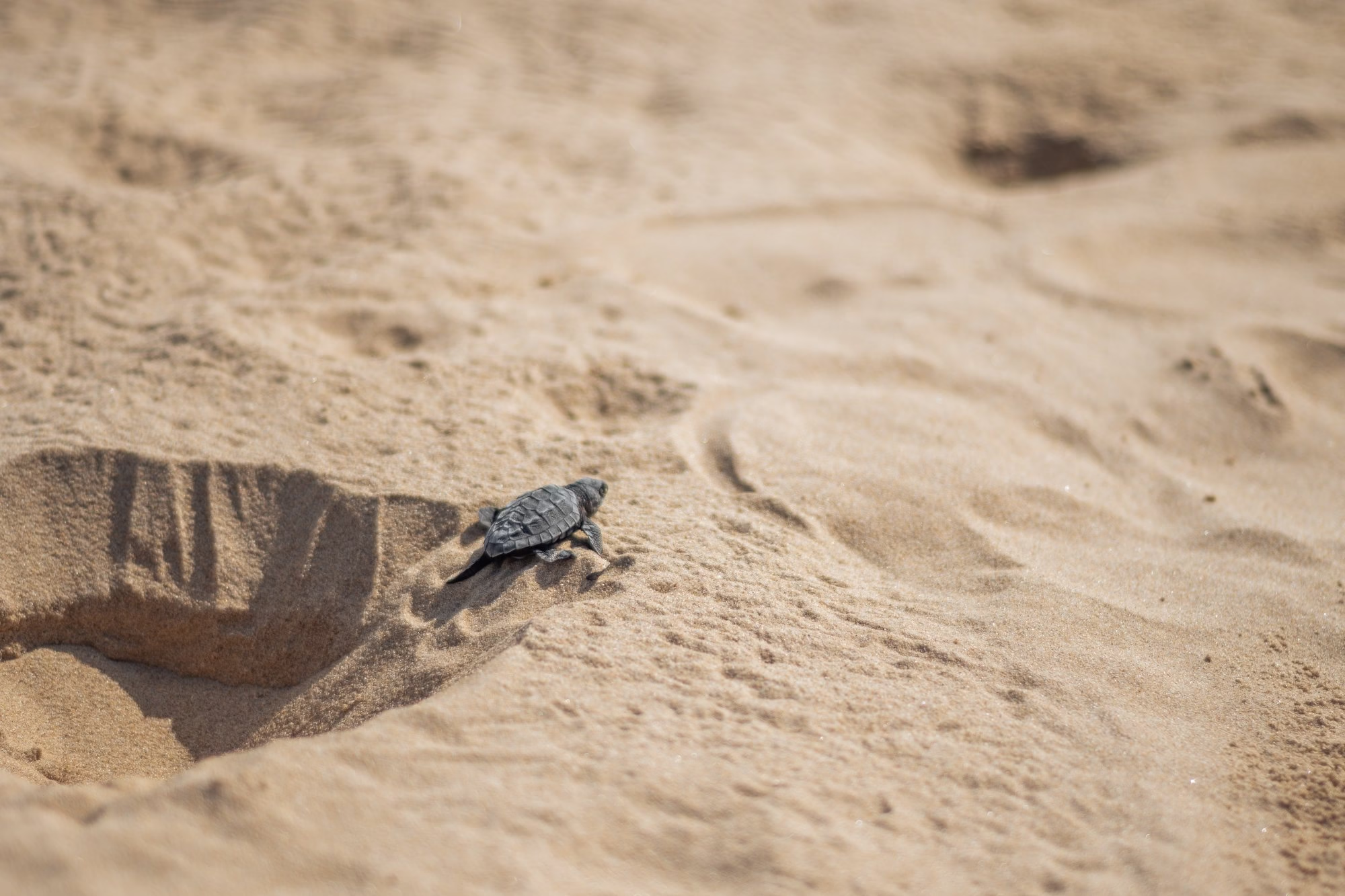
This year, Bipro texted me on a Monday morning mentioning that baby turtles are hatching out of their eggs. Well, I had to wait till the Friday. I hired a cab and drove to Rushikulya without a single break, to see a few Olive Ridley Turtle babies walk towards the sea. I saw one coming out of the hole, and the rest hatched in the hatchery. Bipro, his colleague, and I had a lovely walk along the beach. I clicked a couple of photographs only. Next time when I go there, I would be better prepared.
Baby Turtles and the Light problem.
The newly born baby Olive Ridley Turtles use the reflection of the moon on the water to find the sea. When coastal resorts, ports, or streetlights are too bright, the babies crawl away from the ocean and toward the land, where they die of exhaustion, get run over by vehicles, or are eaten by dogs and crows.
An Olive Ridley turtle hatchling embarks on its incredible first journey across the sands of Rushikulya Beach, observed on 2026-05-10, making its way towards the ocean.
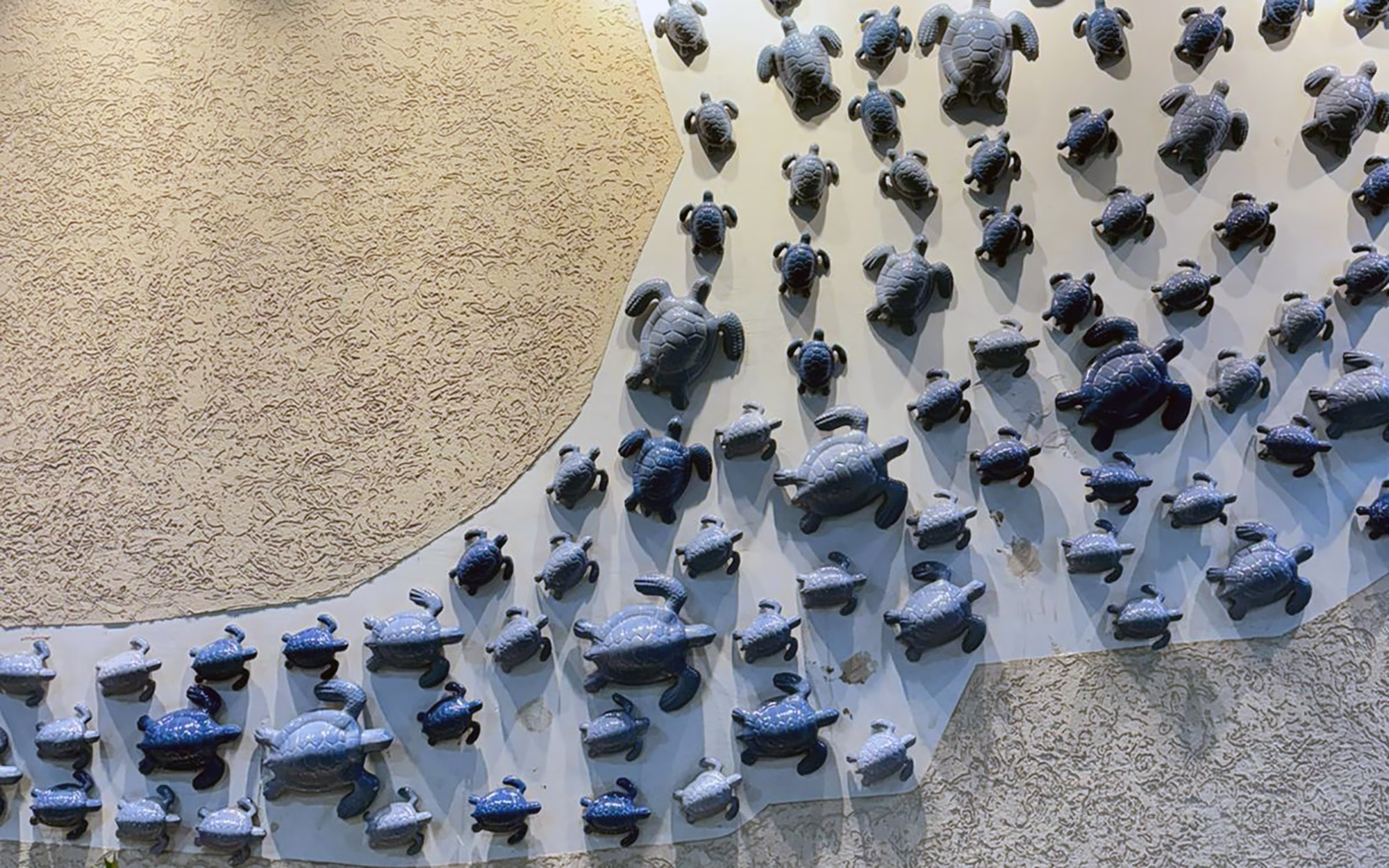
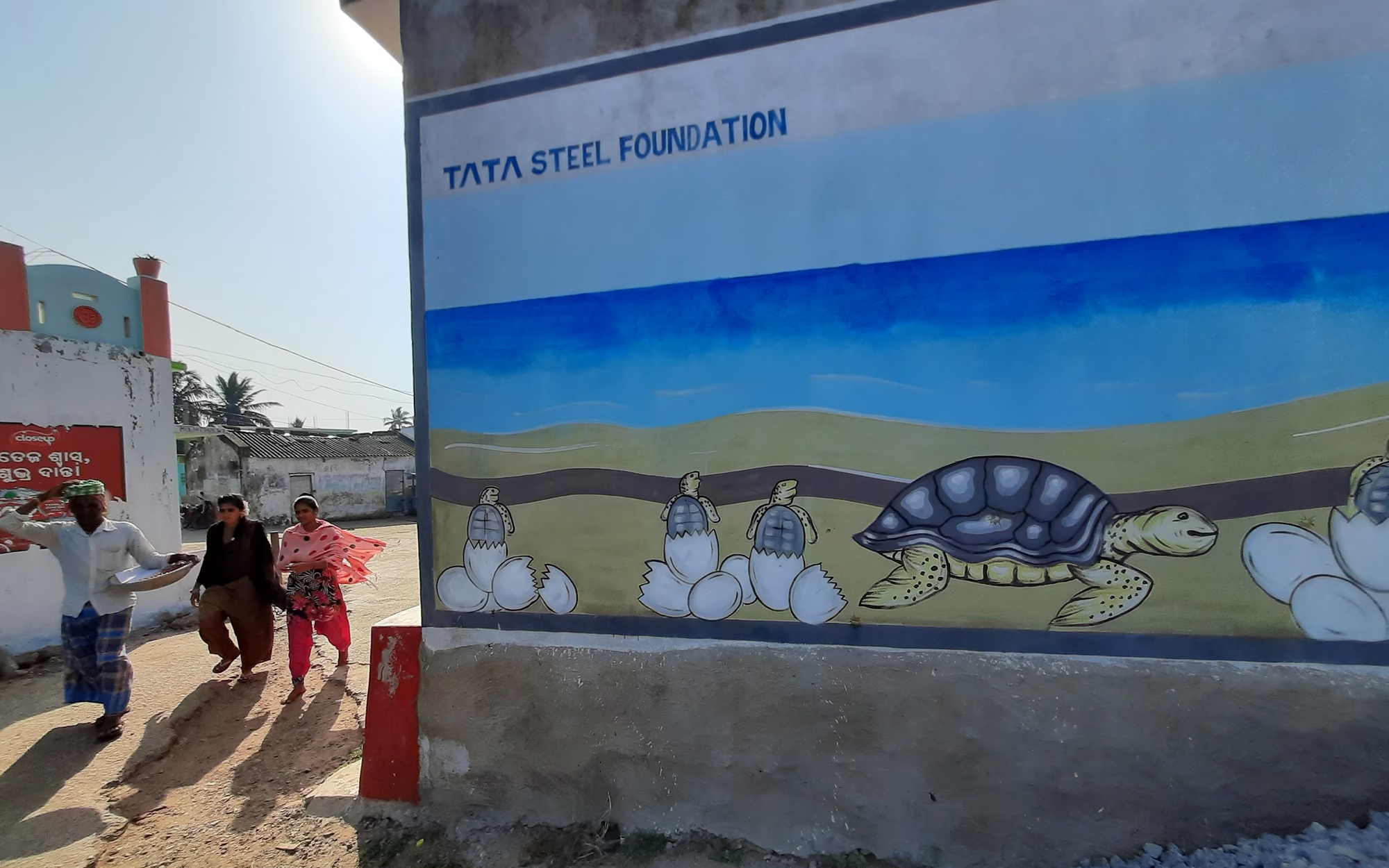
In this blog post, I am not stressing a lot on the kind of challenges that they face, and the kind of conservation efforts that are already on. If you are interested, you would find a LOT of resources online to guide you with that. But I would take this opportunity to mention how the local people and the Government has taken initiatives to raise awareness of the Turtles to the point of celebrating them. In the village you would find wall paintings talking about the Arribada, and even when you try to leave the city of Bhubaneshwar, you’d get to see this at the bus station. Such efforts put together by the people, the corporate, the Government, is very encouraging specially for a blogger like me!
Art Installation depicting the Arribada, at the BSA Bus Terminal in Bhubaneshwar. Wall paintings to raise awareness about the mass nesting in the villages.
Let me end this long post pretty abruptly! Please let me know what you think about this blog post and please wait for the Instagram reel to be uploaded. Please ask me questions, and God bless you.
I am probably an explorer, with a keen interest in contributing to wildlife conservation. You could follow me on Instagram (@sahaanirban) for more photographs.