


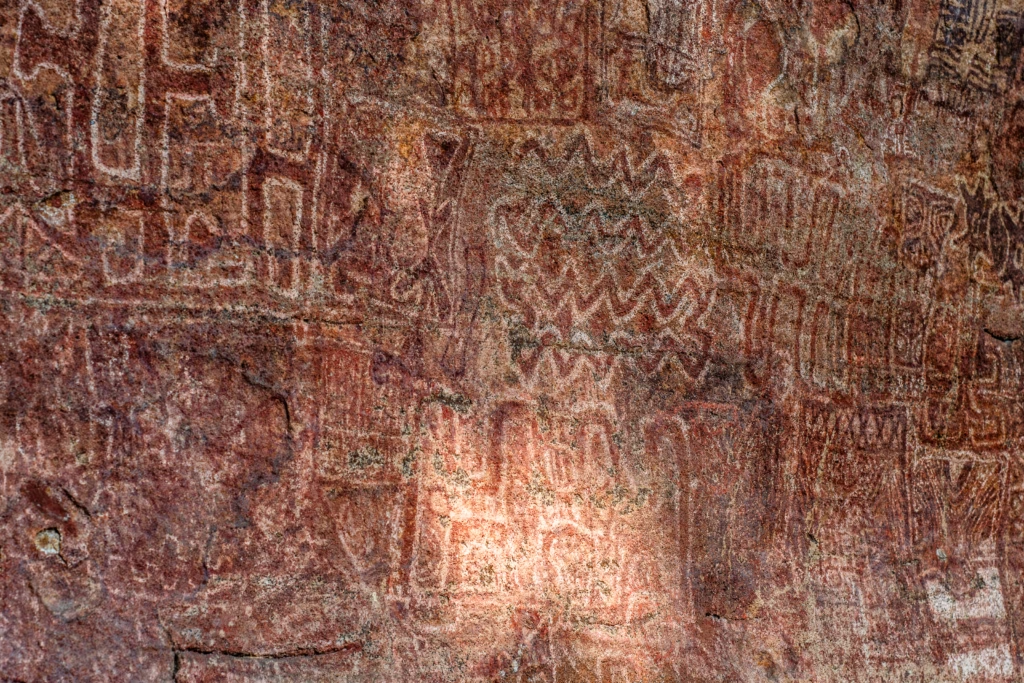
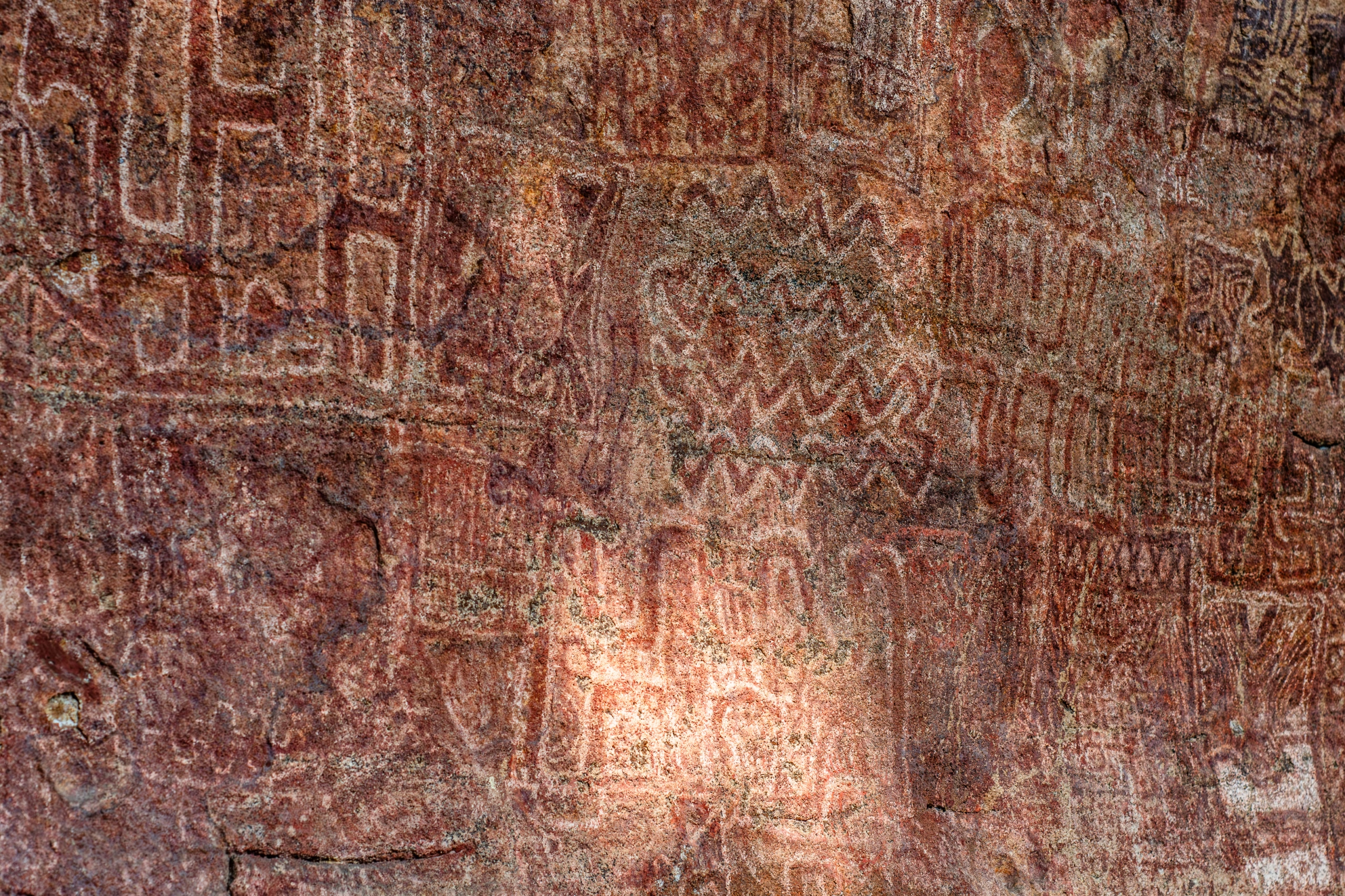
Imagine this: I’m deep in the hilly areas near Hazaribagh, and I’ve just stumbled upon a massive sandstone wall, painted with scenes from a world long past. Standing there, gazing at the Isko Rock Shelter, it felt like stepping into a time machine, where early humans captured the wild heart of their landscape. This place, a hidden gem, tells stories not just of people, but of an incredible ancient ecosystem. It was an experience that truly transported me to the pre-historic time!

The Rhino Petroglyph: A Lost Landscape
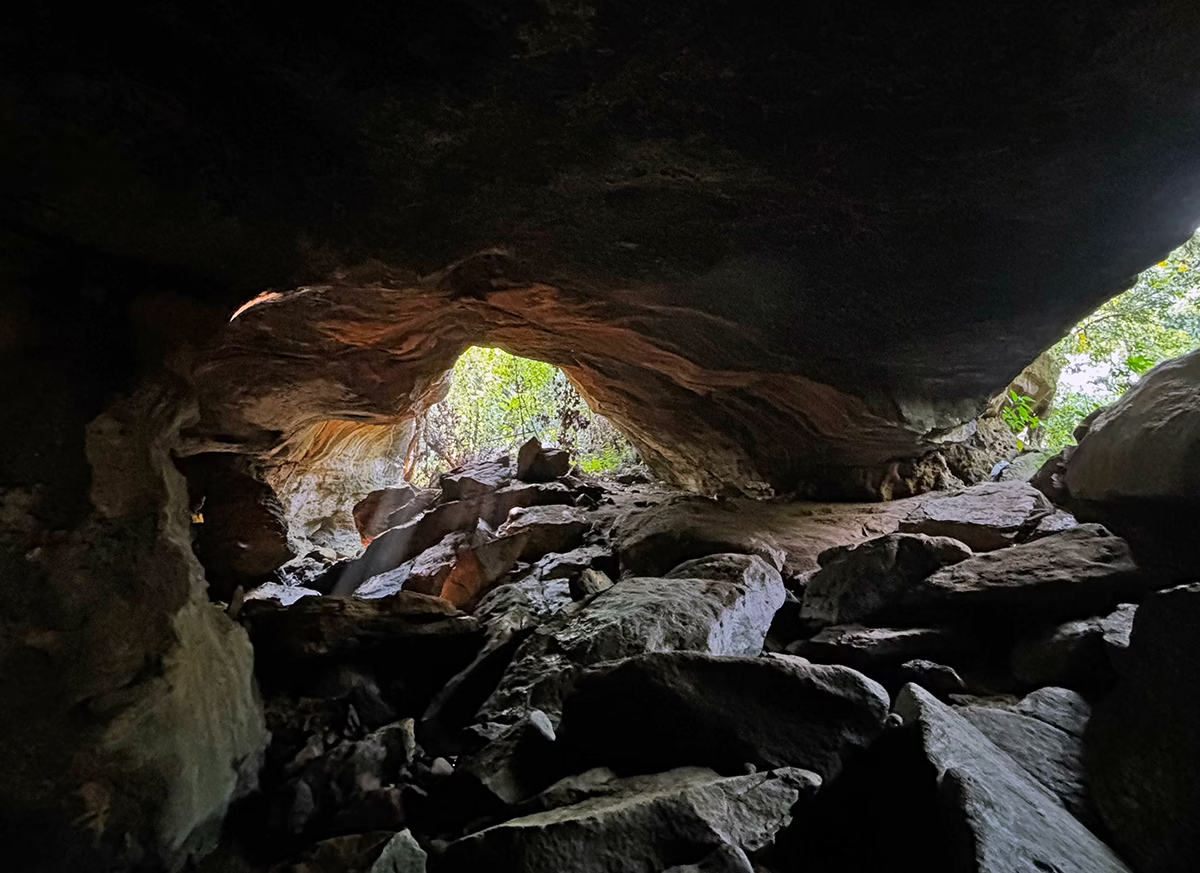
One of the most mind-blowing things for me was the petroglyph (rock carving) of a Greater One-horned Rhinoceros (Rhinoceros unicornis) at the Isko caves. Can you believe it? A rhino, right here in Jharkhand! This carving suggests that 10,000 to 12,000 years ago, this North Karanpura valley was a lush, swampy grassland – a perfect home for such megafauna during the Mesolithic period. Sadly, shifting climatic conditions, drying river basins, and human expansion drove these magnificent creatures northward over millennia, a stark reminder of how much our world has changed.

Rare Wildlife Depictions
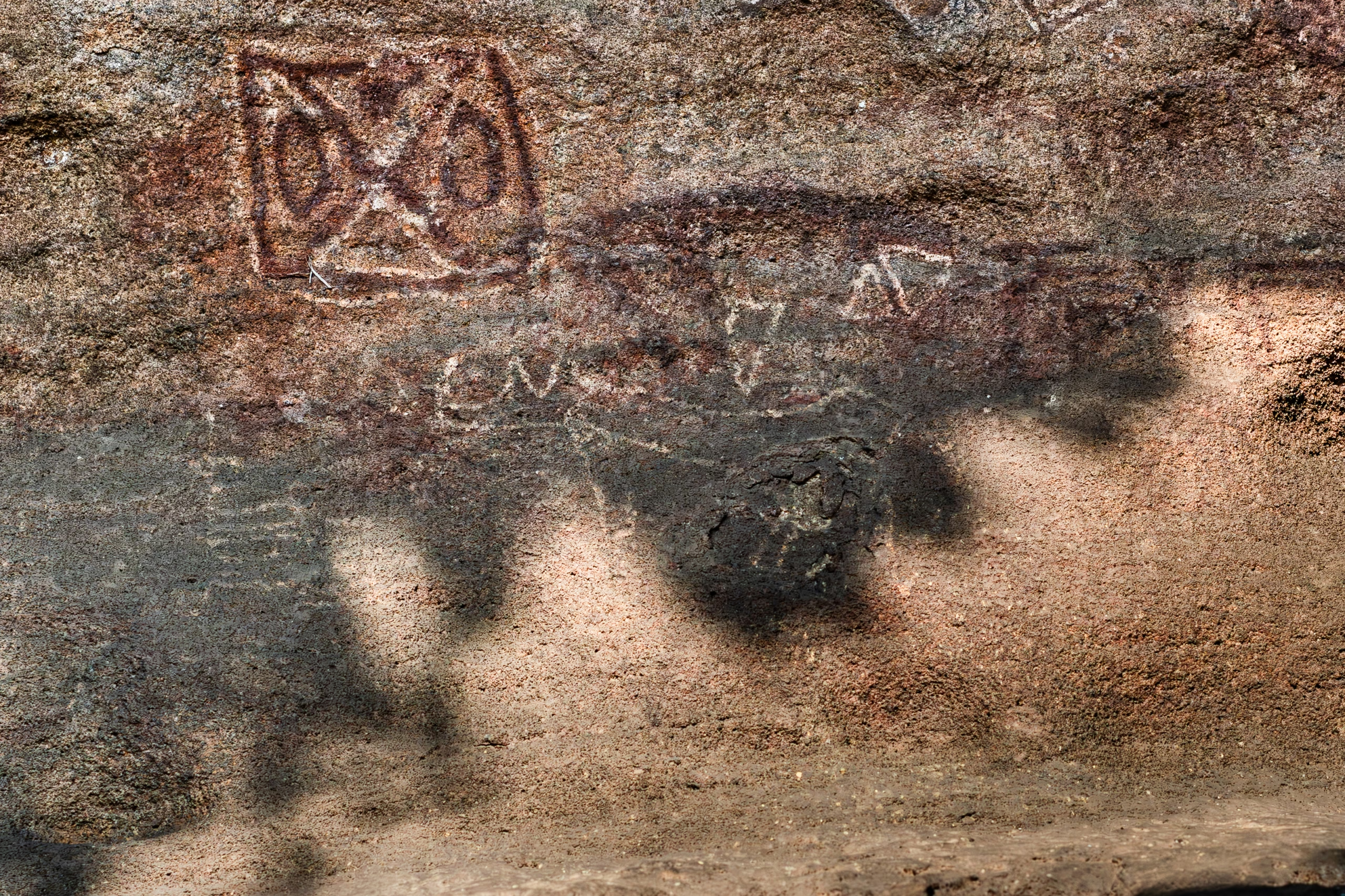
Beyond rhinos, the Isko caves are a treasure trove of rare wildlife depictions. I was fascinated by the detailed pictographs of the endangered Assam Roofed Turtle (Pangshura sylhetensis) around 2 sections away from the Rhinoceros depiction, identifiable by their distinct spiked keels and nailed legs. Alongside them, I spotted frogs, fish, Indian bison (Bos gaurus), and even wild buffalo and deer. These paintings offer a vital glimpse into an ancient riverine ecology that once thrived here, connecting Jharkhand’s waterways directly to distant Eastern Himalayan drainage systems.
Significance, Dating, and Living Traditions
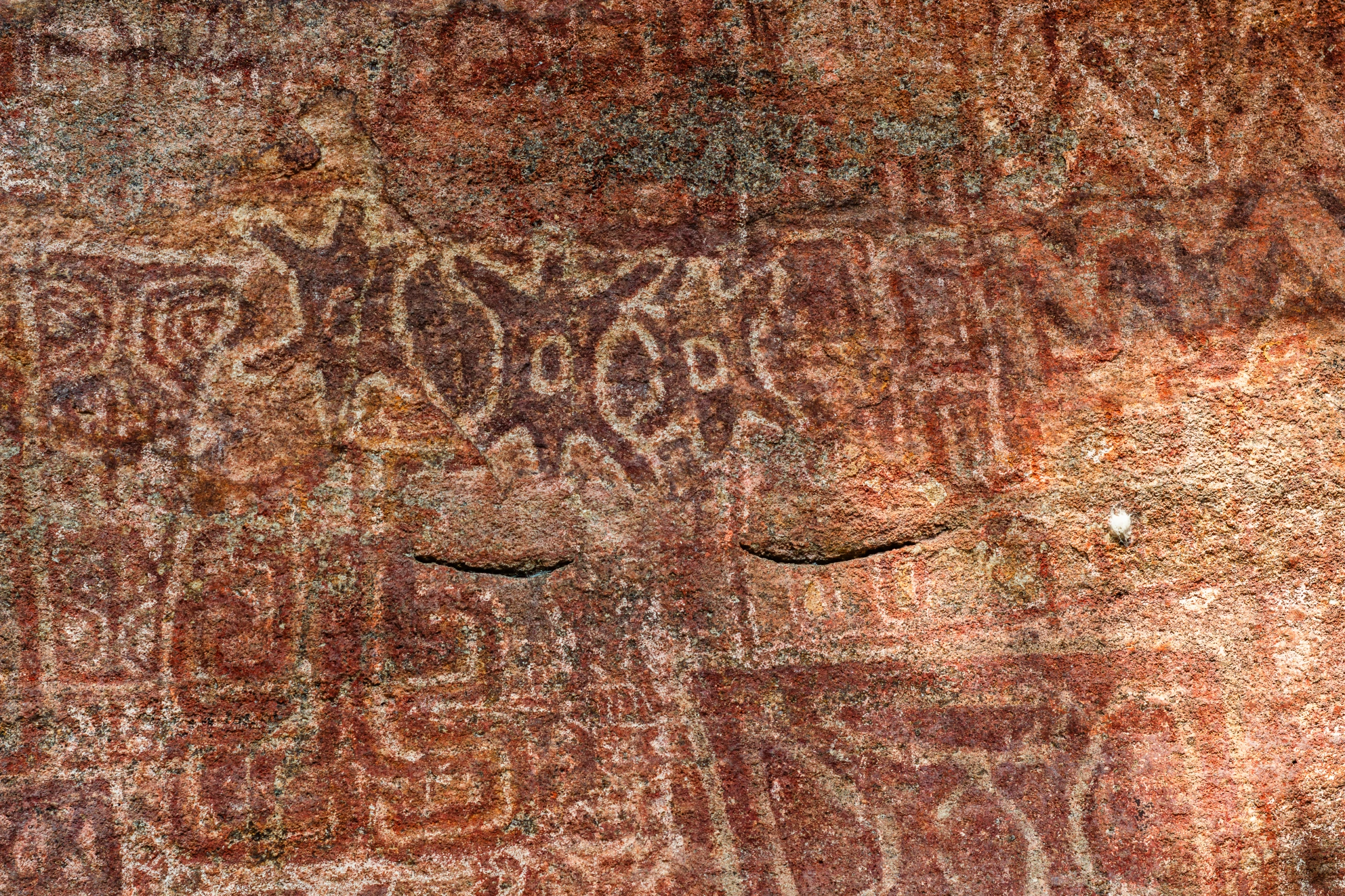
These aren’t just pretty pictures; the Isko rock art is a window into a profound cultural history. Protected as a monument of national importance by the Archaeological Survey of India, the artwork dates primarily to the Mesolithic–Chalcolithic era, roughly 10,000 to 4,000 BCE, placing it alongside other major Indian sites like Bhimbetka. What’s truly special is the connection to living traditions. The intricate geometric labyrinths and ‘vulva’ motifs, thought to be linked to early fertility rites and proto-Tantric Mother Goddess symbolism, are echoed in the vibrant Sohrai and Khovar wall art still practiced by local tribal women today. It’s a living lineage of art stretching back millennia!
Surrounding Megaliths and Sister Caves
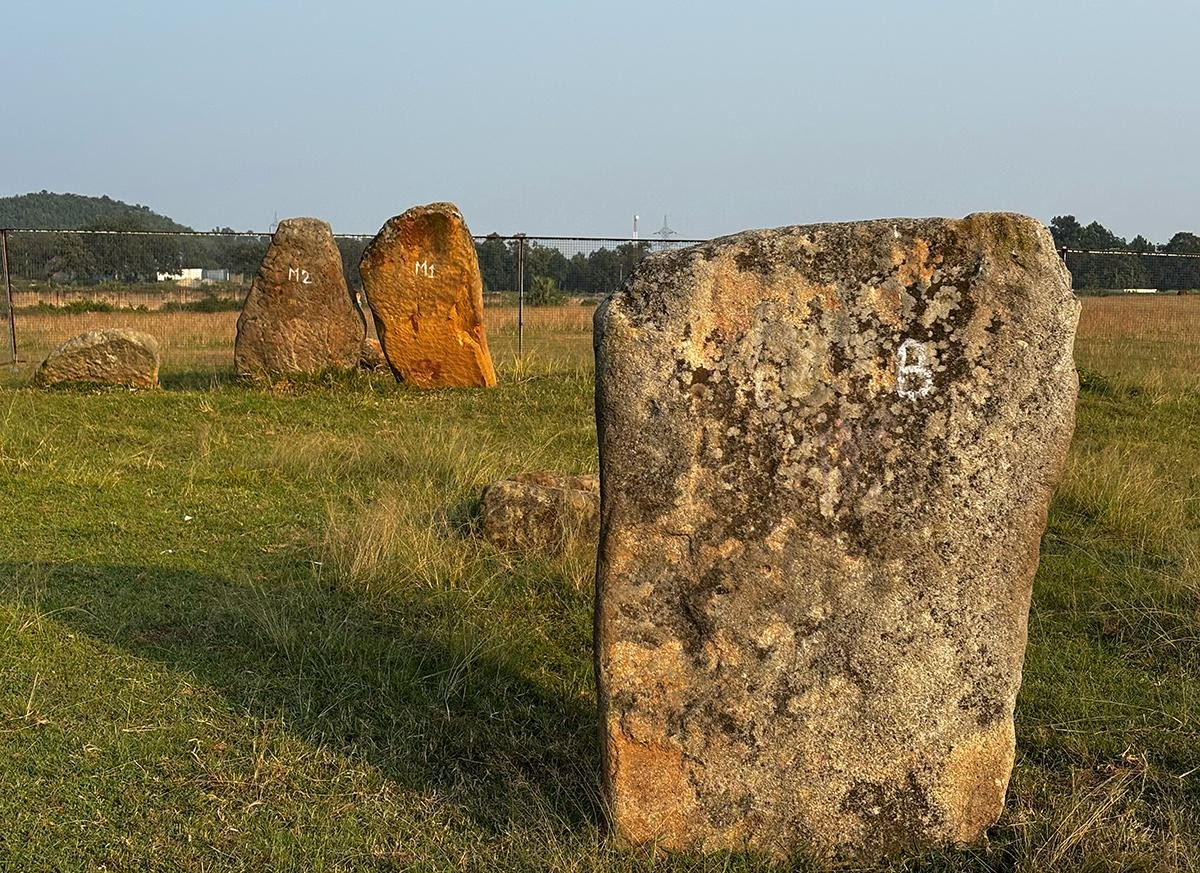
My exploration didn’t stop at the main shelter. The surrounding area near Isko village is dotted with other natural shelters, including the Malwa-duari-gufa, although not all contain art. Further afield on the Hazaribagh plateau, I discovered impressive megalithic and monolithic stone alignments, such as the menhirs of Punkree Burwadih. Researchers believe these ancient standing stones might have been used for prehistoric solstice observations or as ancestral burial sites, adding another layer of mystery to this incredible landscape.
References & Citations
- Archaeological Survey of India (ASI) Ranchi Circle: Painted Rock Shelter, Isko, Barkagaon, Distt. Hazaribagh (Declared Centrally Protected Monument).
- Saha, S. & Rajak, S. (2019/2020): Rock Art at Isko in Hazaribagh District, Jharkhand: Anthropological Perspective & Digital Documentation of the Rock Art Site of Isko.
- Chakraverty, S. (1996): Rock Art of Jharkhand (Survey of zoomorphic motifs including Rhinoceros unicornis and Pangshura sylhetensis).

- Rhinoceros in Jharkhand? Uncovering Isko’s Ancient Wildlife & Art - October 21, 2026
- India’s Dazzling Rollers: A Guide to Four Feathered Gems - October 12, 2026
- Bhigwan’s Harriers and Hyenas: A Trip Report - October 11, 2026