

Discovering North East India’s Six Majestic Hornbill Species
Hey fellow nature lovers! Let me tell you, there’s nothing quite like the thrill of spotting a hornbill in the wild. Their sheer size, their vibrant colors, and those incredible, often oversized, beaks make them truly unmistakable. Having spent a considerable amount of time exploring the lush, biodiverse regions of North Bengal and the North East of India, I’ve been incredibly fortunate to encounter six magnificent species of these forest giants.
From the towering trees of Arunachal Pradesh to the dense jungles bordering Bhutan, these birds are not just a treat for the eyes; they’re vital to the health of the forests, acting as incredible seed dispersers. Join me as I share some personal moments and fascinating facts about these six hornbill species that call this incredible region home!


1. The Iconic Great Hornbill (Buceros bicornis)
Ah, the Great Hornbill! This one always feels like meeting royalty. I remember my first sighting, deep within Manas National Park in Assam, during a misty morning. Its massive, bright yellow and black casque, almost helmet-like, truly lives up to its ‘great’ name. When it takes flight, you can hear the powerful whoosh of its wings even before you see its enormous silhouette against the sky. It’s an unforgettable sound, a rhythmic beat that echoes through the canopy.
These magnificent birds are deeply embedded in the culture of the North East, particularly in Nagaland, where the famous Hornbill Festival is named in its honor – a celebration of the state’s vibrant tribal heritage. I’ve often seen them in pairs, their calls carrying far across the valleys. Their mating ritual is fascinating; the male presents fruits to the female, a true gesture of courtship. Later, the female will seal herself into a tree cavity with mud and droppings, leaving only a narrow slit, relying on the male to feed her and their chicks for months. It’s a testament to incredible parental dedication.

2. The Charming Oriental Pied Hornbill (Anthracoceros albirostris)
Smaller than its ‘great’ cousin but equally charismatic, the Oriental Pied Hornbill is a more common sight, often found in the lower altitude forests and even near human settlements. I’ve had countless delightful encounters with these guys around the fringes of Kaziranga National Park. Their striking black and white plumage, combined with a large, creamy-yellow casque, makes them very distinctive.
I once observed a pair in a fruiting fig tree for nearly an hour, their playful squabbles over the ripest figs bringing a smile to my face. They’re incredibly vocal, with a series of laughing and cackling calls that are easily recognizable. Like all hornbills, their role as seed dispersers is crucial. They swallow fruits whole and later regurgitate the seeds, helping new trees to grow. It’s like they’re planting the forest as they go!

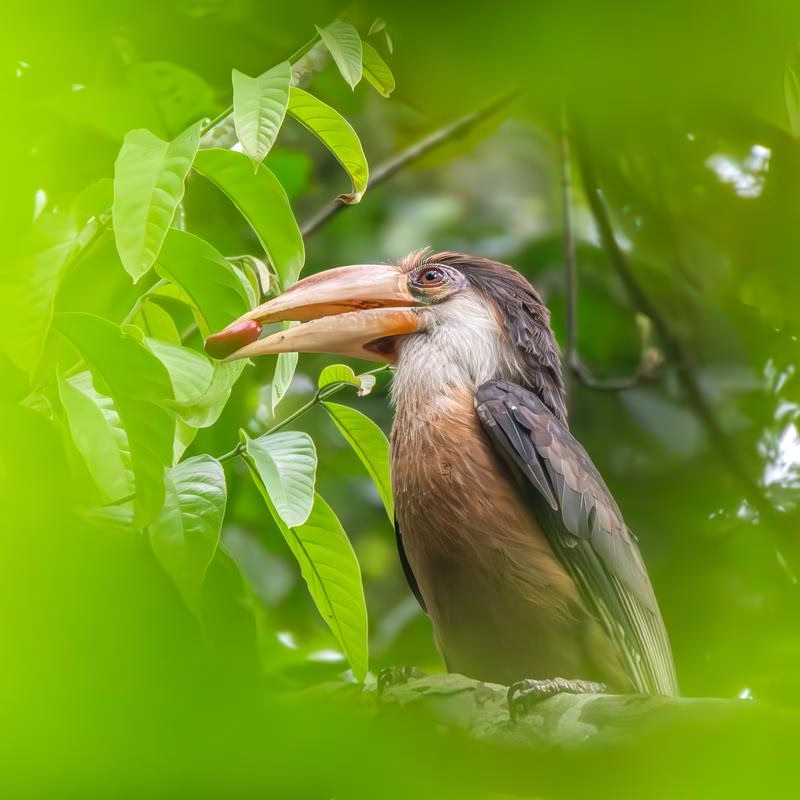
3. The Elusive Austen’s Brown Hornbill (Anorrhinus austeni)
Now, this one is a bit more of a challenge to spot, often preferring the dense, evergreen forests of higher altitudes, particularly in areas like Arunachal Pradesh and Mizoram. The Austen’s Brown Hornbill is, as its name suggests, predominantly brown, making it blend seamlessly into its forest home. It lacks the flamboyant casque of some of its relatives, but its unique charm lies in its elusive nature and slightly smaller size compared to the giants.
My most memorable encounter was during a trek in Namdapha National Park. I first heard their distinct, somewhat reedy calls, a kind of ‘kra-a-a-a’ sound, before finally spotting a small flock foraging high up in the canopy. Unlike many other hornbills, these are known to be cooperative breeders, with older offspring often helping the parents raise new chicks. It’s a wonderful example of family teamwork in the wild!

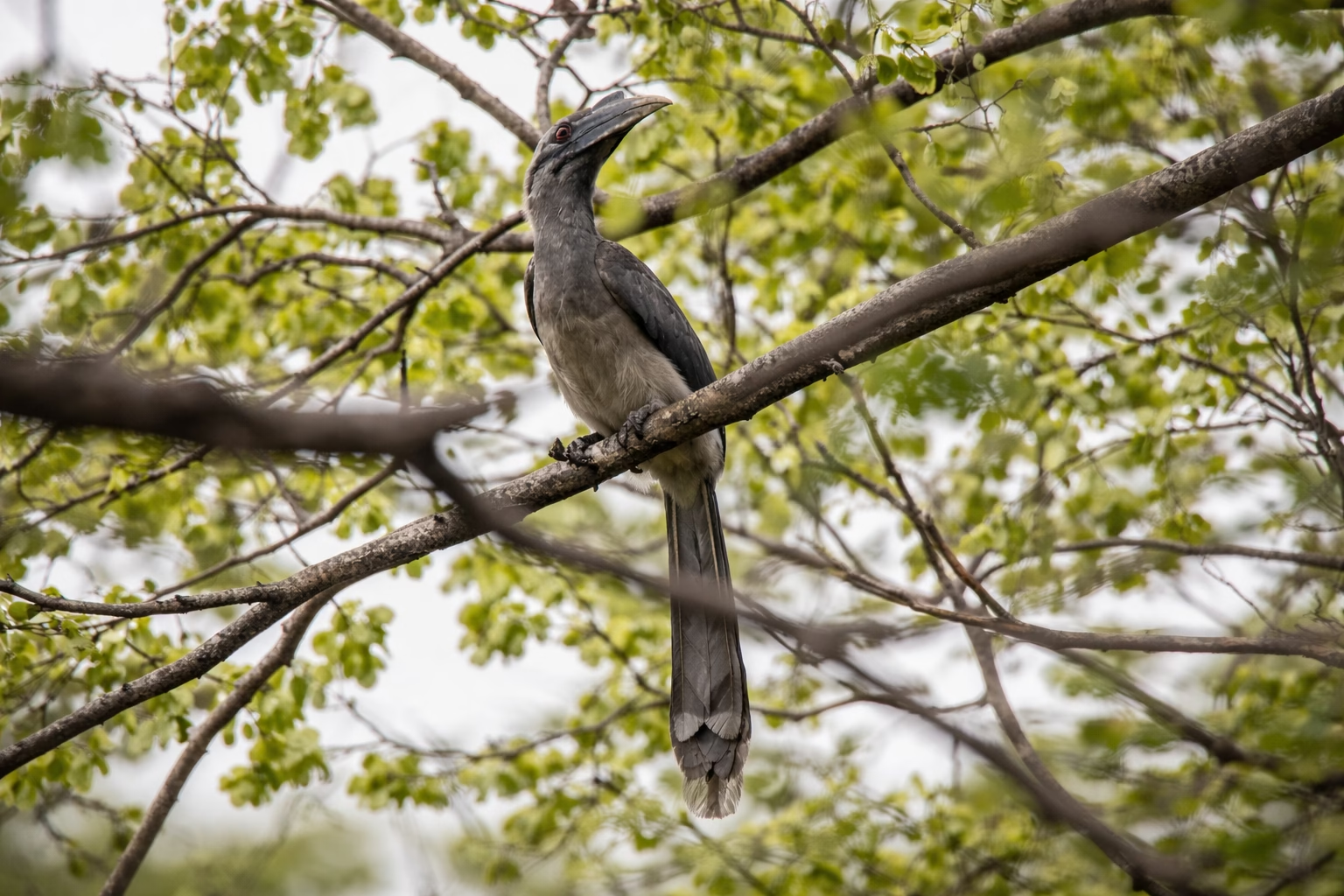
4. The Widespread Indian Grey Hornbill (Ocyceros birostris)
While not exclusive to North East India (they’re found across much of the subcontinent), the Indian Grey Hornbill is a resident here too, often preferring drier deciduous forests and even urban gardens in some areas. In the North East, I’ve seen them mostly on the edges of forests, especially around areas with a mix of open land and woodlands. They are the smallest of the six species I’m talking about today, with a modest, dark casque.
Their call is a peculiar, often loud, cackling laugh that can echo surprisingly far. I’ve often heard them before I’ve seen them, usually in pairs, hopping through the branches with an almost comical gait. Their diet is diverse, including fruits, insects, and even small reptiles, making them adaptable survivors in various habitats. Observing a pair preening each other, a tender moment, showed me their gentle side amidst their boisterous calls.

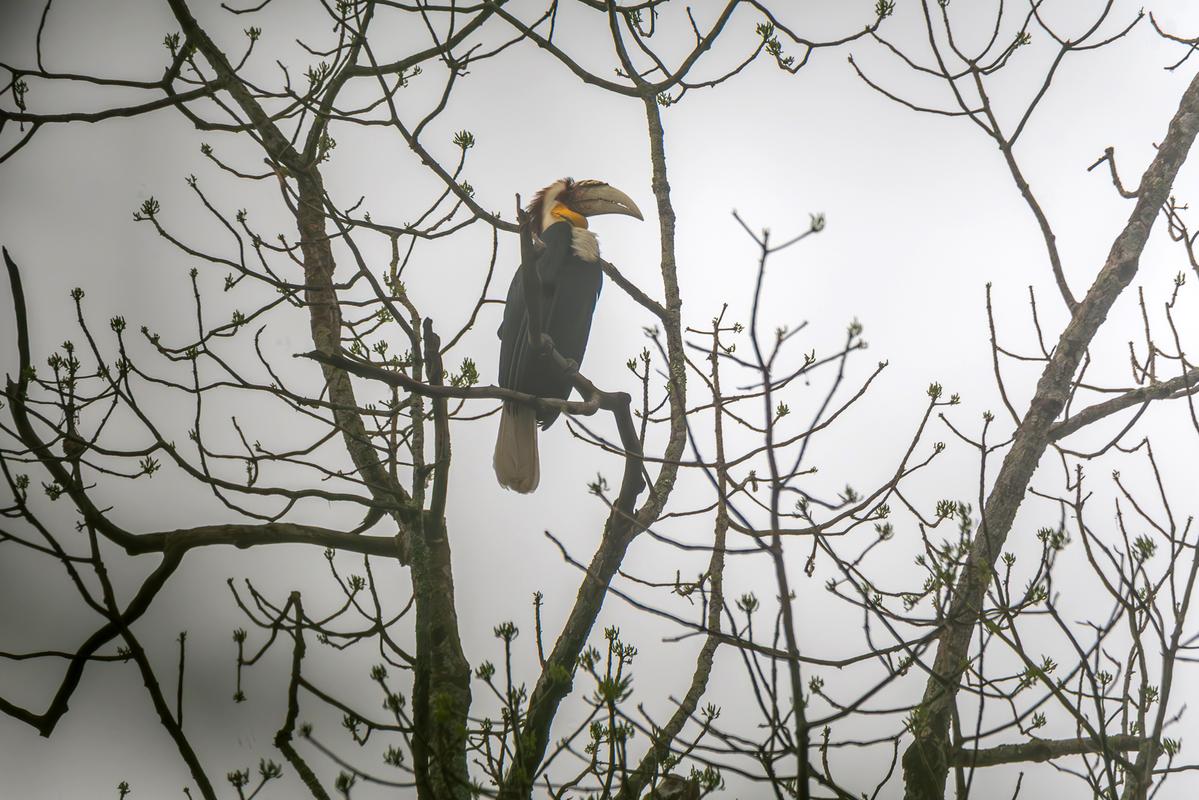
5. The Vibrant Wreathed Hornbill (Rhyticeros undulatus)
The Wreathed Hornbill is another spectacular species, instantly recognizable by the prominent ‘wreathes’ or folds on its casque. The males and females have distinct head and neck colors: males boast a bright yellow gular pouch, while females display a stunning blue. I was absolutely captivated by a male I saw in a dense forest patch in West Bengal, near the border with Bhutan. Its vibrant head contrasted beautifully with its dark body as it flew past, its wings making that characteristic whooshing sound.
Their nesting habits follow the typical hornbill pattern, with the female sealing herself in. But the sheer dedication of the pair is what always strikes me. The male works tirelessly, bringing food to the female and eventually their chicks through that tiny slit, ensuring their survival. These birds prefer large, mature trees for nesting, highlighting the importance of conserving old-growth forests in the region.

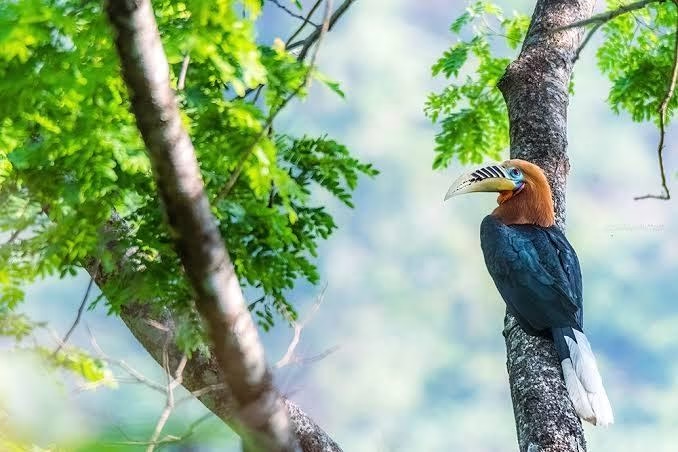
6. The Magnificent Rufous-necked Hornbill (Aceros nipalensis)
Saving one of the most breathtaking for last, the Rufous-necked Hornbill is a true jewel of the high-altitude broad-leaved evergreen forests, particularly in Arunachal Pradesh and parts of Nagaland. These large hornbills are visually stunning, with males sporting a rich rufous (reddish-brown) color on their neck and underparts, while females have a black neck and white underparts.
I recall a memorable sighting high in the Mishmi Hills. The sheer scale and beauty of a male, perched majestically on a branch, its rufous plumage glowing in the sunlight, left me speechless. They are listed as Vulnerable, making every sighting even more precious. Their calls are deep and resonant, a true sound of the pristine wilderness they inhabit. Like their hornbill relatives, they are crucial to forest regeneration, especially in these fragile montane ecosystems.
Guardians of the Forest
Encountering these six hornbill species across North East India has been nothing short of a privilege. Each one, with its unique features, calls, and behaviors, tells a story of the intricate balance of the forest ecosystem. From the grand Great Hornbill, a cultural icon, to the elusive Austen’s Brown, they are all guardians of the forest, their presence a sign of a healthy environment.
The North East of India is a biodiversity hotspot, and hornbills are a vibrant part of its wild heart. Protecting their habitats, especially those old-growth forests with large trees essential for nesting, is vital for their survival and for the health of the entire ecosystem. So, next time you think of a wildlife adventure, consider this incredible region and keep an eye out for these magnificent flying jewels!


- Discovering North East India’s Six Majestic Hornbill Species - October 24, 2026
- Rhinoceros in Jharkhand? Uncovering Isko’s Ancient Wildlife & Art - October 21, 2026
- India’s Dazzling Rollers: A Guide to Four Feathered Gems - October 12, 2026