


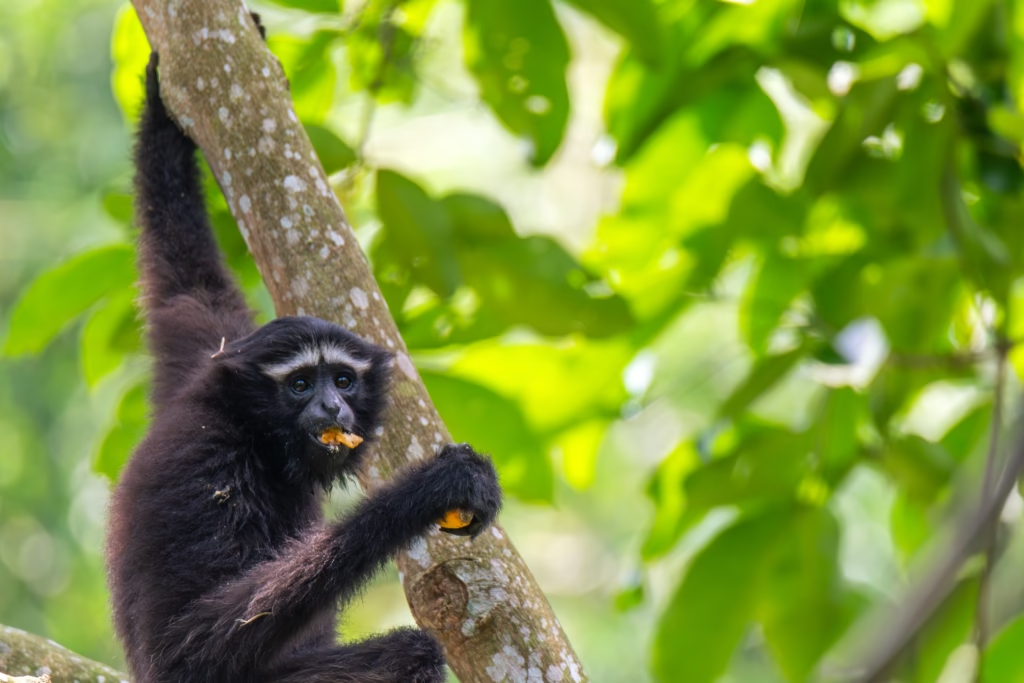
TL;DR: Hoolock Gibbons in India are the only ape species in the country, and are endangered. They could be found in the North Eastern state of Assam. This blog post has photographs, videos, and some experiences I had in Assam!

A Symphony in the Canopy
Last March, I followed the echoes of a ghostly melody into the forests of Jorhat, Assam. The singers? Hoolock Gibbons, India’s only apes, swinging through the emerald treetops of Hollongapar Gibbon Wildlife Sanctuary. These acrobats of the canopy aren’t monkeys—they’re tailless, long-armed apes, closer to humans than to macaques. Their haunting duets, a ritual of love and territory, are the soundtrack of a vanishing wilderness.

Did you know?
- Their arms are 1.5x longer than their legs, propelling them at 20 km/h as they brachiate (Fan et al., 2013).
- They’re “lesser apes”, distinct from great apes like gorillas, yet just as intelligent.
- The Western Hoolock Gibbon (Hoolock hoolock) is Endangered; its Eastern cousin (H. leuconedys) is Vulnerable (IUCN 2023).
A Sanctuary Divided

At dawn, Souranil and I saw a mother gibbon mid-leap, her baby clinging tight as she gripped a branch with her feet. This ballet of survival unfolds in India’s only primate-named sanctuary, a refuge for just 105 gibbons (Sinha & Datta, 2020). But a railway line slices through their home, fragmenting families.
Hope hangs by a thread—literally. In 2015, conservationists installed India’s first canopy bridges—ropes strung over the tracks. Today, gibbons use them daily, but the threat remains: Assam has lost 30% of gibbon habitat since the 1970s (Choudhury, 2006).
Where Hoolock Gibbons lunch with Humans

Beyond the sanctuary, in Barekuri village, I met Alip Moran. With a call, he summoned gibbons from the trees—a rare bond between apes and the Moran tribe. They shared ripe fruit, a tradition spanning generations. But this intimacy carries risk.
The tragic tale of Kaalia, a semi-domesticated gibbon stoned by children, is a warning: habituation can kill. As Kalpa explained, “Feeding gibbons feels like friendship, but wilderness is their right.”
The Guardians of the Gibbons
Alip’s father once refused to cut down gibbon-filled trees—even to pay for lifesaving cure. “These apes are our kin,” he told Alip. Such stories reveal the human cost of conservation in Assam, where communities protect gibbons without formal incentives.
Did you know?
- Gibbons live 25 years in the wild, but reach 44 in captivity (Erwin et al., 2004).
- They spend 60% of their day eating fruit, shaping forest ecology (Fan & Jiang, 2008).
- Their population crashed by 90% in some areas due to deforestation (Choudhury, 2006).
Will Their Song Survive?
Barekuri’s harmony is fragile. Without stronger policies—corridors, anti-poaching laws, and community partnerships—Hoolock Gibbons India could vanish like their rainforests. Yet, in Hollongapar, the morning duets persist. Two voices, weaving through the mist, as they have for millennia.
Listen. That song is a plea—and a reminder: extinction is silent.
How You Can Help
- Support Wildlife Trust of India’s canopy bridge projects.
- Visit responsibly: Choose eco-tours that prioritize gibbon welfare.
- Spread awareness: Share this story with #SaveHoolockGibbons.
Instagram Post
..more videos coming up soon. Stay connected with @sahaanirban


- Test Immersive Experience - February 10, 2026
- Off-beat Wildlife Photography in India: 6 Species from Rushikulya to Dehing Patkai (2025) - December 30, 2025
- Hoolock Gibbons in India: The Singing Apes Fighting for Survival. - June 10, 2025