


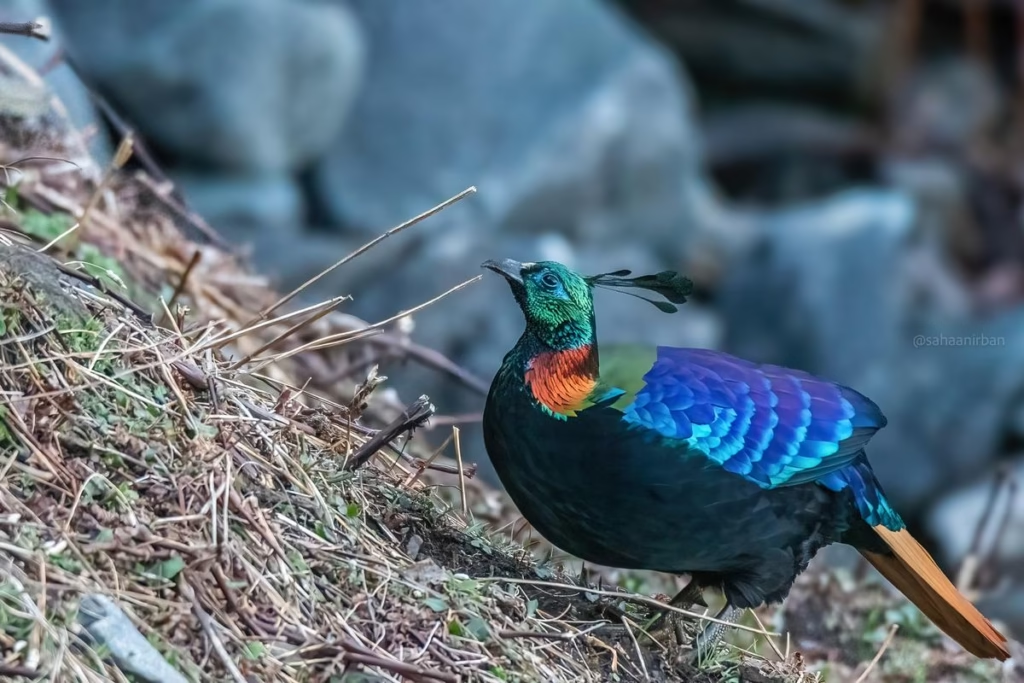
Himalayan Monal’s Changing Voice: A Youth Call to Responsible Tourism
I recently came across a news article and a subsequent research paper by Indian scientists, detailing changes in the Himalayan Monal’s behavior. It sparked my reflection on how our adventures, even well-intentioned ones, can impact the fragile environments we explore. Today, I want to highlight something crucial about one of the Himalayas’ most breathtaking residents: the Himalayan Monal. More than just a magnificent bird, its story serves as an urgent reminder for all of us to consider our connection with nature.
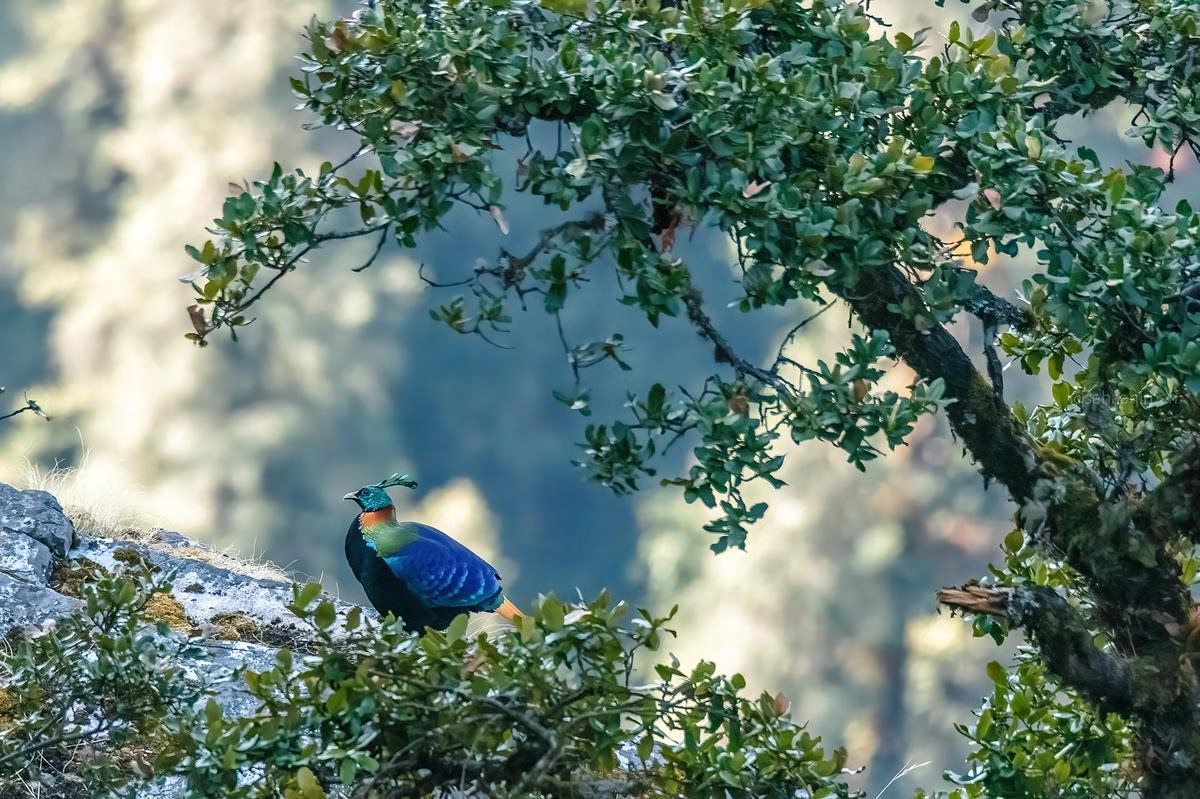

Imagine a bird that seems to have flown straight out of a rainbow. That’s the male Himalayan Monal. With its iridescent green, blue, and copper plumage, it’s a vibrant spectacle of the mountains, so significant it’s the state bird of India’s Uttarakhand and the national bird of Nepal. These pheasants thrive in high-altitude forests and alpine meadows, their distinctive calls echoing across the valleys. They’re not just beautiful to behold; Monals are considered a key indicator species, serving as nature’s early warning system for the health of the entire Himalayan ecosystem.
But here’s the critical development. Recent studies by Indian researchers, including Dr. Rajeev Lochan and his team from Hemvati Nandan Bahuguna Garhwal University, have revealed something alarming: the Monal’s vocalizations are literally changing due to human activity. Consider this: their calls are their primary means of communication—attracting mates, defending territory, or warning others. And now, they’re having to adapt just to be heard!
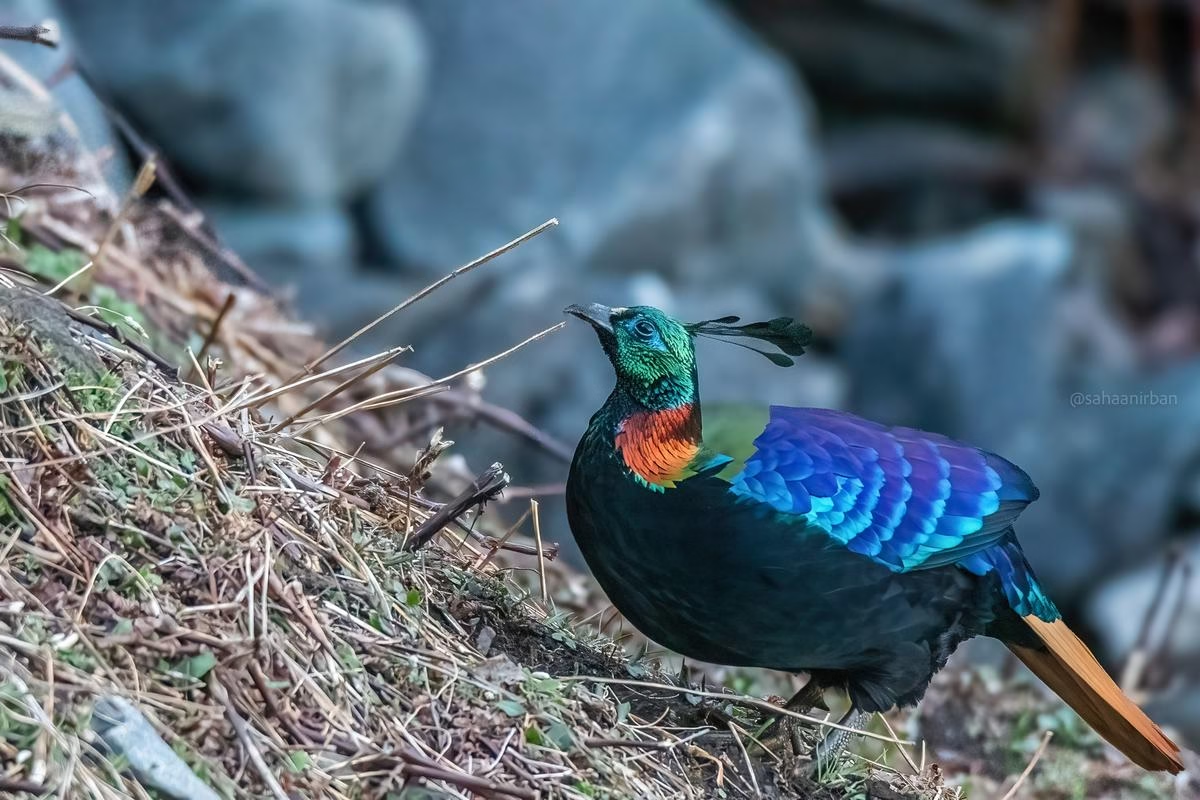

Human Noise and Monal Calls
The research findings are quite clear. In busy areas like Chopta, a popular tourist spot, Monals are producing calls with significantly higher peak frequencies compared to their quieter counterparts in places like Madmaheshwar Valley. It’s as if they’re trying to project their voices over the low-frequency rumble of traffic, construction, and crowds. Not only are their calls higher in pitch, but they also have shorter durations, all to cut through our noise. This isn’t a permanent evolutionary change, but an immediate behavioral adjustment – what scientists call “phenotypic plasticity”.
While it’s remarkable that these birds can adapt, this ability comes with significant consequences. When a Monal must alter its vocalization, it can affect everything from their mating success (consider the challenges of attracting a mate when your call is strained) to their ability to defend their space and even the energy they expend. As Professor Anjal Prakash, an expert in public policy, wisely put it, “When a species must raise its pitch to be heard over tourist traffic, or climb higher as meadows turn crowded, it reveals how human pressure is rewriting the rules of life in the Himalaya.”
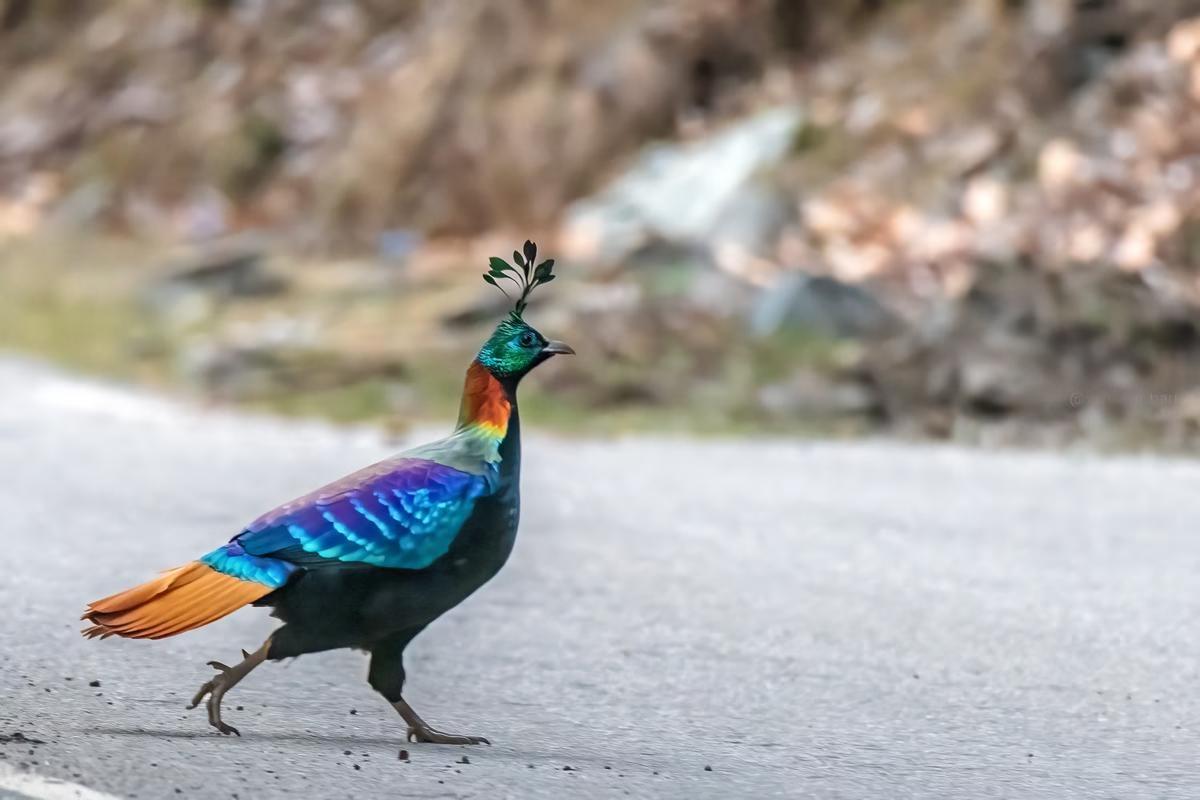
More Than Just Noise: Their Home is Shrinking
It’s not just sound pollution impacting these birds. The studies also found that Monals are being forced to move higher up the mountains. Why? Because their natural habitats in the alpine meadows above the tree line are getting crowded. Unregulated tourism, rapid infrastructure development, and increasing human presence are all squeezing their space. This, combined with the growing threat of climate change, means their suitable habitats are shrinking and becoming fragmented, making it harder for groups to breed and thrive.
Why the Monal Matters: A Bellwether for the Ecosystem
So, why should this stunning bird’s predicament matter to us, especially as young people eager to explore the world? Because, as an indicator species, the Monal’s struggles offer a stark indication for the entire Himalayan ecosystem. If these robust birds are forced to adjust their vocalizations and homes, imagine the impact on more sensitive, less adaptable species. The challenges they face reflect broader ecological stress across one of the world’s most fragile and important mountain ranges. The economic development of the region, as Vishal Singh highlights, isn’t always aligned with its ecological integrity.
Our Call to Action: Responsible Tourism is Key
This is where we come in. As the next generation of travelers and nature enthusiasts, we have the power to make a difference. We can embrace responsible tourism and advocate for sustainable development. It’s about recognizing our “invisible environmental footprint” – even when we leave no trash, our noise can disturb wildlife in profound ways.
- Minimize Noise: On mountain roads and trails, let’s reduce honking and vehicle idling. Avoid loud music, shouting, or large noisy gatherings in natural sanctuaries.
- Support Thoughtful Travel: Choose tour operators and accommodations that prioritize low-impact, quiet tourism initiatives.
- Respect Sanctuary Zones: Understand and adhere to regulations in protected areas, giving wildlife the space they need.
- Learn and Share: Educate yourselves and others. The more we know, the more effectively we can advocate for conservation.
The shifts in the Monal’s vocalizations might be subtle to our ears, but their implications are profound. They serve as a powerful reminder that every action—from the sounds we make to the paths we tread—leaves an impact. Let’s listen closely to what the Himalayan Monal is telling us. Its altered calls are a clear message from the Himalayas, urging us to consider the space, silence, and care these ecosystems need. It’s up to us to respond with empathy, awareness, and action. Let’s make our travels a force for good, preserving the magic of these incredible places for generations to come.

- Himalayan Monal ‘s Changing Voice: A Youth Call to Responsible Tourism - October 9, 2026
- Finding the Bengal Florican in Manas! - October 2, 2026
- Searching for the Elusive Red Munia in Rajarhat, Kolkata - September 26, 2026