


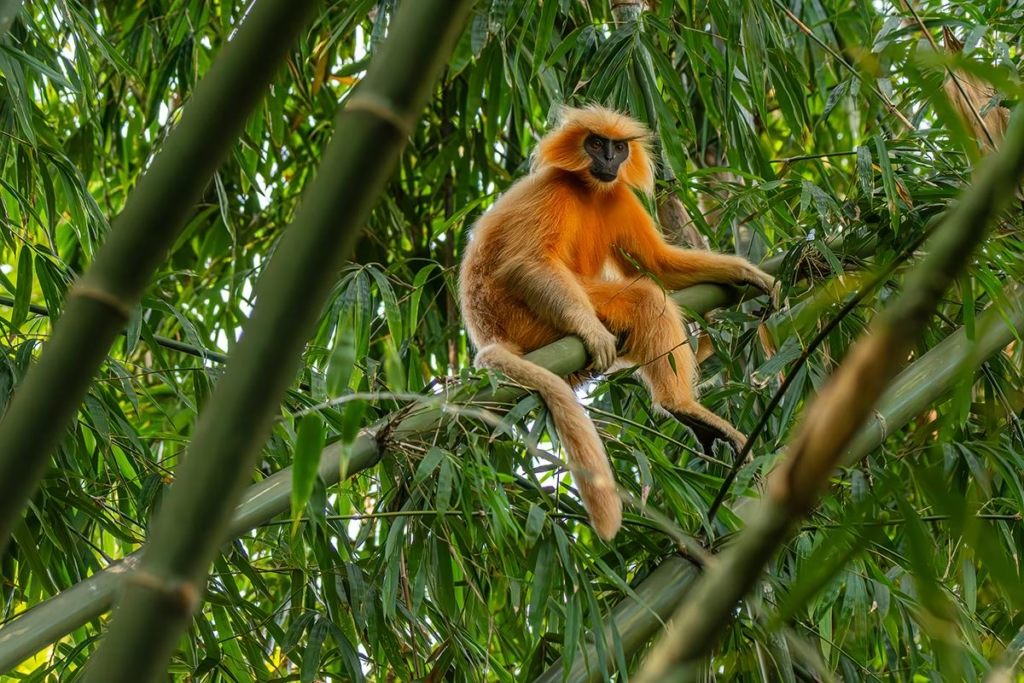
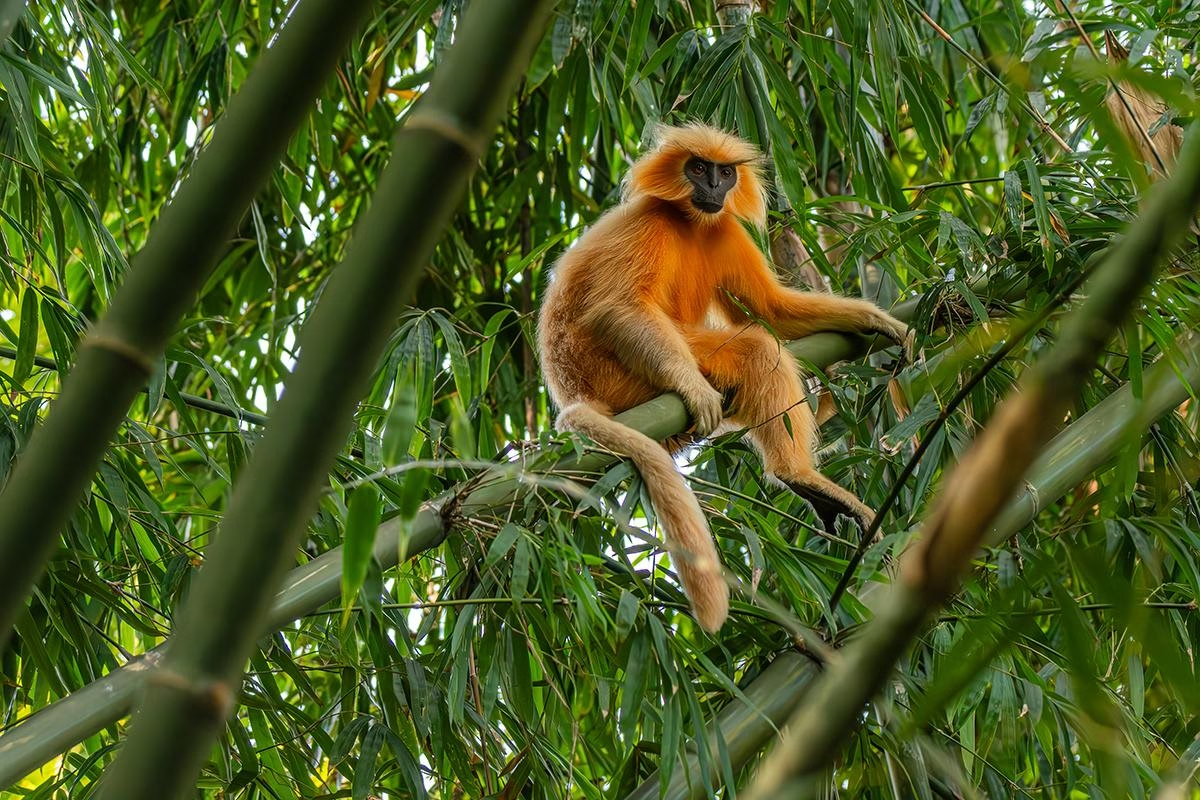
Image: A magnificent Golden Langur on a bamboo stalk in Kakoijana Reserve Forest.

Imagine stepping into a jungle full of green trees and the sound of birds. That’s Kakoijana! It’s super clean and has a cool bridge just for the monkeys to cross! My home there was a cozy place with cows, geese, and chickens. I even saw a Common Kingfisher by a pond – wow!
But the real stars were the Golden Langurs! These aren’t just any monkeys. They have beautiful, shiny golden-orange fur, like a treasure hidden in the trees. Their faces are black, which makes their golden fur stand out even more. They are quite rare, like a special gem of India.
Finding them was a bit tricky! We walked and looked, and even though my shoes got wet in a stream, I didn’t give up. And then, BAM! We saw a whole family of Golden Langurs of Kakoijana high up in the trees!
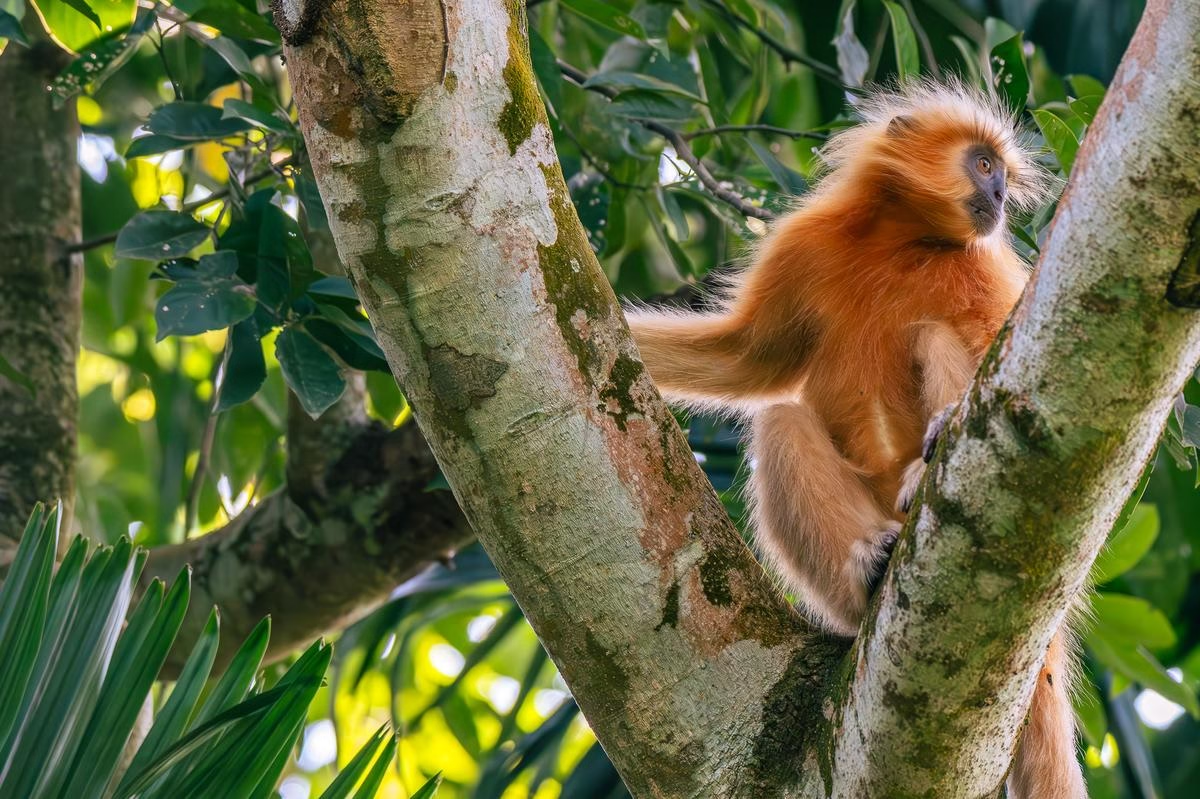
Image: A striking Golden Langur on a moss-covered branch in Kakoijana Reserve Forest.
Our friend, Haro Mohan Rabha, who knows these langurs very well, told me a secret: these smart monkeys love looking at themselves in mirrors! Can you believe it? They are not scared of people and they don’t cause any trouble, which makes the villagers happy to have them around. They eat yummy young bamboo shoots.
I even spotted other cool animals like pretty butterflies and interesting lizards! We have to help keep these amazing animals safe. It’s important to protect their homes, especially the beautiful Golden Langurs of Kakoijana.
When you visit places like this, remember to be patient and quiet. You might see even more amazing things! And if you get a chance to visit Kakoijana, remember guide Haro Mohan Rabha – he knows all the secrets of the forest!
It was a truly special trip, full of amazing sights and new friends. I hope you get to see the wonderful Golden Langurs of Kakoijana one day too! What animals do you love to spot? Tell me in the comments below!
Image: A magnificent Golden Langur on a bamboo stalk in Kakoijana Reserve Forest. Its distinctive bright golden-orange fur contrasts sharply with its hairless, black face and the lush green bamboo leaves.
My Journey and Homestay Realities
My adventure kicked off from Guwahati, a 3.5-hour cab ride to Bongaigaon, leading to a charming red-roofed homestay. While the government-subsidized accommodation offered spacious comfort for ₹1500 a night, minor inconveniences like the lack of a geyser and WiFi were present. Yet, the rustic charm of nearby cows, geese, and chickens, coupled with a surprise visit from a Common Kingfisher at the pond, added immeasurable value. This trip served as a stark reminder: always re-verify travel agent calculations! My initial budget ballooned by 1.5 times, a valuable lesson learned. Opting for a local guide directly can significantly cut costs.
Exploring the “Home of Golden Langurs”
Entering Kakoijana Reserve Forest through its vibrant welcome gate immediately conveyed a sense of pride: “The Home of Golden Langurs.” The forest’s pristine condition, with minimal littering, was truly commendable. An intriguing observation was the canopy bridge, built specifically for the Golden Langurs to traverse, yet reportedly used only twice in years – a testament to their natural arboreal paths, perhaps.
Beyond the star primates, the forest was alive with avian wonders: I spotted a White-breasted Kingfisher, a melodious Black-rumped Shama, the vibrant Emerald Dove, a watchful Spotted Owlet, and the distinctive Greater Racket-tailed Drongo. Countless butterflies and various lizards added to the biodiversity, making every moment an active discovery.
The Elusive Search for Golden Langurs in India
The primary quest: to document the elusive Golden Langurs of Kakoijana. These primates, native to a small region of western Assam and neighboring Bhutan, are a rare and endangered species (Trachypithecus geei), making their presence a conservation triumph. They are primarily arboreal, spending their lives in tree canopies, feeding on leaves, flowers, and fruits, including the abundant young bamboo shoots I observed.
My initial attempts to find them in the dense forest proved challenging. Despite an early start (or rather, a slightly later start than my ideal 7:30 am), the morning hours, when langurs are most active, passed without a sighting. Trekking through the forest, I encountered friendly elephants and navigated a rocky stream, resulting in delightfully wet shoes – a small price for the wilderness immersion. Internet connectivity issues further complicated real-time updates.
However, perseverance is the birder’s virtue! Around 12:12 pm, my efforts were richly rewarded when we finally located a family of Golden Langurs of Kakoijana in a village tree plantation. It was an exhilarating moment, especially capturing excellent footage of the alpha male, a true highlight of the trip. These Golden Langurs are unique; unlike many primates, they generally avoid humans, maintaining a respectful distance, though my experience later proved they aren’t completely deterred by human presence.
Image: A striking Golden Langur on a moss-covered branch in Kakoijana Reserve Forest. Sunlight filters through the dense canopy, creating a natural spotlight.
Insights from Haro Mohan Rabha: The Local Oracle
My guide, Haro Mohan Rabha, a member of the local Rabha clan and a long-time associate of the forest’s wildlife, was an invaluable resource. His insights into the Golden Langurs were profound.
- A Mirroring Fascination: Haro Mohan shared a surprising fact: over the past two years, these langurs have developed a peculiar fascination with mirrors, often entering unoccupied homes to gaze at their reflections. This intriguing behavior suggests these golden langurs are intelligent, displaying a level of self-awareness or curiosity rarely attributed to wild primates.
- Harmony with Humans: The villagers’ relationship with the langurs is one of deep trust and respect. They do not perceive golden langurs as dangerous; the animals neither harm people nor raid their food. Their diet of young bamboo shoots is generally tolerated by the locals.
- A Unique Souvenir: During one particularly close photographic encounter, a langur decided to bless my lens with a bit of poop – a truly memorable, if somewhat pungent, souvenir! It was a moment shared with amusement by local kids, underscoring the casual coexistence.
Conservation Challenges and Community Spirit
On my final day, I engaged with villagers about their conservation efforts. It was disheartening to learn of five Golden Langur deaths recently, three tragically due to electrocution. Bikash, a local, highlighted a perceived lack of awareness, an area where more focused outreach could make a significant difference. Despite these losses, the community’s general delight in the langurs’ presence is a powerful force for protection. The question of “are golden langurs rare” is answered by their ‘endangered’ status, making these local efforts even more critical.
Tips for Your Kakoijana Adventure
If you’re planning a trip to witness the Golden Langurs of Kakoijana:
- Guide Contact: Connect with local guides like Haro Mohan Rabha directly. Their expertise is unmatched, and it supports local communities.
- Season: My visit was in early November, offering pleasant weather. Langurs are active in the mornings (best before 9 am) and late afternoons.
- Photography: Patience is key. A telephoto lens is essential. Be prepared for varied light conditions under the canopy.
- Budget Wisely: Always cross-check all travel expenses to avoid surprises.
- Respect Wildlife: Maintain distance, move quietly, and leave no trace.
This journey reaffirmed my belief in the delicate balance between humanity and nature. The spirit of Kakoijana, embodied by its people and its Golden Langurs, is a powerful story of coexistence.
What are your thoughts on community-led conservation? Share your experiences in the comments below! For more wildlife tales and travel insights, check out my related posts on [Link to Related Post 1] and [Link to Related Post 2].


- My Incredible Journey to Pakke: A Wreathed Hornbill Haven in the Eastern Himalayas! - February 28, 2026
- Bhigwan Adventure: Spotting Bengal Fox and Majestic Predatory Birds - February 2, 2026
- Encountering the Majestic Bengal Tiger in Misty Pilibhit: A Winter Safari Tale - January 21, 2026