


Chasing Golden Langurs in Kakoijana: A Jungle Adventure!
Hey young explorers! Imagine a forest where monkeys shine like real gold. That’s exactly where I went on November 7, 2025, in a beautiful place called Kakoijana Reserve Forest in Assam, India. My big mission? To find and take pictures of special monkeys called Golden Langurs in Kakoijana! This blog post will take you on my amazing trip and give you tips so you can dream about seeing these wonderful creatures too!
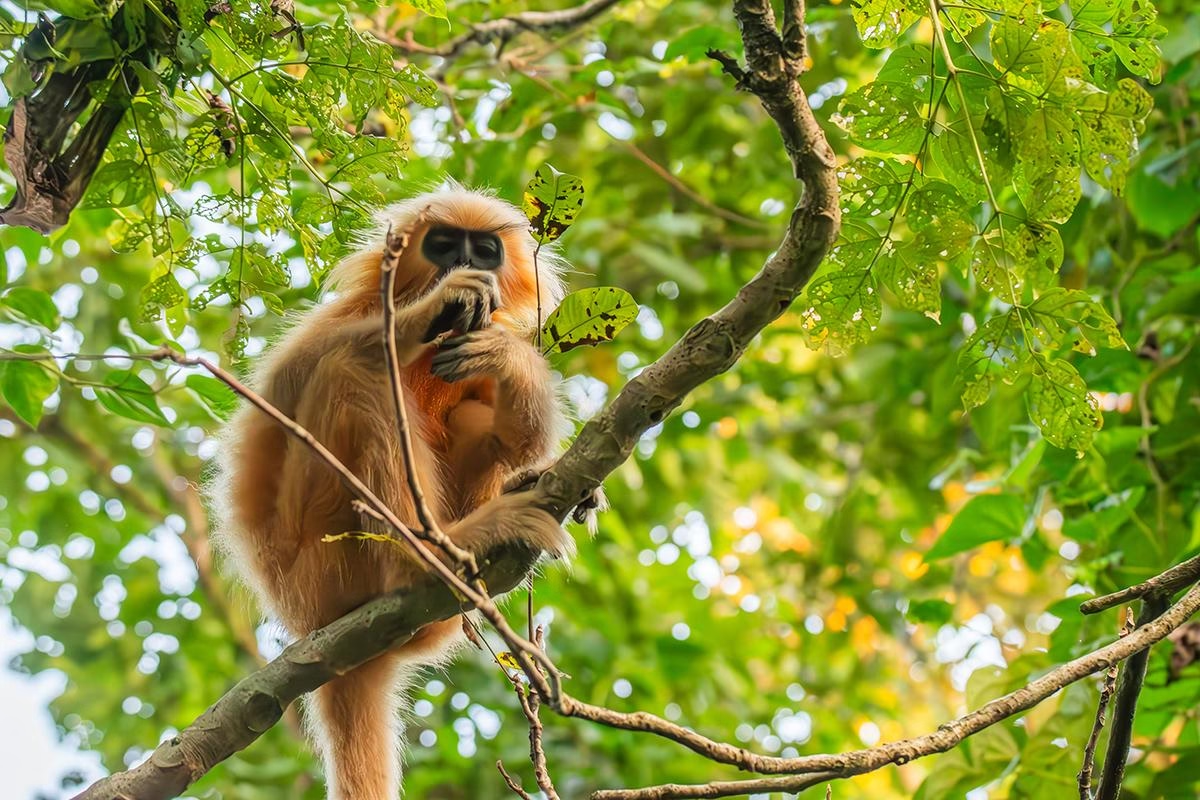

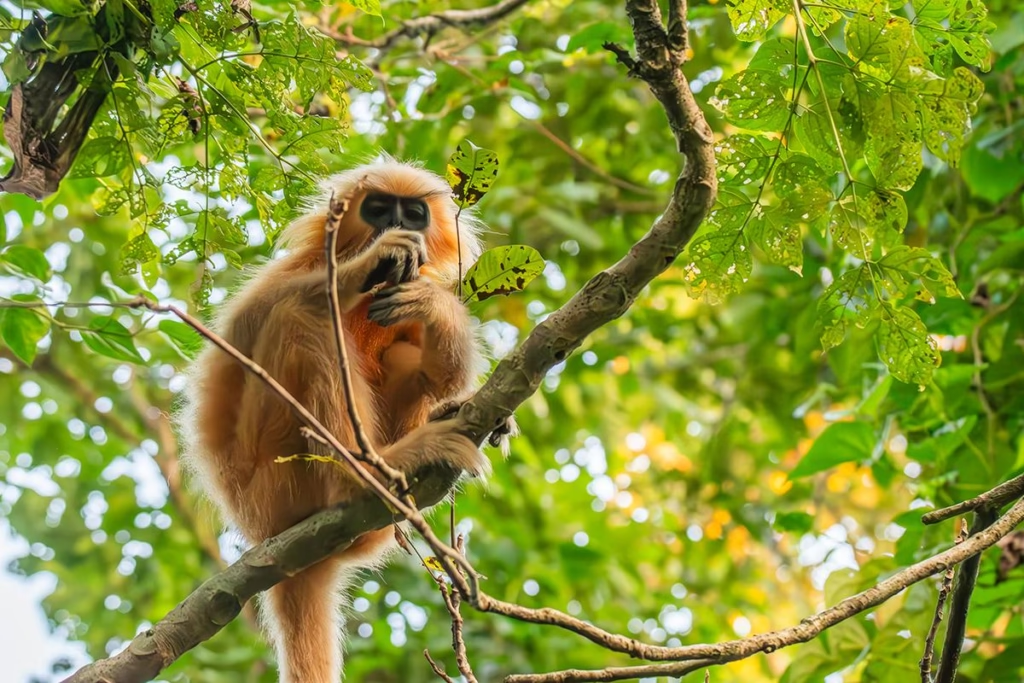
Image: A majestic Golden Langur enjoying a leafy snack in Kakoijana Reserve Forest.
My Cozy Forest Home
I stayed in a super comfy house near the forest. There were friendly cows with bells, quiet geese in a pond, and chickens roaming around. I even saw a Common Kingfisher flying by! It felt like living inside a nature book.
Exploring Kakoijana Reserve Forest
My first walk in Kakoijana Reserve Forest was so exciting! The forest was very clean and had a bright, colorful gate that said ‘Home of Golden Langurs’. We saw lots of other cool animals like the White-breasted Kingfisher, amazing butterflies, and even some lizards. But the Golden Langurs in Kakoijana were still hiding!
Finding the Shining Monkeys!
The next day, we tried again, hiking up a steep, rocky path. It was a real jungle adventure! My shoes got wet in a stream, and I even tripped a little (oops!), but I kept going. And guess what? We finally saw a family of Golden Langurs in Kakoijana in a nearby village! They were absolutely stunning with their golden fur.
Cool Facts About Golden Langurs
These monkeys are really smart! Did you know that the Golden Langurs in Kakoijana love looking at themselves in mirrors? The people who live there don’t mind; they are very kind to the langurs. Our guide, Haro Mohan Rabha, knew everything about them. Once, a langur even pooped on my camera lens! It was a bit gross, but also super funny, and I still got fantastic photos and videos of them!

Image: A curious Golden Langur soaking up the sun in Kakoijana Reserve Forest.
Tips for Young Nature Detectives
- Go Early: The langurs are most active in the morning.
- Be Patient: Sometimes you have to wait to see wildlife.
- Be Quiet: Animals don’t like loud noises.
- Ask an Adult: Always go with a grown-up and maybe a local guide like Haro Mohan Rabha!
Keep Caring for Golden Langurs!
My journey to see the Golden Langurs in Kakoijana was an unforgettable adventure. They are very special animals, and we need to help protect them and their forest homes. I learned that some face dangers, like electric wires, but people are working hard to keep them safe. It was so heartwarming to see how happy local children were watching them! Maybe one day, you can visit Kakoijana Reserve Forest too and see these amazing golden creatures!
Unveiling the Secrets of Golden Langurs in Kakoijana Reserve Forest: A Wildlife Journalist’s Account
November 7, 2025. A date etched in my memory. My expedition to Assam, India, wasn’t just another assignment; it was a personal quest to connect with the elusive Golden Langurs in Kakoijana Reserve Forest. As a seasoned bird blogger turned primate enthusiast, I was eager to witness these magnificent creatures firsthand. Prepare to journey with me through verdant landscapes, unexpected challenges, and the heartwarming reality of a species living in unique harmony with humanity. This post will arm you with insights into their world, tips for ethical wildlife photography, and a deeper appreciation for these fascinating primates.
Image: A Golden Langur (Trachypithecus geei) delicately plucking leaves, showcasing its arboreal nature in Kakoijana Reserve Forest.
The Journey to Kakoijana: Travel & Homestay Insights
My trip commenced with an arrival at Guwahati airport, followed by a three-and-a-half-hour cab ride to Bongaigaon. I opted for a government-subsidized homestay, a quaint single-story house with a red roof, which was both spacious and remarkably clean for approximately ₹1500 per night. However, be advised: expect no geyser for hot water and definitely no WiFi. The proximity to Kakoijana Reserve Forest, a medicine shop, and a hospital was a significant advantage. The ambiance was serene, punctuated by the rhythmic bells of three cows, the graceful glides of geese in a small pond, and even a fleeting visit from a Common Kingfisher. A minor challenge was a budget miscalculation by my travel agent, increasing costs by 1.5 times—a lesson learned to consider hiring local guides like Haro Mohan Rabha directly, as their fees often exclude unnecessary overheads for their own accommodation and food.
First Forays into Kakoijana Reserve Forest
My initial venture into Kakoijana Reserve Forest was overwhelmingly positive. The area was impressively clean, a testament to local conservation efforts. The vibrant, thatched-roof welcome gate proudly proclaimed it ‘The Home of Golden Langurs’. I was intrigued by a canopy bridge built for the langurs, though locals joked it had only been used twice in years. During this exploration, I spotted a diverse array of birdlife, including the White-breasted Kingfisher, Black-rumped Shama, Emerald Dove, Spotted Owlet, and the magnificent Greater Racket-tailed Drongo, alongside numerous butterflies and lizards. Despite the rich biodiversity, the Golden Langurs in Kakoijana remained elusive on this first outing. A slight health dip one evening meant I chose rest over birding, a valuable lesson in listening to your body amidst intense travel.
Deepening the Exploration and the Elusive Langurs
The following day, despite planning a 7:30 am start, I yearned for an earlier commencement, knowing Golden Langurs are most active until around 9 am. The forest continued to unveil its wonders, including a sighting of friendly elephants grazing in a sunlit clearing. We embarked on a challenging yet beautiful hike up a steep, rocky dirt trail, enveloped by dense green vegetation. Internet connectivity was practically non-existent, forcing me to truly immerse myself. The search for the Golden Langurs in Kakoijana persisted, leading to a picturesque resting spot by a rocky stream where my shoes inevitably got quite wet. During the trek down, a minor stumble resulted in a sprained ankle, but it was merely a small bump on an otherwise incredible adventure.
The Golden Langurs Revealed: A Unique Co-existence
After hours of searching in the wild, success finally struck! At 12:12 pm, we were absolutely thrilled to locate a family of Golden Langurs in Kakoijana near a village area. Our search continued into a charming tea bush plantation, shaded by tall tropical palms, where we found even more. It was here I learned a fascinating insight: for the past two years, these Gee’s Golden Langurs (Trachypithecus geei), also known as golden-headed langurs, have developed a curious fascination with mirrors! The locals shared a beautiful relationship with these animals; they were not perturbed by their presence and truly trusted them. It was heartwarming to hear that the langurs often entered homes when unoccupied, just to see their reflections. Our local guide, Haro Mohan Rabha—a member of the Rabha clan whose language is similar to Bengali—was an incredible resource. He had a long history of working with these golden langurs in India, contributed to a National Geographic documentary, and was even featured in a Bengali travel magazine. My enthusiasm to get close to the langurs led to a memorable, albeit messy, moment—one playfully pooped right onto my camera lens! A truly f**king unique wildlife encounter! Despite the unexpected ‘gift,’ I managed to capture truly excellent shots and video footage throughout the afternoon and evening.
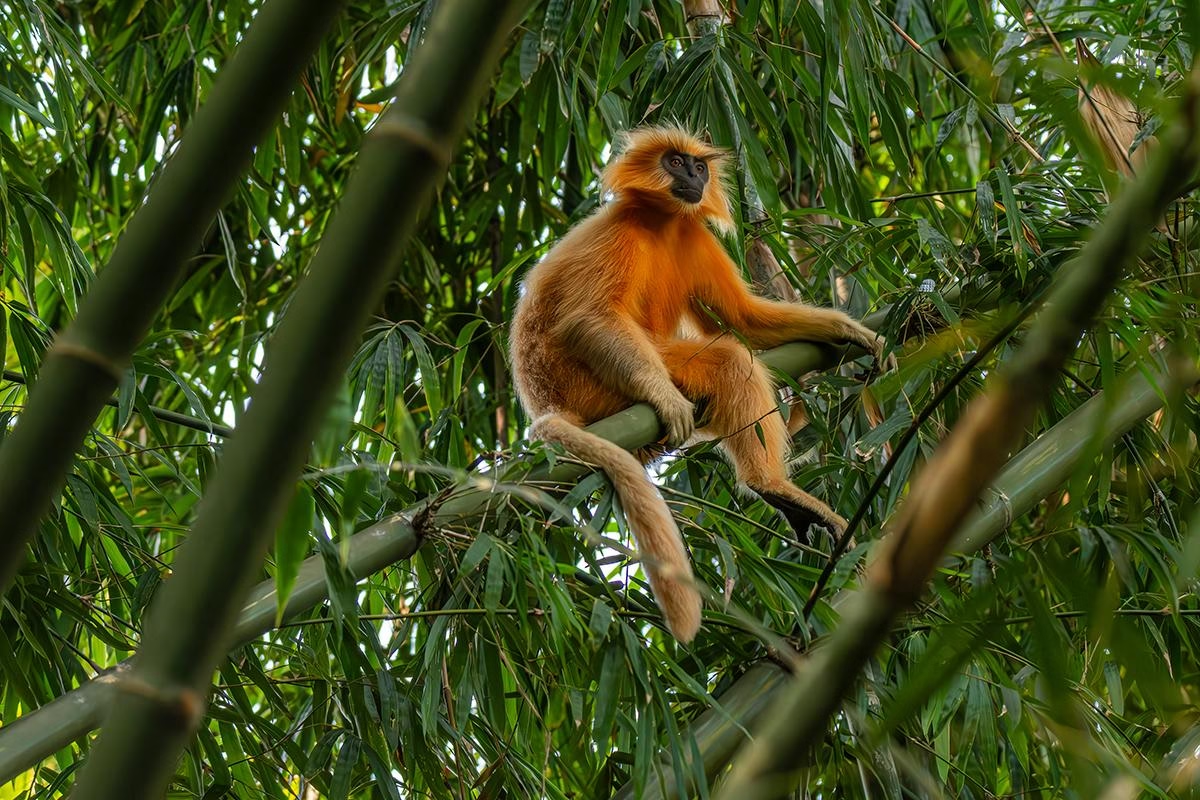
Image: A striking Golden Langur finds solace on a bamboo branch, a common sight for these arboreal primates in Kakoijana Reserve Forest.
Understanding the Golden Langur: Habitat, Diet, and Intelligence
The Golden Langurs in Kakoijana are primarily arboreal, spending nearly their entire lives in the treetops. Their diet consists predominantly of leaves, fruits, and flowers, playing a vital role in seed dispersal and maintaining the health of their unique forest ecosystem. While largely folivorous, they are known to occasionally supplement their diet with young bamboo shoots, a behavior the local community generally accepts. Are golden langurs intelligent? Their curious mirror fascination certainly suggests a level of cognitive engagement not always seen in wild primates. Are golden langurs dangerous? Not typically; locals attest they don’t harm people or take their food, though, like any wild animal, they should be observed respectfully from a distance. The presence of these endangered primates highlights the critical biodiversity of this region. Are golden langurs rare? Yes, they are endangered, primarily found in a small region of western Assam and Bhutan. This makes sightings of these Gee’s golden langurs even more precious.
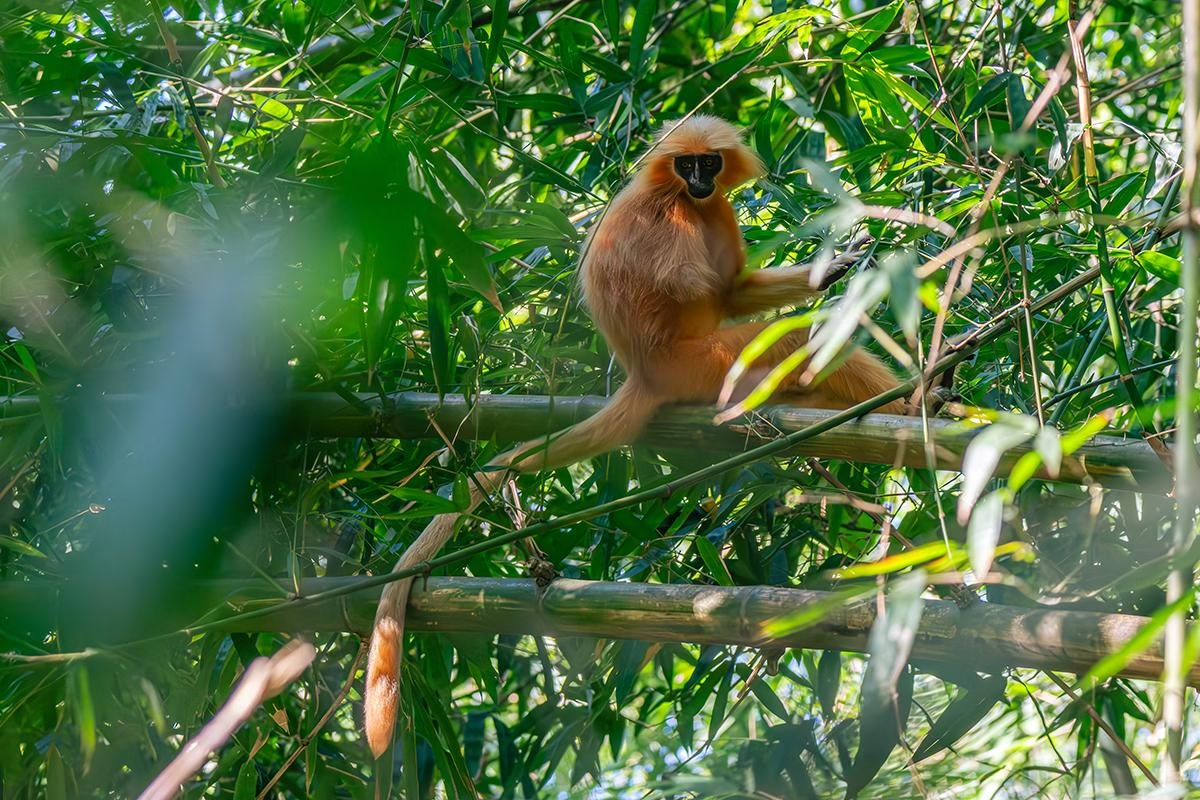
Image: A Golden Langur (Trachypithecus geei) observing its surroundings from a bamboo perch in Kakoijana Reserve Forest, where these primates uniquely interact with human settlements.
Conservation Challenges & Community Co-existence
My final day involved gathering more footage and speaking with villagers about their conservation efforts. Sadly, challenges persist; five Golden Langurs in Kakoijana have died in recent years, with three succumbing to electrocution from power lines. This underscores the urgent need for increased awareness and mitigation strategies, as local contacts like Bikash suggested. It was encouraging, however, to hear that the canopy bridge *is* used by the langurs, especially in the mornings, offering a safer passage. The genuine amusement and affection from locals, especially young children, as they witnessed me filming these incredible creatures was a heartwarming testament to the special bond shared between the community and the Golden Langurs in Kakoijana Reserve Forest. Are golden langurs afraid of humans? In Kakoijana, not so much; their trust in the local populace is remarkable.
Essential Tips for Your Golden Langur Expedition in Kakoijana
- Hire Local Expertise: Engage local guides like Haro Mohan Rabha. They are invaluable for spotting, understanding behavior, and navigating the terrain.
- Timing is Key: Aim for early mornings (before 9 am) for optimal langur activity.
- Be Prepared: Bring appropriate hiking gear, waterproof shoes, and be ready for limited amenities (no WiFi, no hot water).
- Respect Wildlife & Locals: Maintain a respectful distance from the langurs. Observe local customs and traditions.
- Patience Pays Off: These are wild animals; sightings are never guaranteed, but patience significantly increases your chances.
- Support Conservation: Learn about and support local initiatives to protect these endangered primates.
Final Thoughts on Kakoijana’s Golden Treasures
My journey to Kakoijana Reserve Forest was more than a wildlife photography trip; it was an immersive experience into the life of the remarkable Golden Langurs in Kakoijana and their unique co-existence with humanity. From the initial challenges to the triumphant sightings and the profound lessons learned about conservation, it underscored the delicate balance of nature and community. These are real, magnificent creatures. I encourage you to embark on your own research or, if the opportunity arises, a respectful visit to this incredible sanctuary. Share your thoughts in the comments below, and check out my related posts for more wildlife adventures!

- Unveiling the Secrets of Golden Langurs in Kakoijana Reserve Forest: A Journalist’s Account - December 31, 2025
- From Lens to Langur: My Unforgettable Journey with Assam’s Golden Langurs - December 27, 2025
- Beyond the Golden Gaze: My Unforgettable Encounter with the Golden Langurs of Kakoijana Reserve Forest - December 27, 2025