My Amazing Dehing Patkai Birding Adventure!
Imagine being deep in a super green jungle, with sounds all around you! That’s exactly where I was on June 5, 2025, in a special place called Dehing Patkai National Park in India. This blog post is all about my exciting Dehing Patkai birding adventure, where I met some truly wonderful birds!
Are you ready to see what we found? Get comfy, because we’re going on a virtual trip to one of the wildest places!
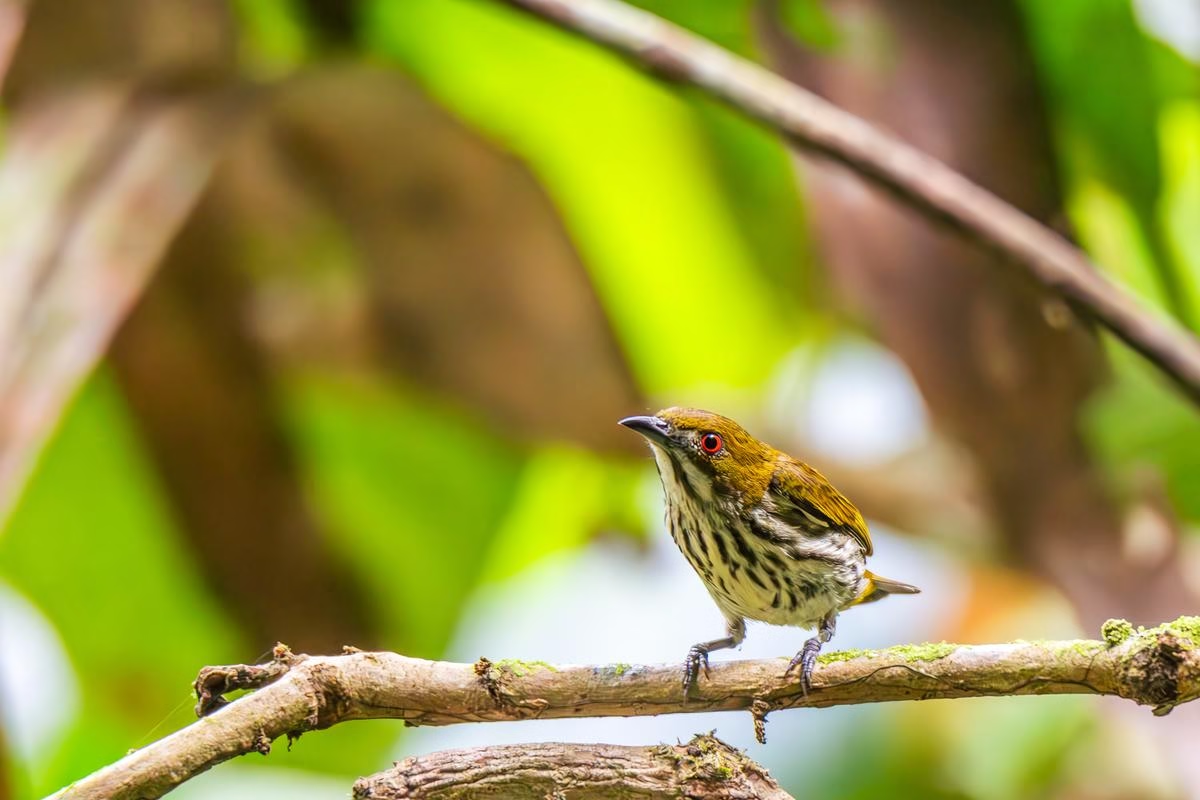
Meet the Yellow-vented Flowerpecker!
First up was a tiny burst of energy, the Yellow-vented Flowerpecker. This little bird is like a tiny flying jewel! It has olive-brown on top and pretty streaky white underneath. Its eye is bright red and really stands out.
These birds love to eat berries, especially from mistletoe plants. Guess what? When they eat the berries, they help plant new mistletoe all over the forest! They’re super important for helping the jungle grow.
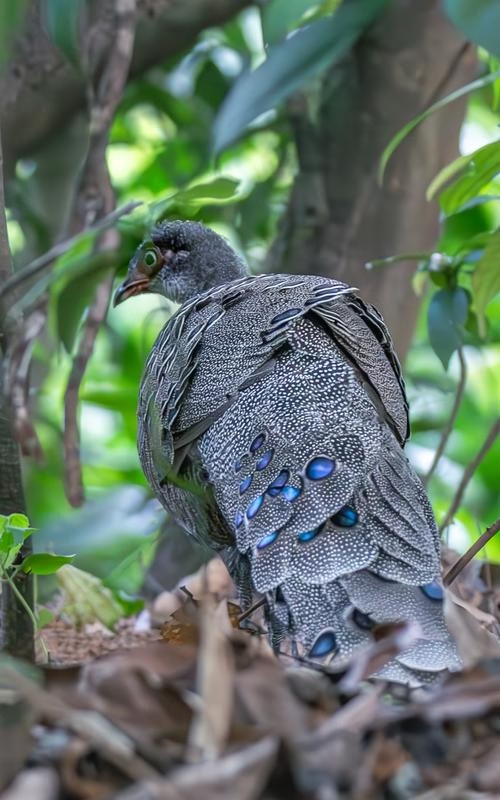
The Shy Grey Peacock-Pheasant
Next, we were super quiet and lucky to spot a Grey Peacock-Pheasant on the ground! These birds are masters of hide-and-seek. They have grey feathers with tiny speckles, which helps them blend in perfectly with the fallen leaves.
But wait, there’s a secret! They have amazing blue and purple “eye-spots” on their feathers. They usually keep them hidden, but when they want to show off for friends, they fan them out. So cool!
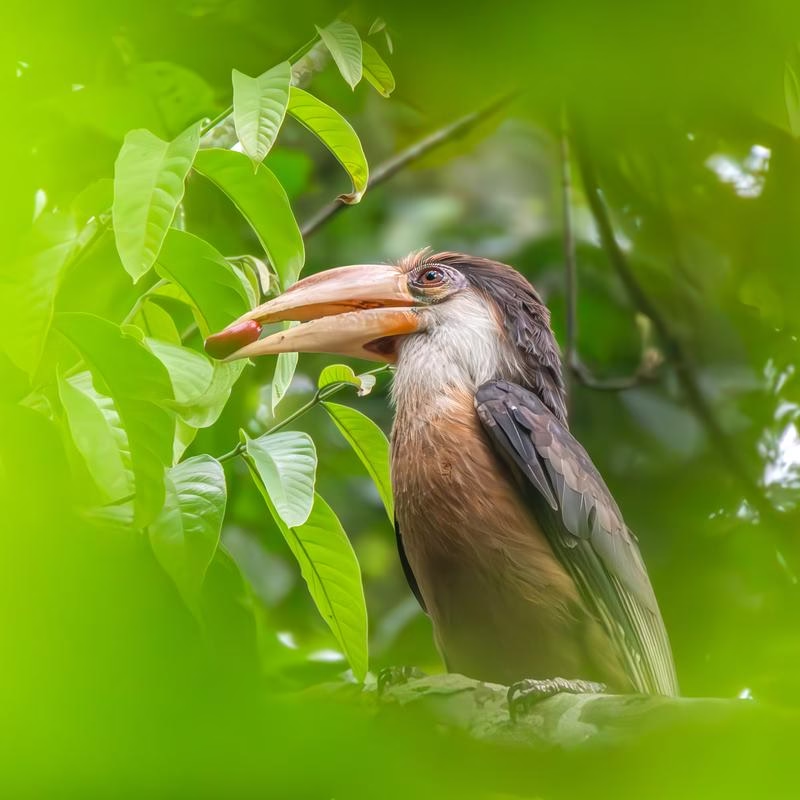
Big Beak, Big Help: Austen’s Brown Hornbill
Then, high up in the trees, we saw a magnificent bird with a HUGE bill – a female Austen’s Brown Hornbill! She was even holding a yummy reddish fruit in her beak. Her head is dark brown, and her chest is lighter.
Hornbills are super important for the forest because they eat lots of fruits and then spread the seeds far away. They’re like the jungle’s own gardeners, helping new trees grow. Isn’t that neat?
Tips for Your Own Bird Adventure!
- Be Quiet: Birds get scared easily, so whisper and move slowly.
- Look Closely: Bring binoculars to see birds high in the trees or far away.
- Respect Nature: Never leave trash, and don’t disturb the birds or their homes.
Come Back for More Birds!
My Dehing Patkai birding adventure was so much fun! We saw amazing birds, learned cool facts, and got to enjoy the beautiful jungle. Which bird was your favorite? Let me know in the comments!
Keep exploring and protecting our amazing bird friends!
An Unforgettable Dehing Patkai Birding Adventure
The humid air of June 5, 2025, still clings to my memory, thick with the symphony of unseen life as I ventured into the heart of Dehing Patkai National Park. This isn’t just a trip; it’s a deep dive into one of Northeast India’s last remaining rainforests, a place that whispers tales of ancient ecology and untamed beauty. My latest blog post chronicles an unforgettable Dehing Patkai birding adventure, revealing the triumphs and challenges of seeking out the park’s elusive avian residents.
From the moment I stepped onto the forest floor, guided by the incredibly knowledgeable Kalpa Sonowal of Soraipung Retreat, I knew this expedition would test my patience and reward it tenfold. Prepare yourself for a journey through dense foliage, the thrill of discovery, and the profound lessons learned from the jungle itself.
Tracking the Tiny Titans: Yellow-vented Flowerpeckers in Dehing Patkai
My first significant sighting was the vibrant Yellow-vented Flowerpecker (Dicaeum chrysorrheum). These tiny arboreal passerines are often a blur of motion in the canopy. This particular individual, with its olive-brown upperparts, streaked white underparts, and striking reddish eye, was a true testament to the forest’s hidden gems. Photographing such an active, small bird amidst shifting light conditions always presents a unique challenge, pushing your skills to the limit.
Fascinating Fact: Yellow-vented Flowerpeckers are ecological engineers! They are highly adapted to feeding on mistletoe berries. Their specialized digestive system allows them to process the sticky fruit rapidly, and they play a crucial role in dispersing mistletoe seeds by wiping their sticky droppings onto branches. This act facilitates the growth of new mistletoe plants, essentially ‘farming’ the forest and contributing significantly to its biodiversity.
The Elusive Forest Floor King: Grey Peacock-Pheasant
Finding a Grey Peacock-Pheasant (Polyplectron bicalcaratum) in the dense undergrowth of Dehing Patkai is like discovering a secret. Its finely speckled grey plumage provides exceptional camouflage, making it incredibly difficult to spot. This specific bird, caught from behind and slightly to its left, revealed its head turned sharply, showcasing a striking green eye. The highlight, however, was the glimpse of its iridescent blue-purple ocelli on its wing and tail feathers—a truly breathtaking sight that makes all the patience worthwhile.
Failure & Lesson: I almost missed this shot! The low light and constant movement of the forest floor made focusing a real b**ch. I learned to slow down, anticipate movement, and trust my instincts rather than just spraying and praying. It was a lesson in patience and persistence.
Fascinating Fact: While its grey plumage offers superb camouflage, the dazzling ocelli serve a dual purpose: hidden when the bird is still, but dramatically fanned out during courtship displays to attract mates. It’s a masterclass in nature’s design.
The Majestic Austen’s Brown Hornbill: Architects of the Canopy
High above, amidst the lush green canopy, a female Austen’s Brown Hornbill (Anorrhinus austeni) made her grand appearance. Her large, pale yellowish bill, open to reveal a reddish fruit, was a sight to behold. The contrast of her dark brown head with a lighter, whitish-grey throat and upper chest, framed by distinct reddish orbital skin, was simply stunning. Hornbills are truly charismatic megafauna of these rainforests.
Fascinating Fact: Austen’s Brown Hornbills are crucial ‘farmers of the forest.’ By consuming a wide variety of fruits, like the one she was holding, they effectively disperse seeds across vast areas. This process contributes significantly to forest regeneration and maintains the rich biodiversity of the rainforest, making them indispensable to the ecosystem.
Tips for Your Own Dehing Patkai Birding Adventure & Photography
Planning a trip to this incredible park? Here are some insights to maximize your Dehing Patkai birding adventure:
Q&A for Aspiring Birders:
- Q: What’s the best time to visit Dehing Patkai?
A: Post-monsoon (October to March) offers cooler temperatures and more active birds, though the park’s biodiversity shines year-round.
- Q: Do I need a guide?
A: Absolutely. The jungle is vast and challenging. I highly recommend connecting with Kalpa Sonowal at Soraipung Retreat. His local expertise is unparalleled and made all the difference in locating these elusive species. Contact Kalpa Sonowal (example email, replace with real if available).
- Q: What gear should I bring for photography?
A: A telephoto lens (400mm+), a sturdy tripod or monopod for stability, and weather-sealed equipment are essential. Don’t forget rain covers and extra batteries!
- Q: How can I practice ethical birding?
A: Maintain a respectful distance, avoid using playback (it disturbs birds), move slowly and quietly, and never leave any trash behind. Leave no trace.
Wrapping Up Your Dehing Patkai Birding Adventure
My journey through Dehing Patkai was more than just ticking off species; it was an immersive experience in a vibrant, breathing ecosystem. Seeing the Yellow-vented Flowerpecker, the magnificent Grey Peacock-Pheasant, and the regal Austen’s Brown Hornbill reminded me of the incredible biodiversity we must protect.
What are your thoughts on rainforest conservation, or perhaps your own thrilling birding tales? Share them in the comments below! For more exciting expeditions, check out my related blog posts on birding in Northeast India. Let’s keep the spirit of exploration and conservation alive!